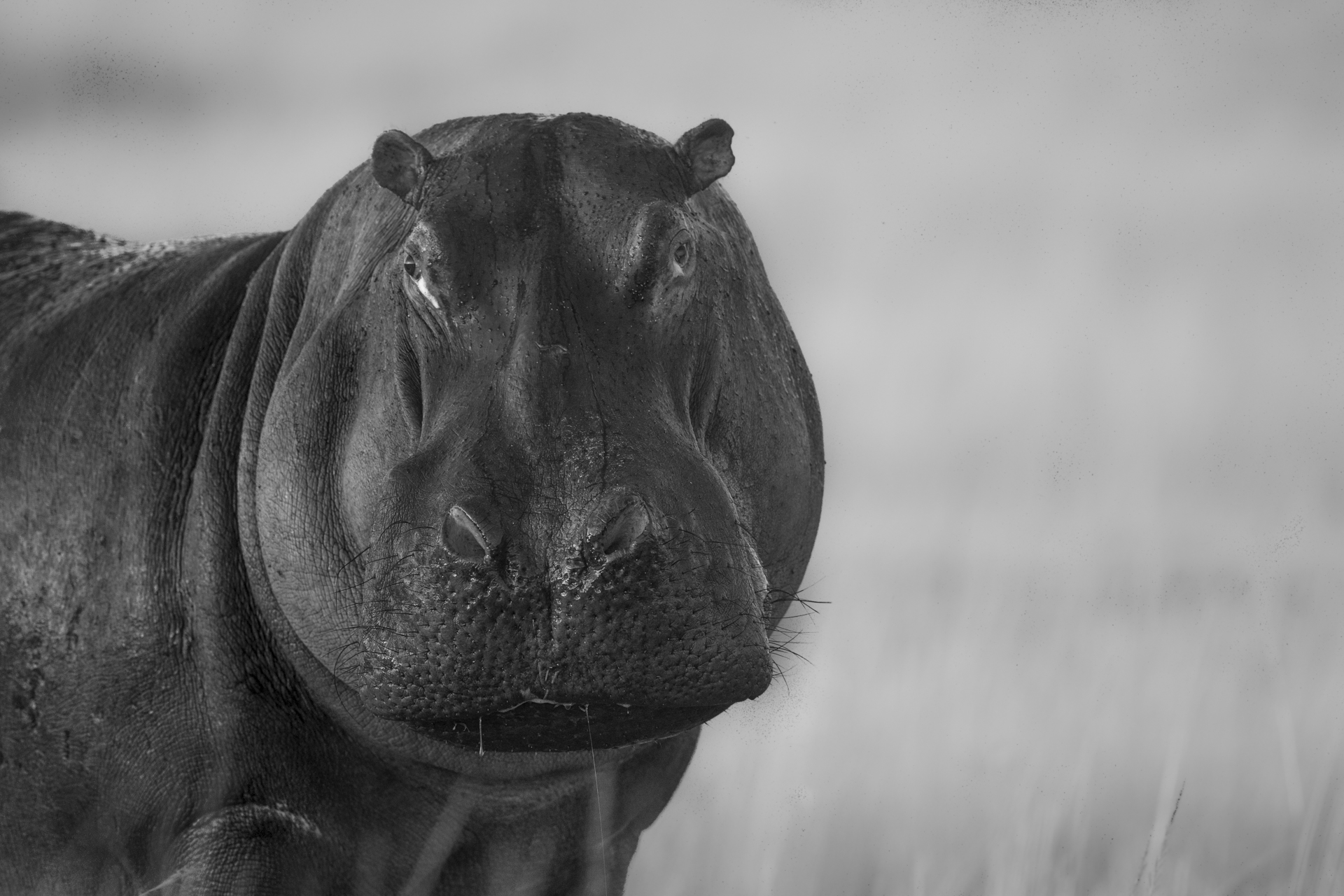
The Remarkable Hippopotamus Suffering from habitat loss and climate change
Photo By Peter Hudson
When you look at the remarkable diversity of mammals in Africa, several stand out as being truly different from the other mammals. The elephant, the rhino and the hippopotamus lack the usual luxuriant thick coat of fur worn by lions, gorillas, and other mammals. I find this somewhat surprising given that other hairless mammals tend to be aquatic; species like whales, seals, sealions and manatees and, except for humans of course, most hairless mammals are marine. The analysis of DNA reveals that the closest cousin to the hippo is indeed the whales and the hippo broke away from the ancestral line some 50 million years ago. As a member of a hairless species, I can vouch for the fact that we face issues of over-heating, water loss and sunburn.
Photo By Nisha Purushothaman
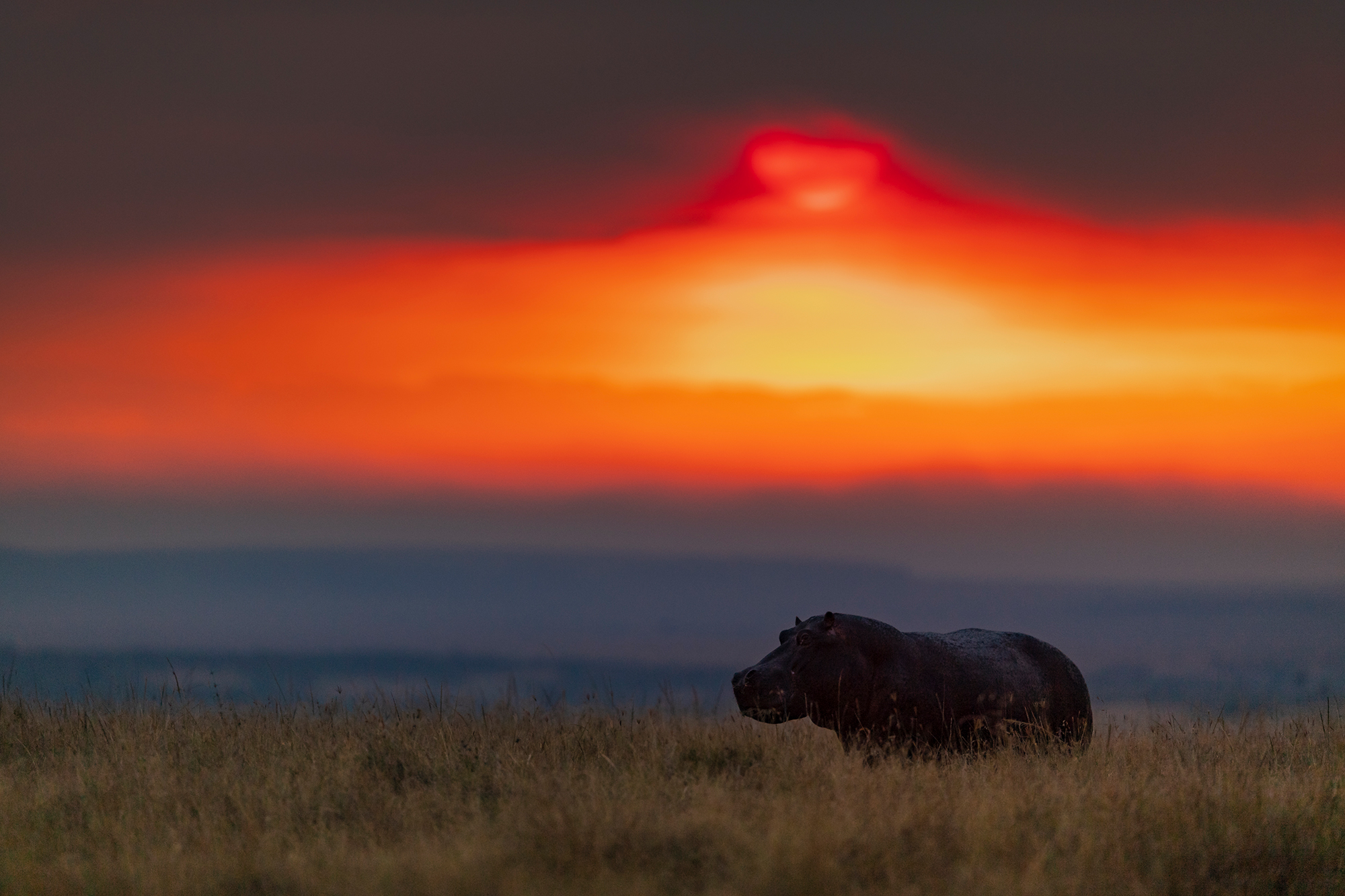
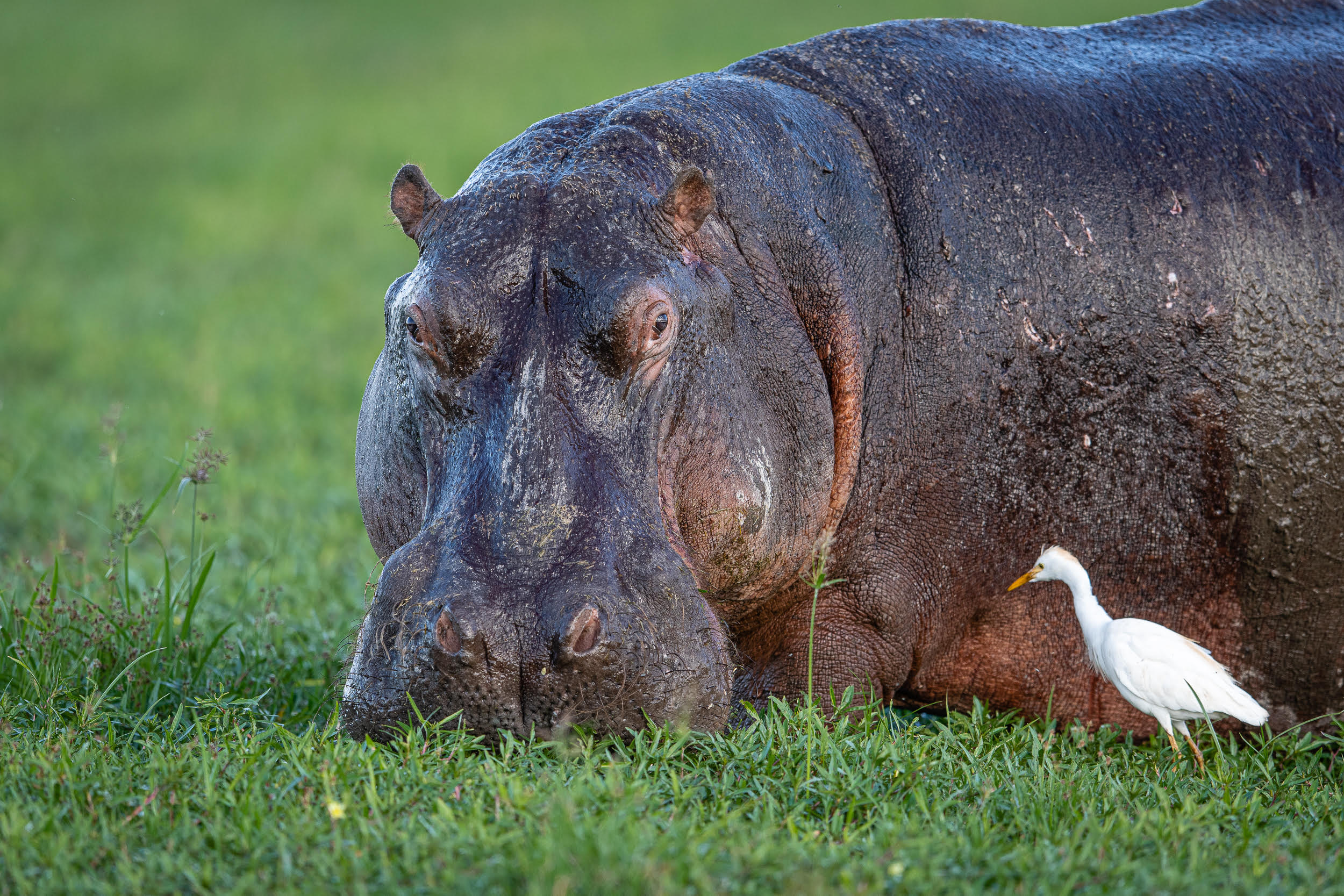
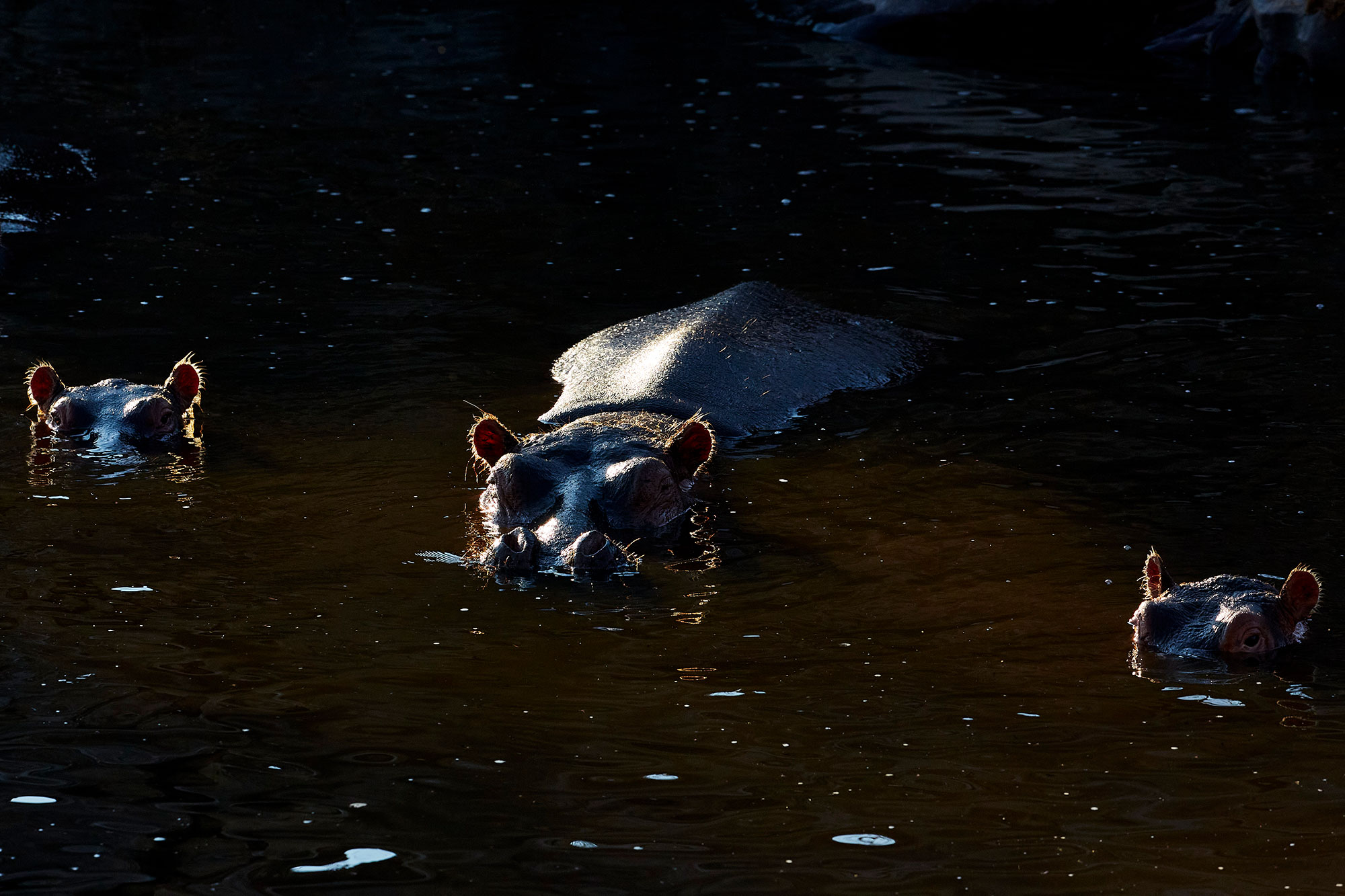
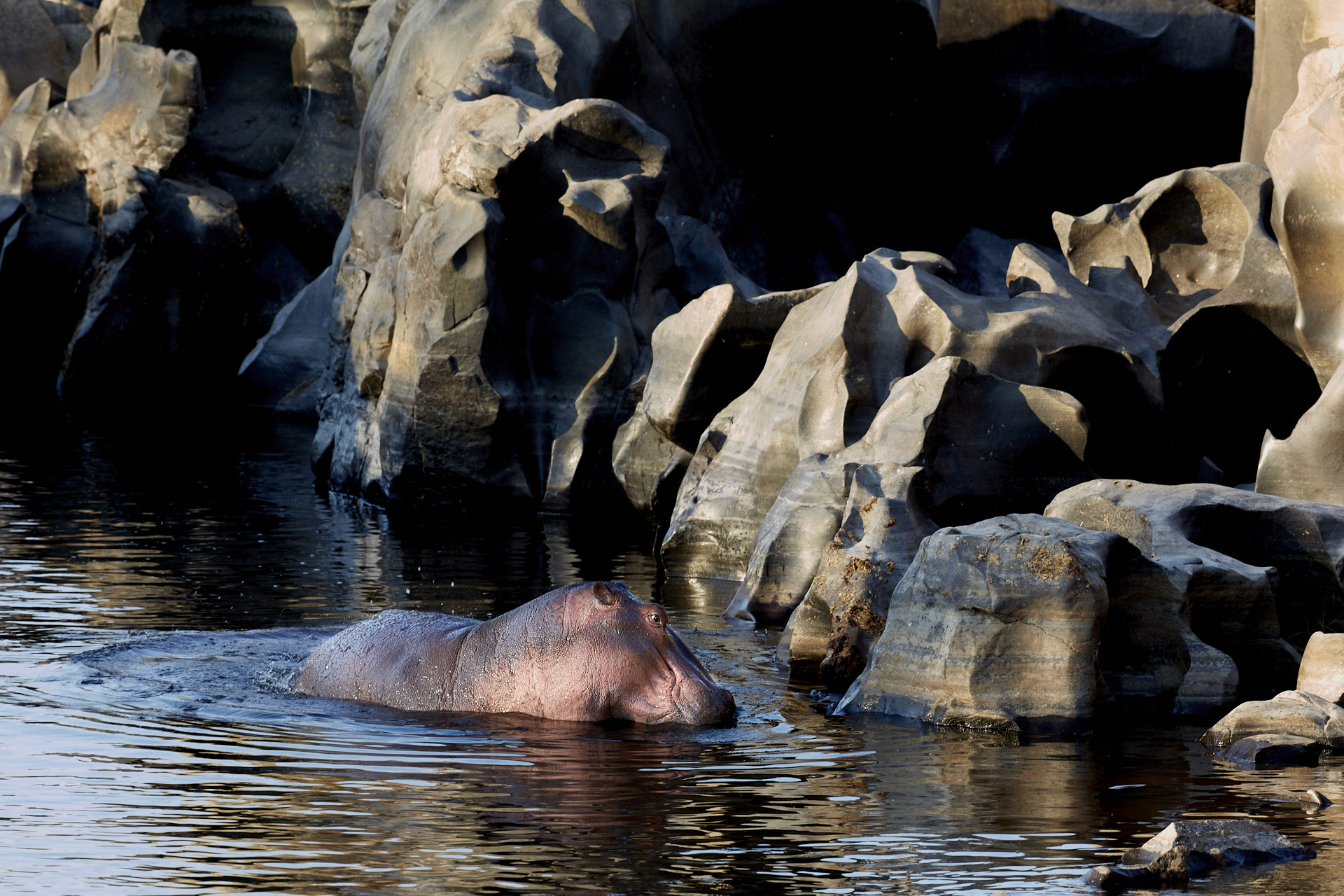
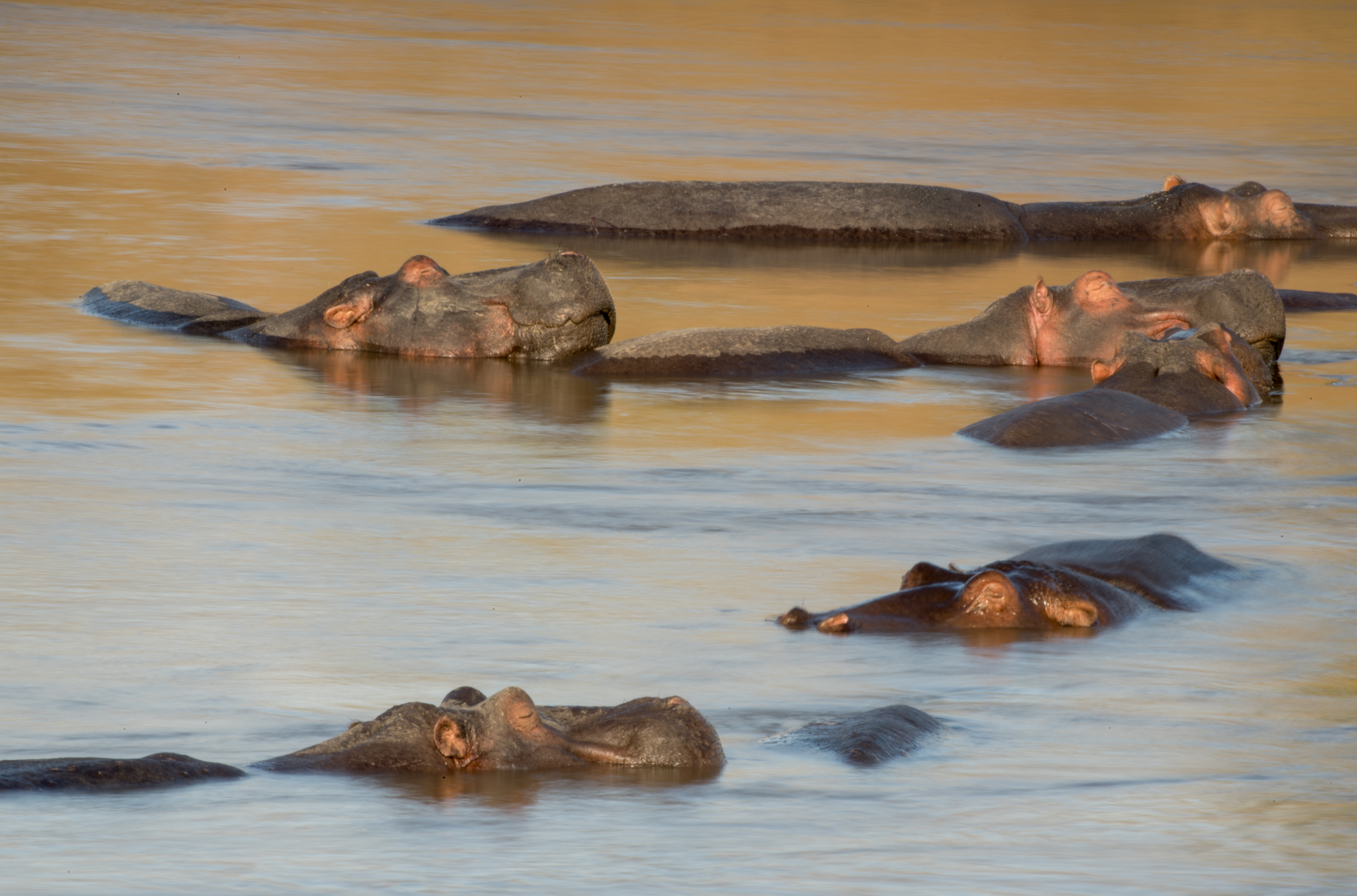
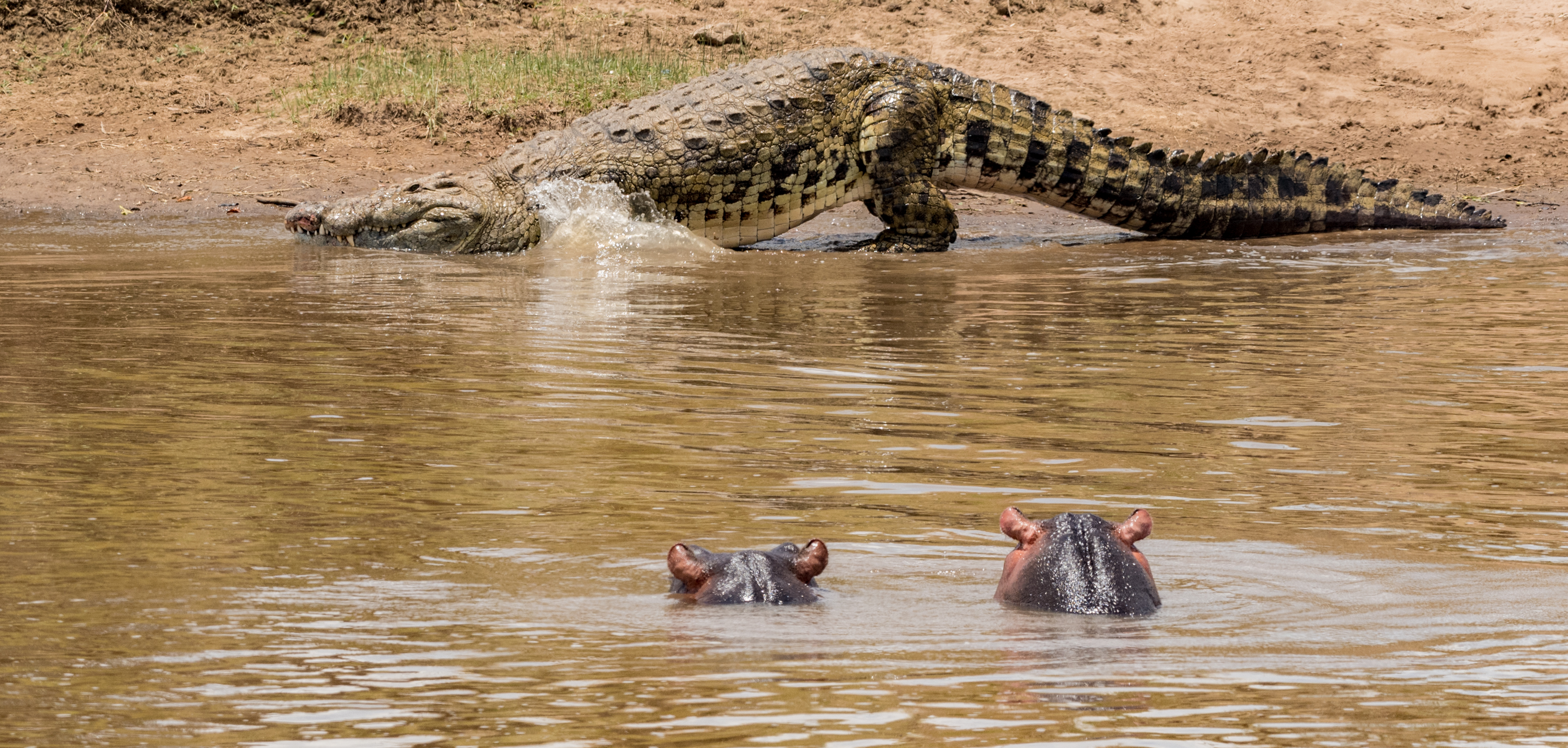
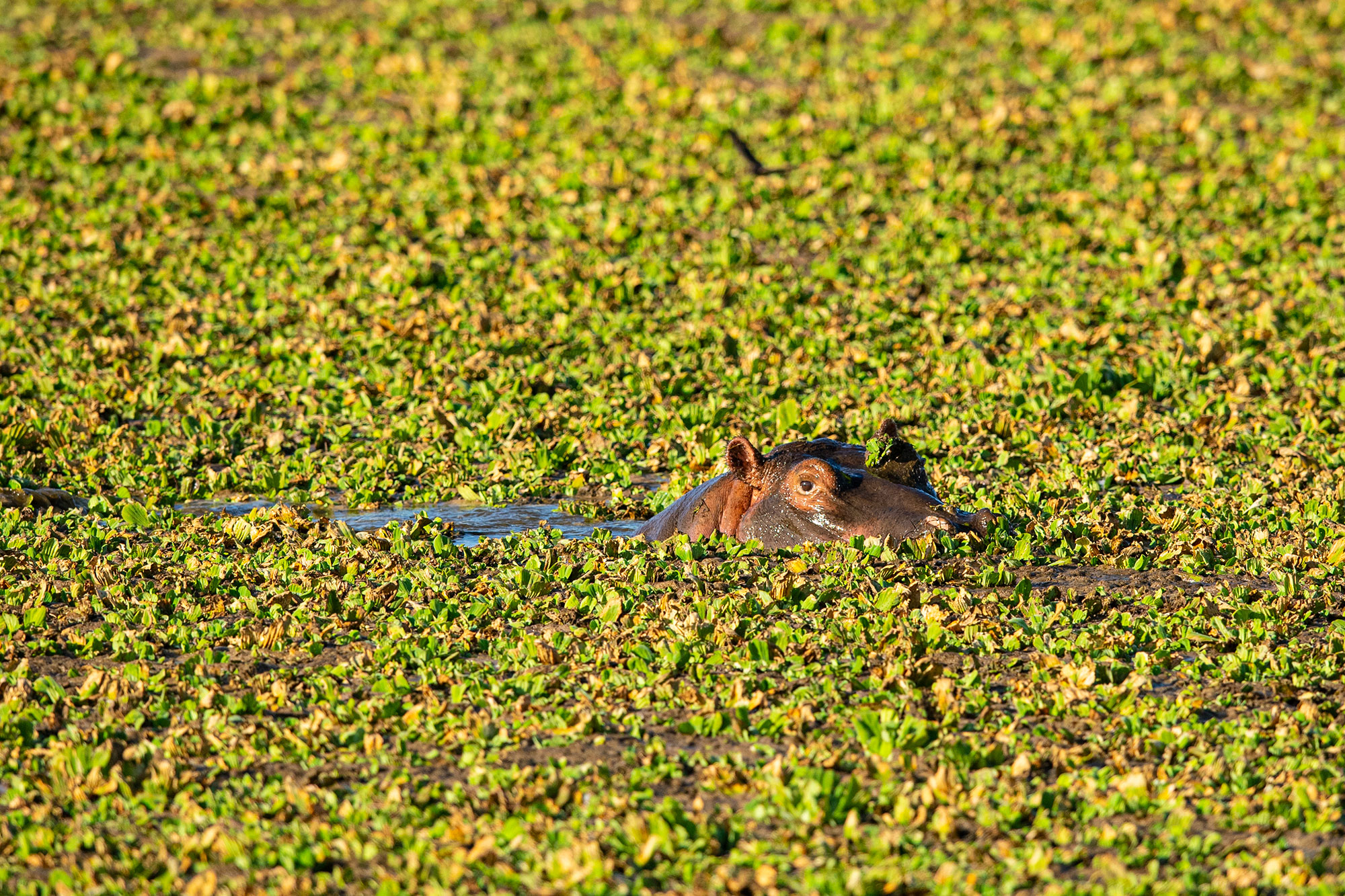
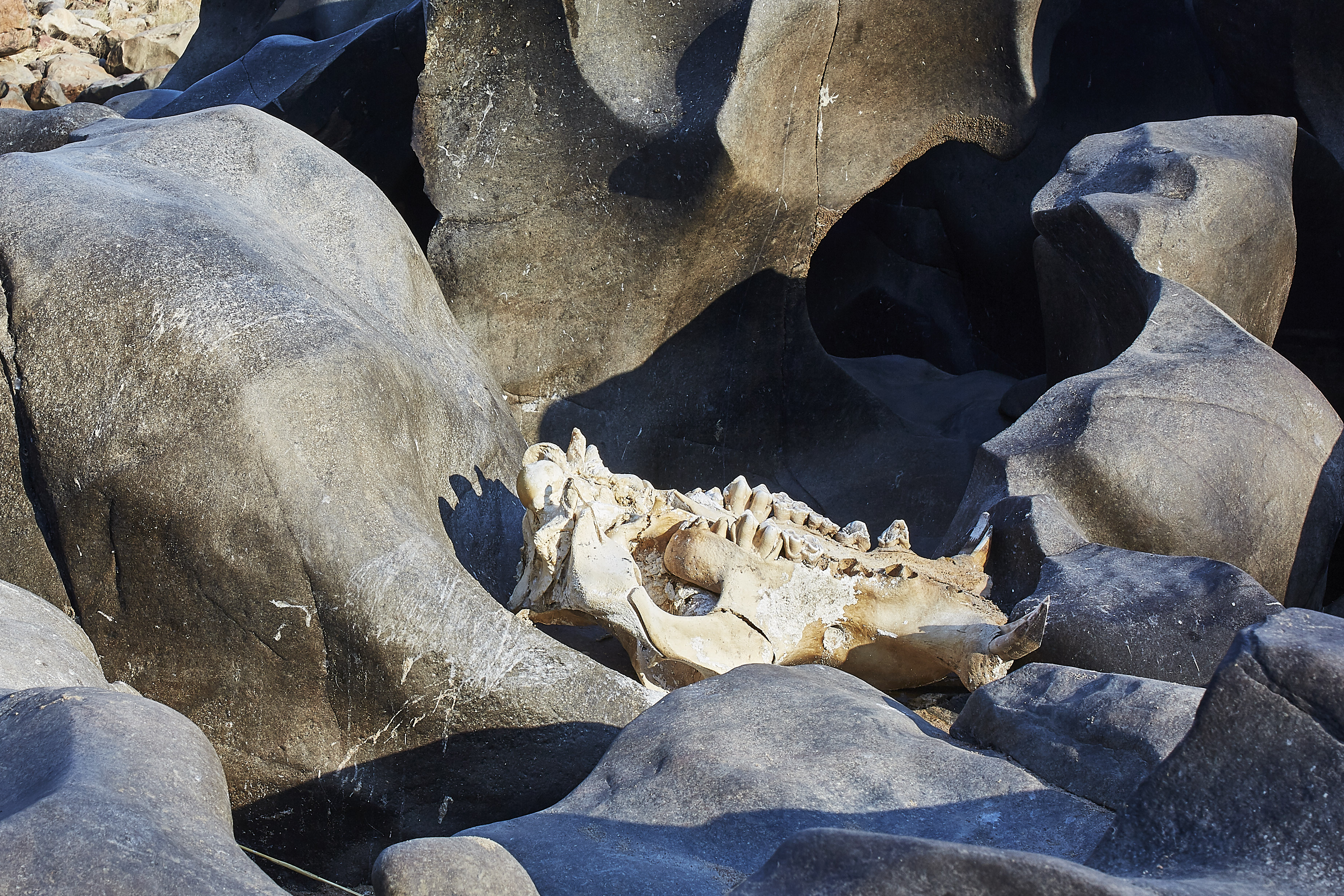
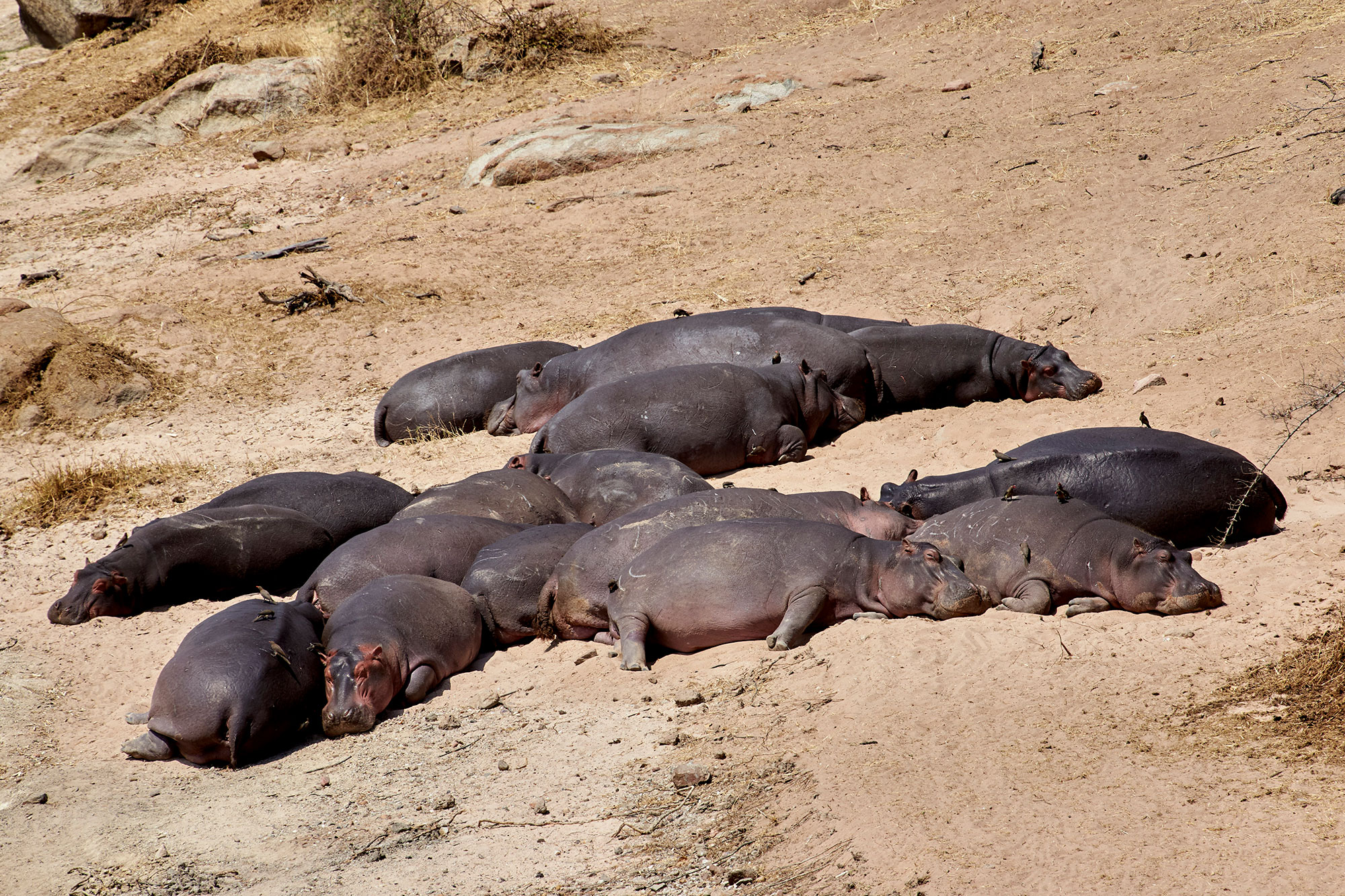
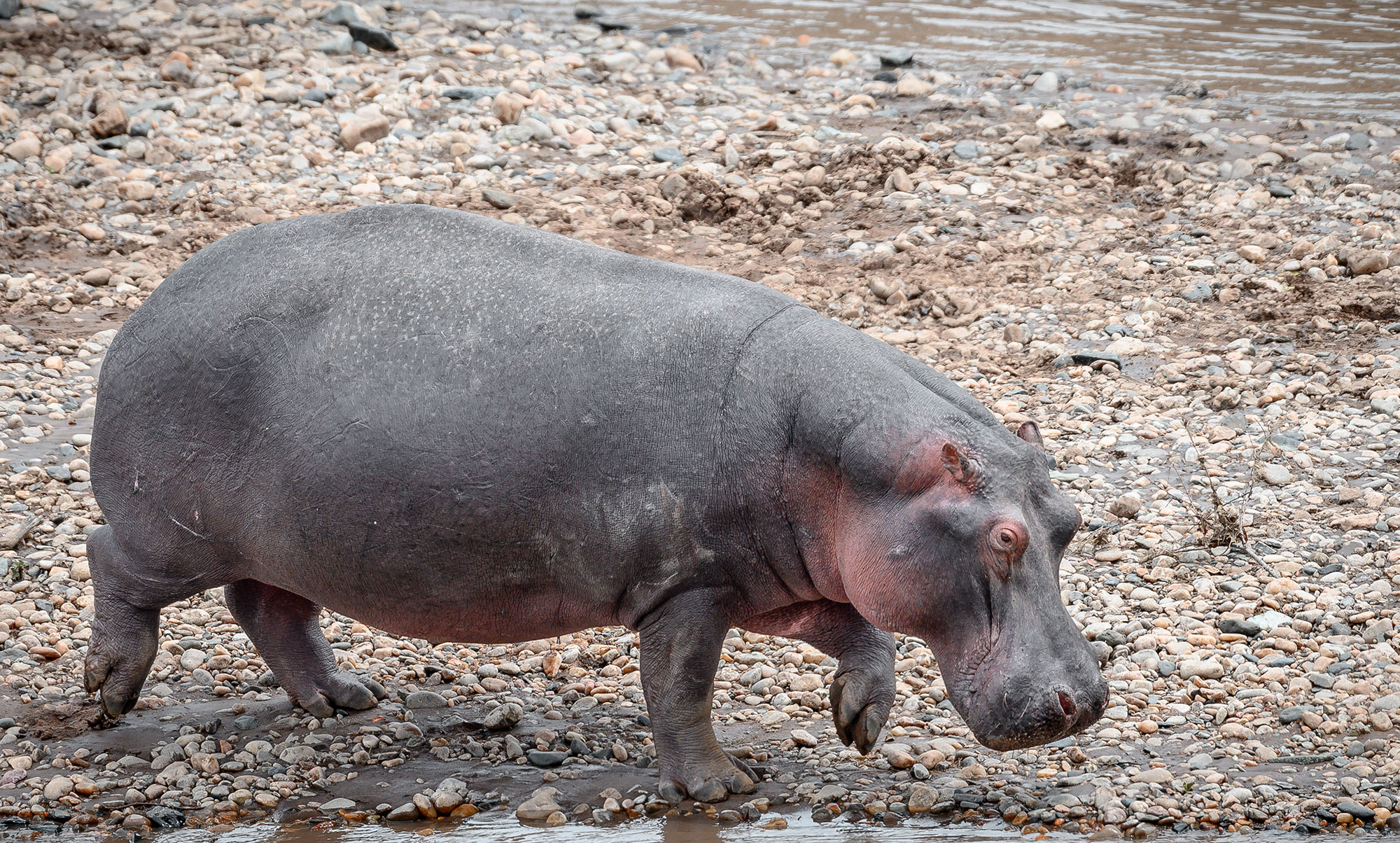
The hippopotamus (Hippopotamus amphibius) is indeed unique amongst the terrestrial African species in that it must avoid dehydration and sunburn and avoid the midday sun by remaining in fresh water or a mud wallow even though aquatic vegetation are not an important part of its diet. At night hippos emerge from the water and graze on grass close to the water, plucking the grass with their powerful lips and grazing the grass to produce the “Hippo lawn’. The hippo also protects their skin from the sun by excreting a chemical compound from glands just under the skin. This is often referred to as “hippo sweat” but is a colourless excretion that turns red and slowly polymerizes into a brown colour. This unstable red pigment turns out to be an aromatic compound that is highly acidic and has both antibiotic as well as sunscreen characteristics. I cannot think of another animal that makes its own sunscreen, although it just highlights how vulnerable it is to exposure to UV light. The skin dries rapidly in direct sun and it will crack and bleed attracting the attention of Oxpeckers who will open-up the skin to feed on the blood making the wounds weep badly.
Photo by: Todd Gustafson
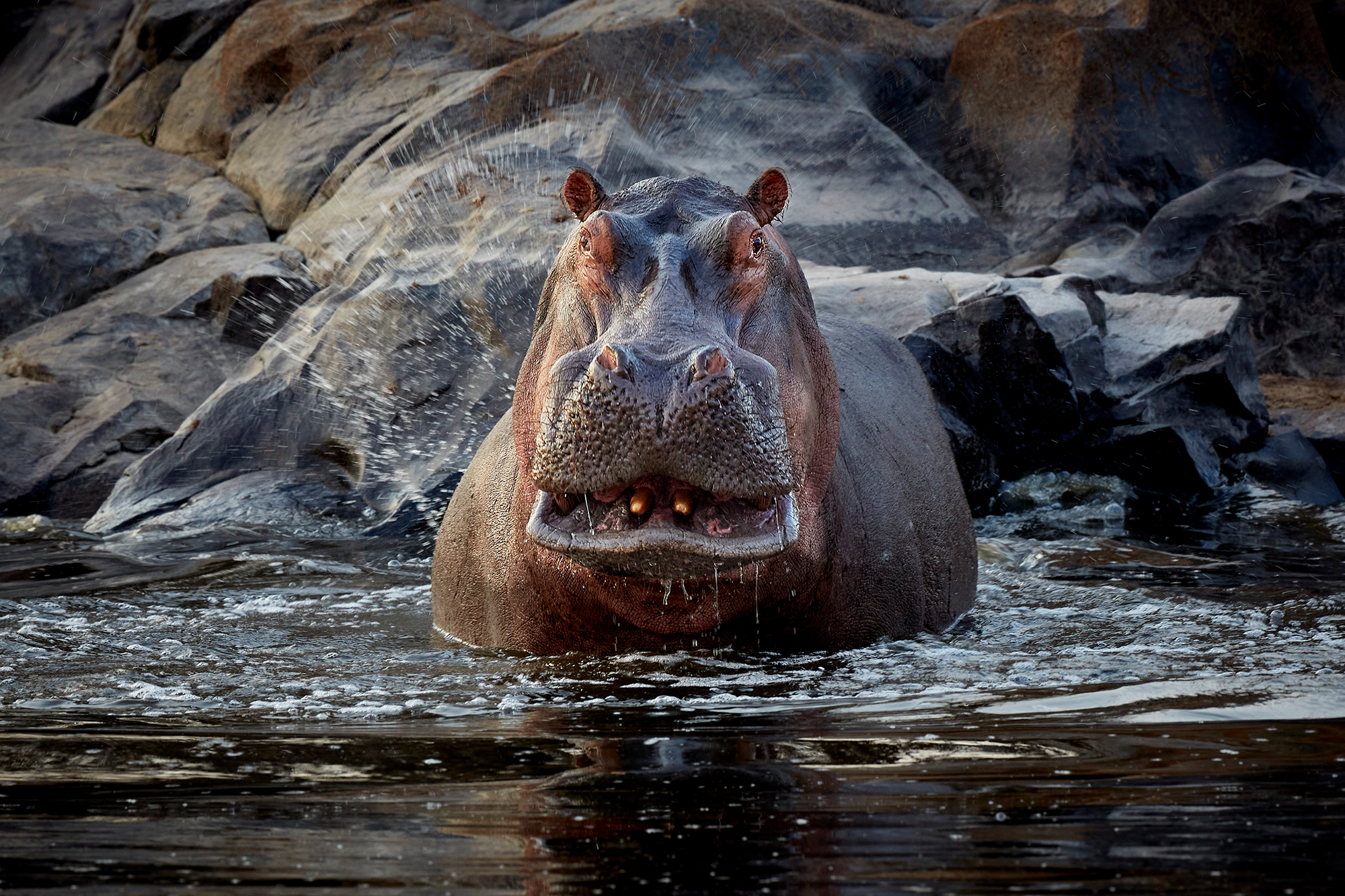
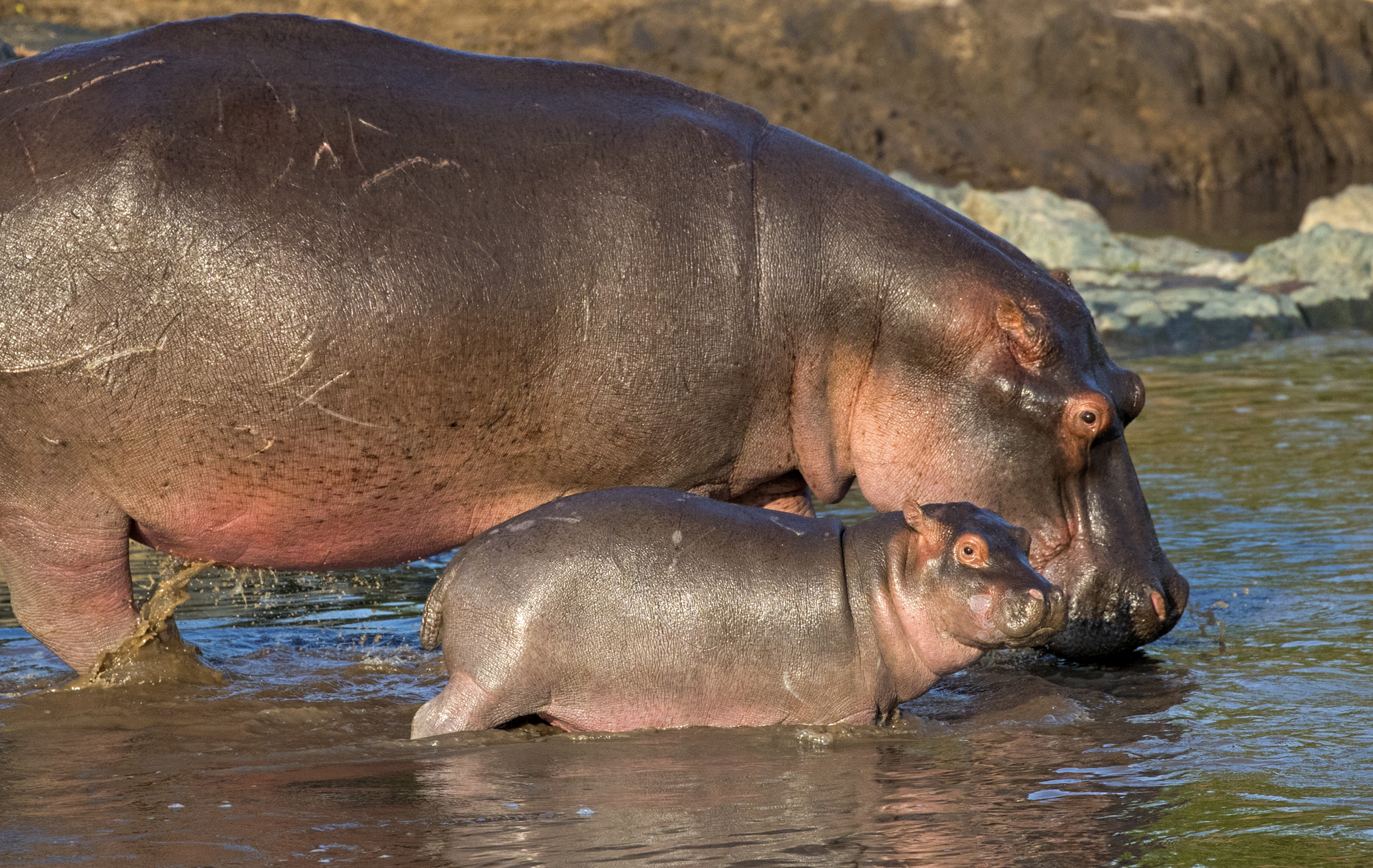
While Disney portrays the hippo in Fantasia as a soft and gentle ballerina, in the wild they should not be trifled with, and allegedly kill more people on the African continent every year than any other mammal. Estimates vary from 500- 3000 a year and attacks often occur when fishermen disturb a territorial male or get too close to a young one. They will attack boats and grab a swimming figure in their massive jaws and cause serious injury and death with their powerful jaws and large canine tusks.
Many who travel regularly in Africa have had interesting interactions with hippos and it is important to appreciate that they really can move very fast and when you are in a boat you do not see them swimming under the water. Back in 1974, I was part of a group navigating the length of the Congo river and had been making our way through this massive papyrus swamp all day when night fell and there was no land nearby. The mosquitoes emerged in vengeance and we found a sort of boggy island with a couple of small trees. I went on shore and followed this path and where the path split in two there was a small tree that was good enough for me to hang my mosquito net on so I could avoid the onslaught of the mosquitoes. I couldn’t sleep because as soon as my arms touched the side, I felt the mosquitoes start biting. Then the whole island started to shake, and I realized that I had hung my mosquito net at the junction of 2 hippo paths and the hippos were passing just inches from my head. I debated with myself and felt I was probably better off where I was, if I got up I may well bump into an irate four-ton hippo and since I hadn’t been squashed so far and outside the mosquitoes were so bad, I would just stay where I was. After an hour everything went quiet, and I got some sleep until just before dawn when the hippos all came running back past my bed and jumped into the water. The others had slept in the boat and been eaten alive by the mosquitoes – I was just happy I had not been squashed.
Photo by: Pareet Shah
Photo by: Todd Gustafson
Wetland loss so fewer Hippos
As climate change continues to get worse and the human population expands so water sources for our wild animal species have been reduced and water scarcity is now becoming one of this century’s most complex challenges. More than 4 billion people across the world face severe water scarcity due to the removal of more water than is sustainably available. Large parts of the world have undertaken massive construction developments each one with large water demands for showers, bathrooms, and irrigation, without the availability of water to support them. In Africa, this reduced access to clean water sources not only impacts human welfare and health but also hits water-dependent species like hippos. In Africa, this reduced access to clean water sources not only impacts human welfare and health but also hits water-dependent species like hippos.
Photo by: Peter Hudson
Photo by: Todd Gustafson
Photo by: Amartya Mukherjee
In 2008, the IUCN listed the hippopotamus as a vulnerable species since it experienced drastic declines in 29 countries at the end of the 1990s and again that continued into the 2000s. Since then, even though hippo numbers are not easy to estimate, the data indicate that the population has now stabilized at this lower level following the loss of important wetland areas.
At the same time hippos are persecuted for their ivory teeth to supply the ivory carving markets in the east. There is indeed increasing concern about the persecution of hippos for their teeth. In 1963 the IUCN produced a multilateral treaty to protect endangered plants and animals called CITES: Convention on International Trade in Endangered Species of Wild Fauna and Flora. Under this convention trade in hippo ivory is allowed, and trade figures show that the source countries are now predominantly Tanzania, Zambia, Zimbabwe, and Malawi. While they are protected in many countries including Uganda and DRC there is still a large illegal trade that is impacting wild populations.
Photo by: Peter Hudson
Photo by: Peter Hudson
Photo by: Peter Hudson
Hippo Biology and Water
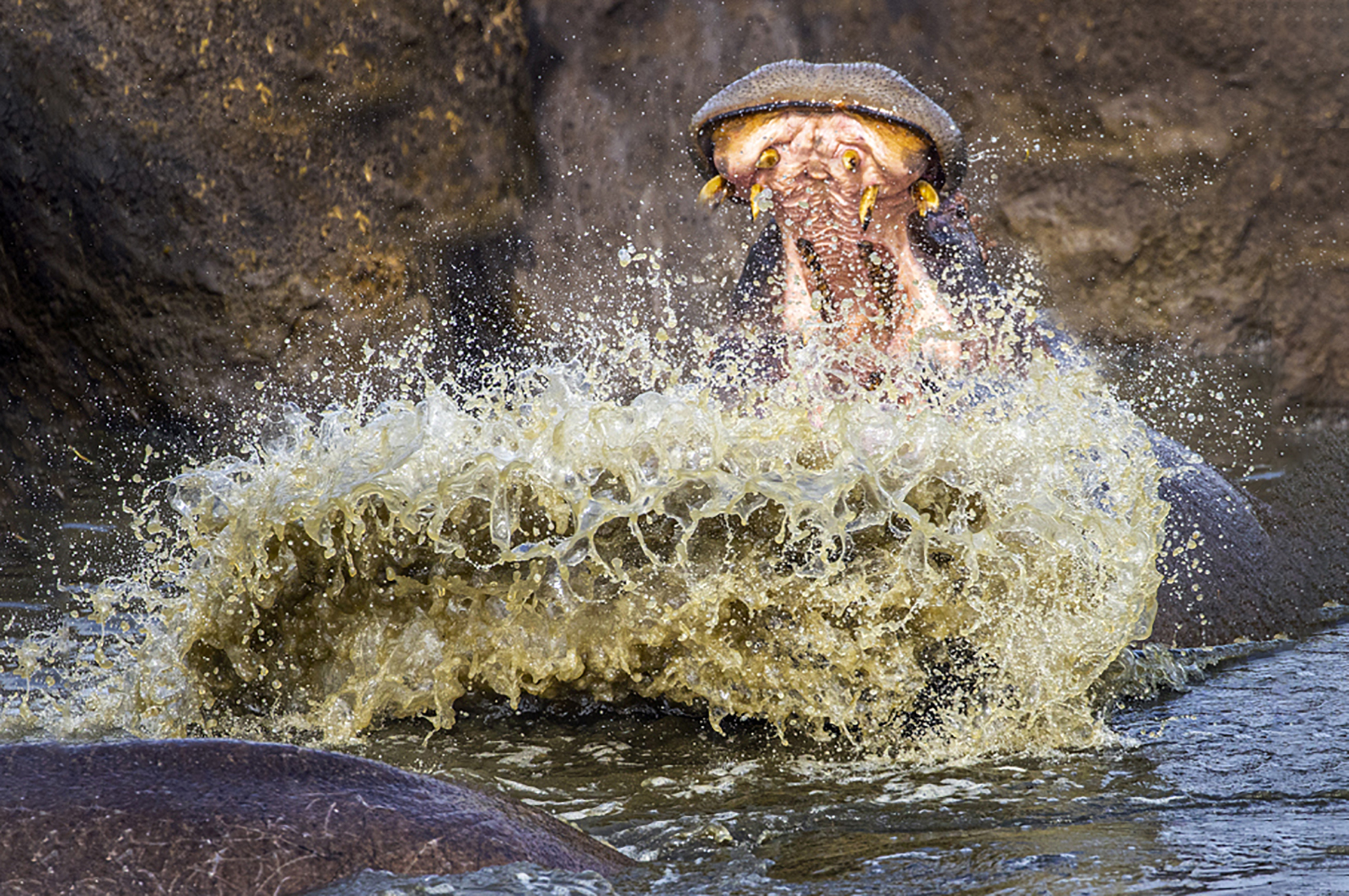
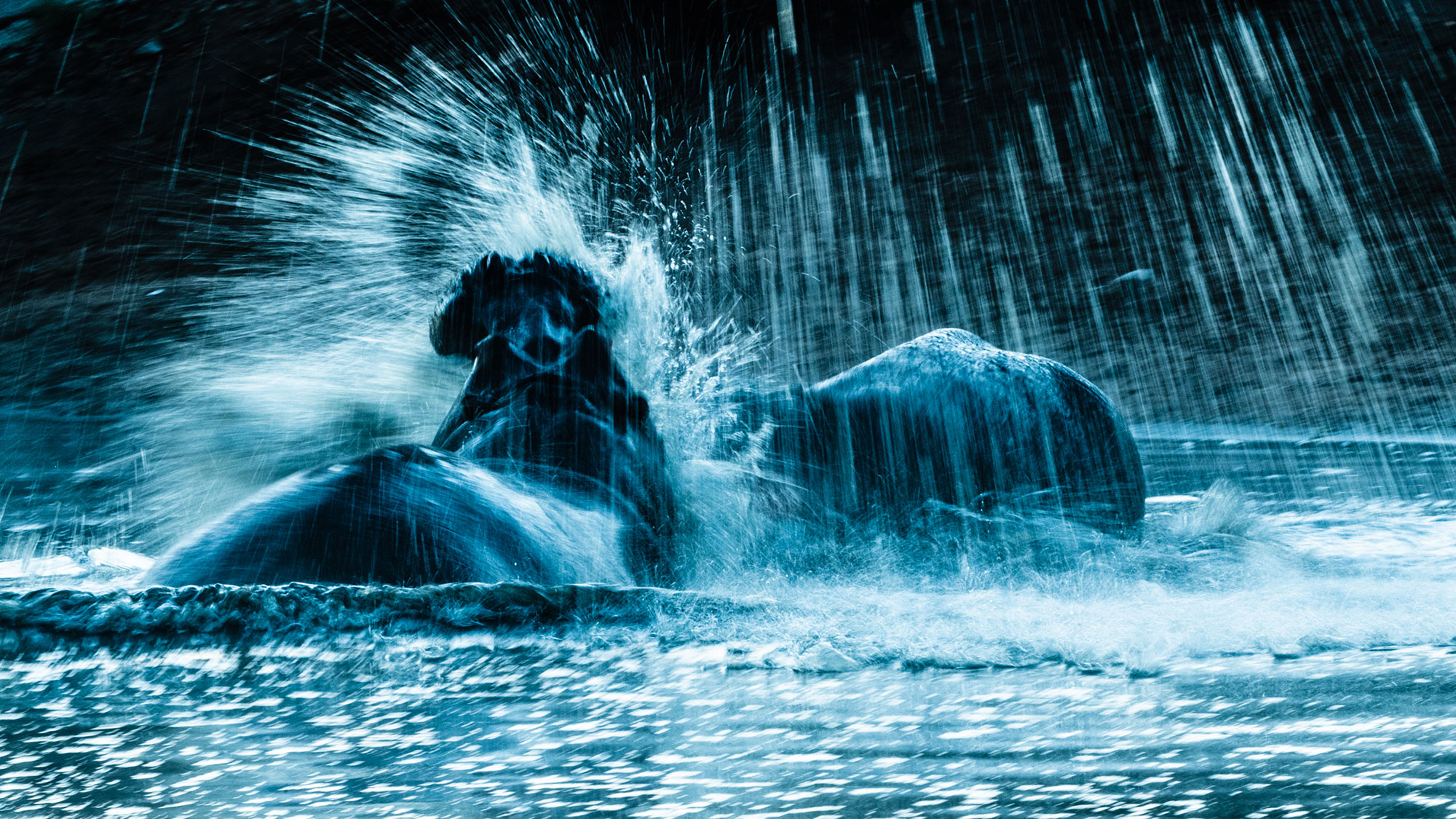
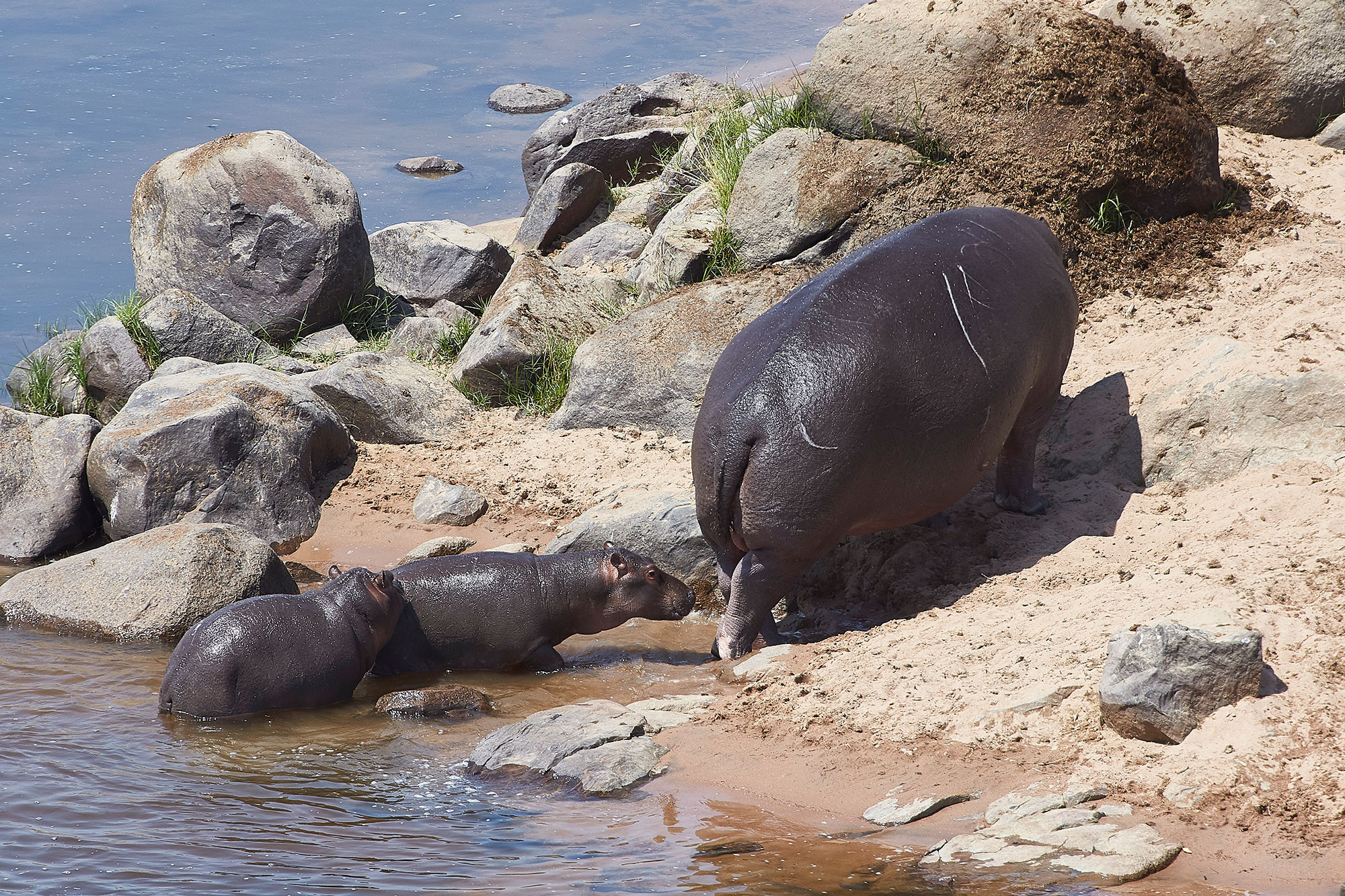
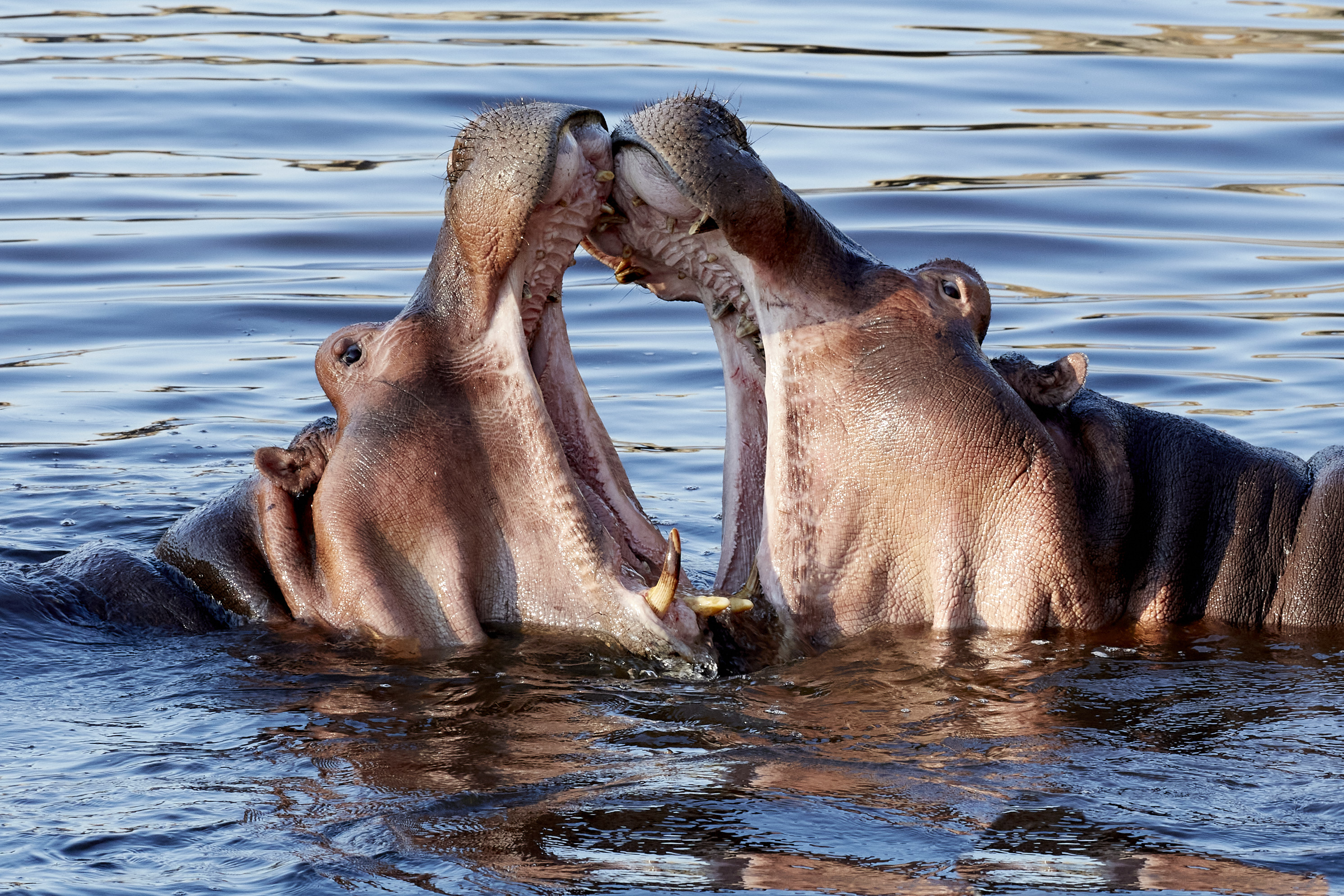
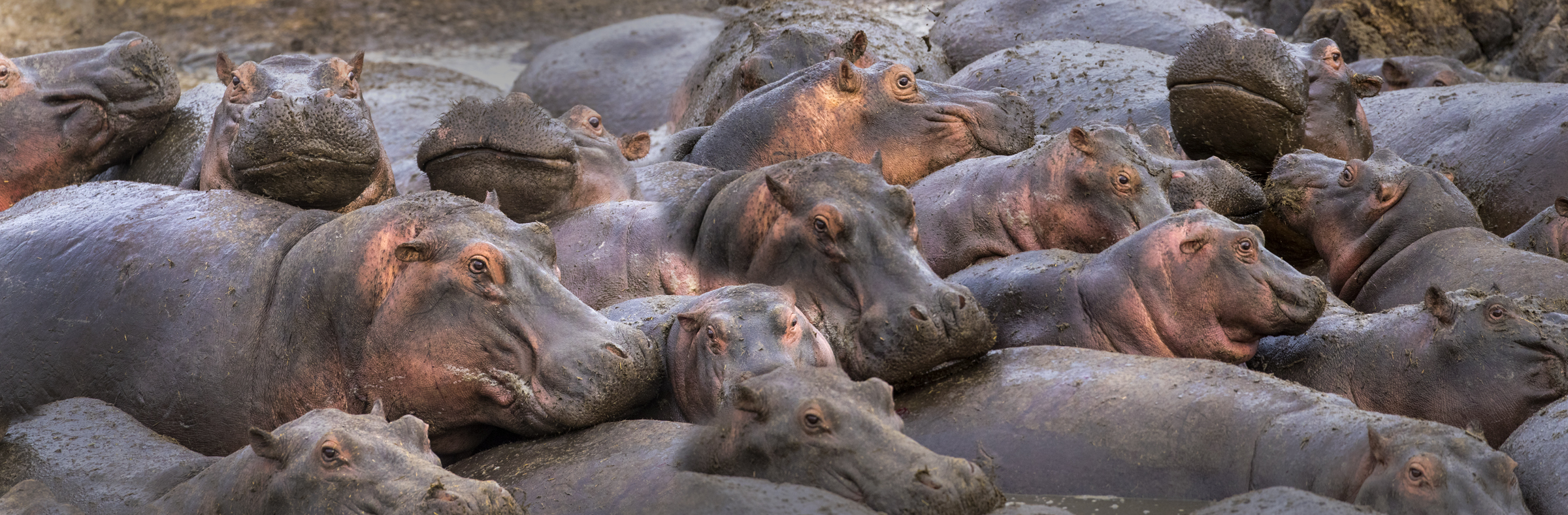
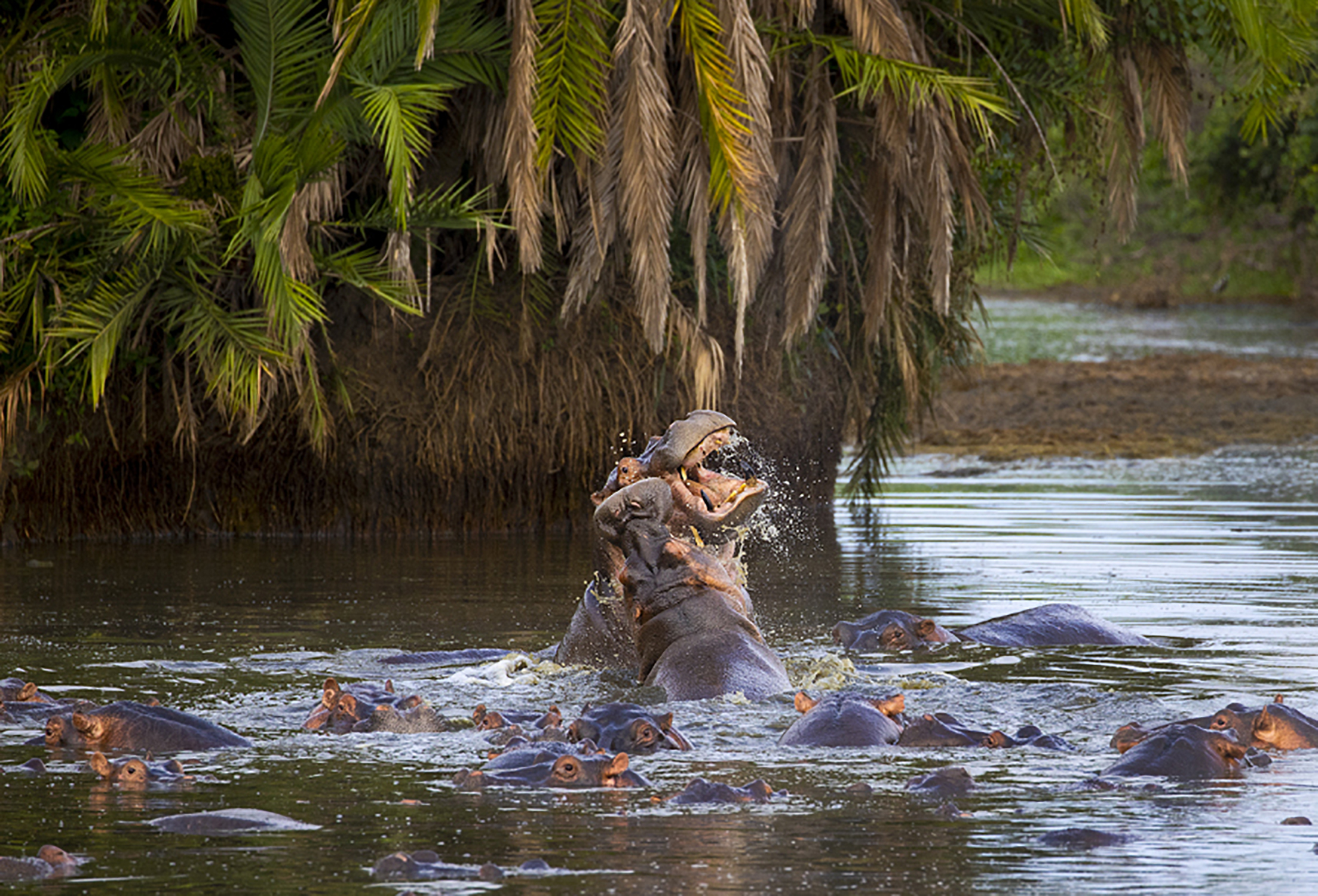
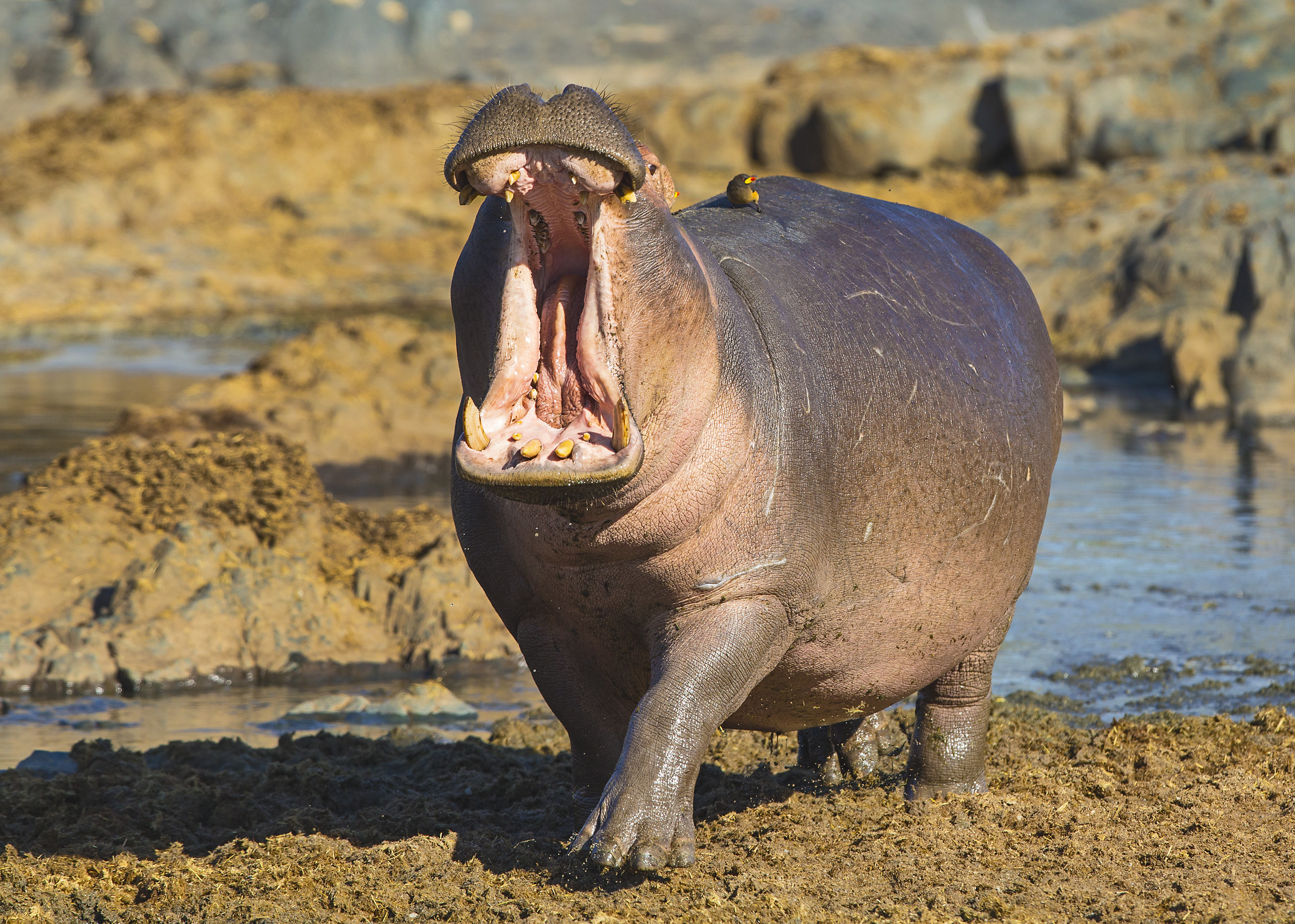
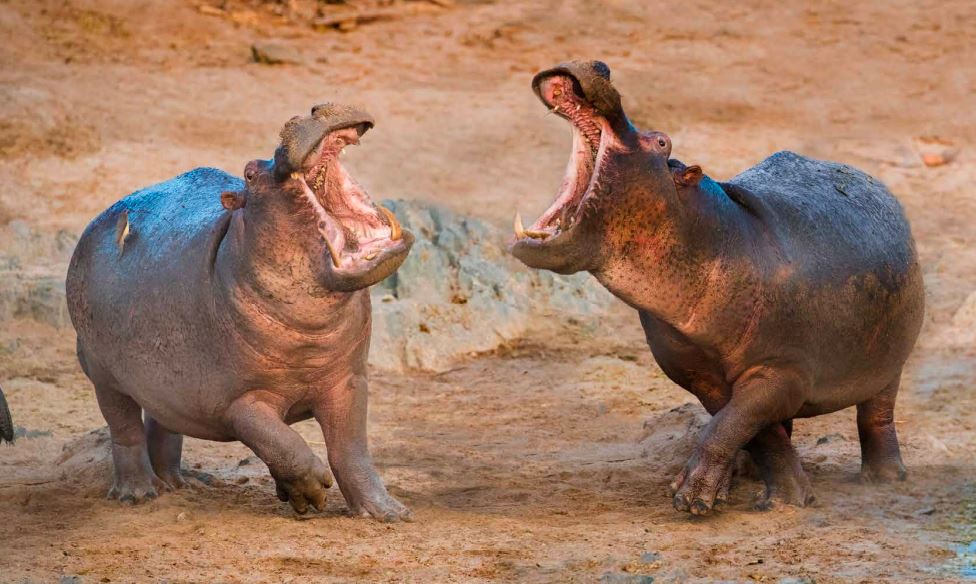
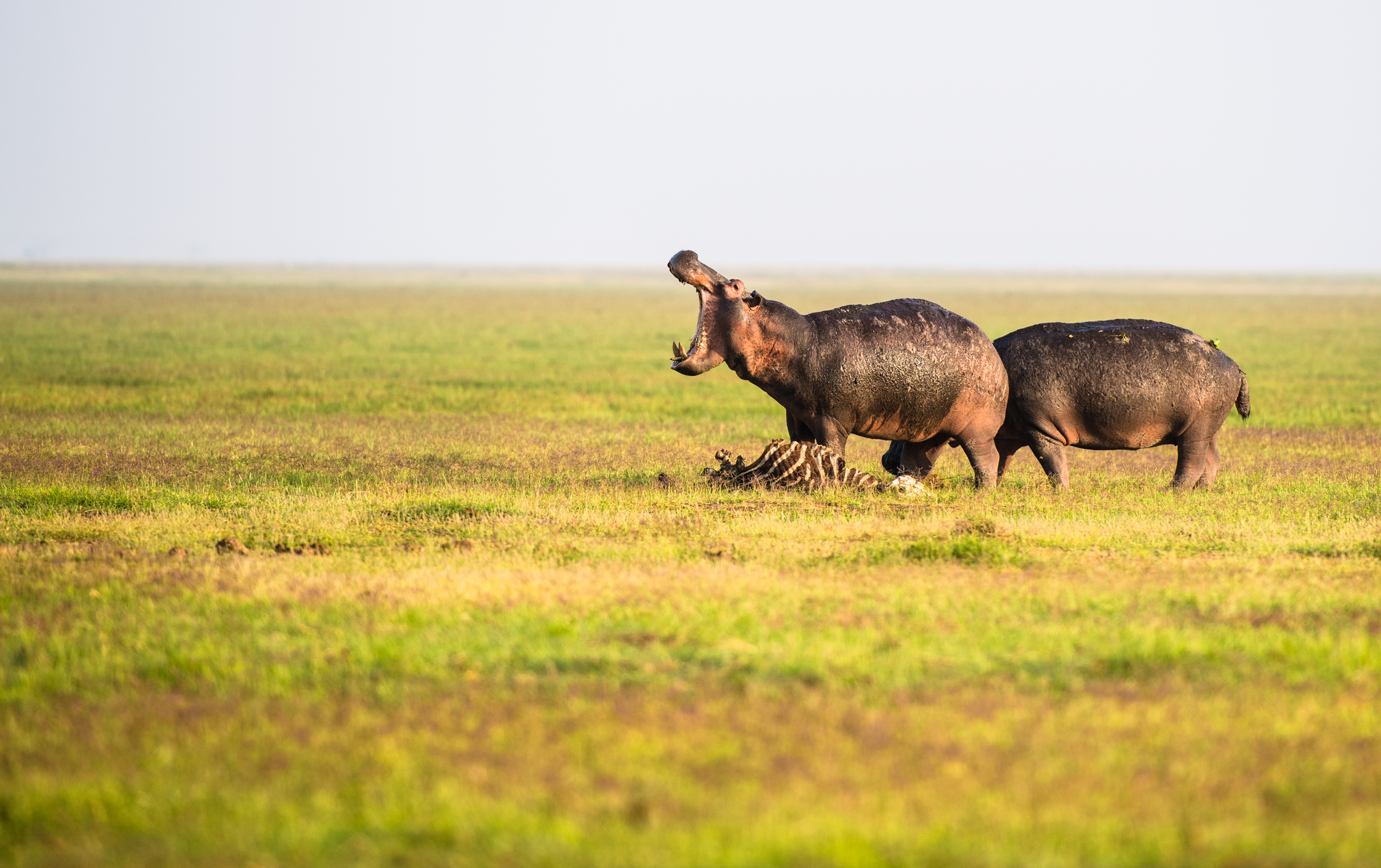
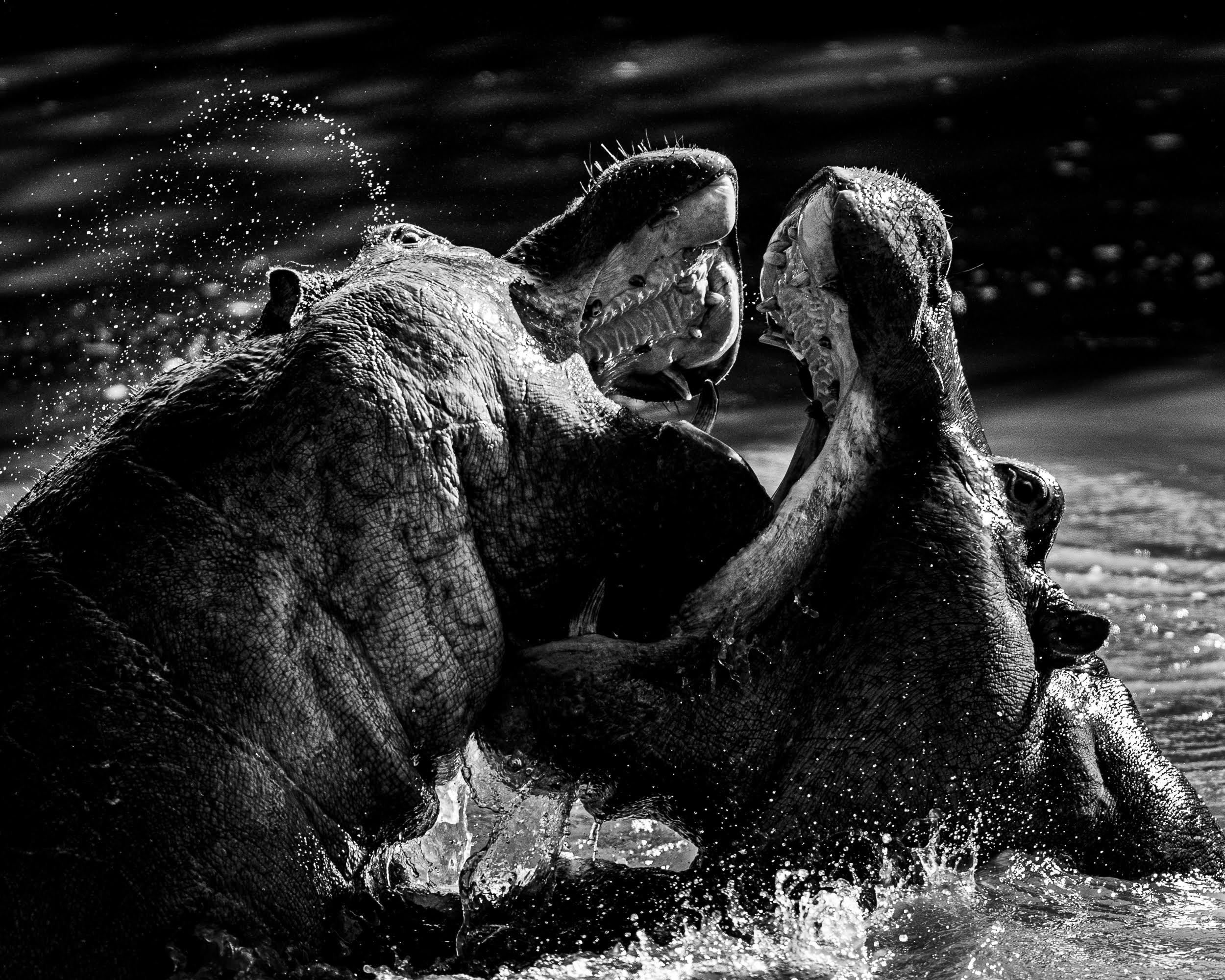
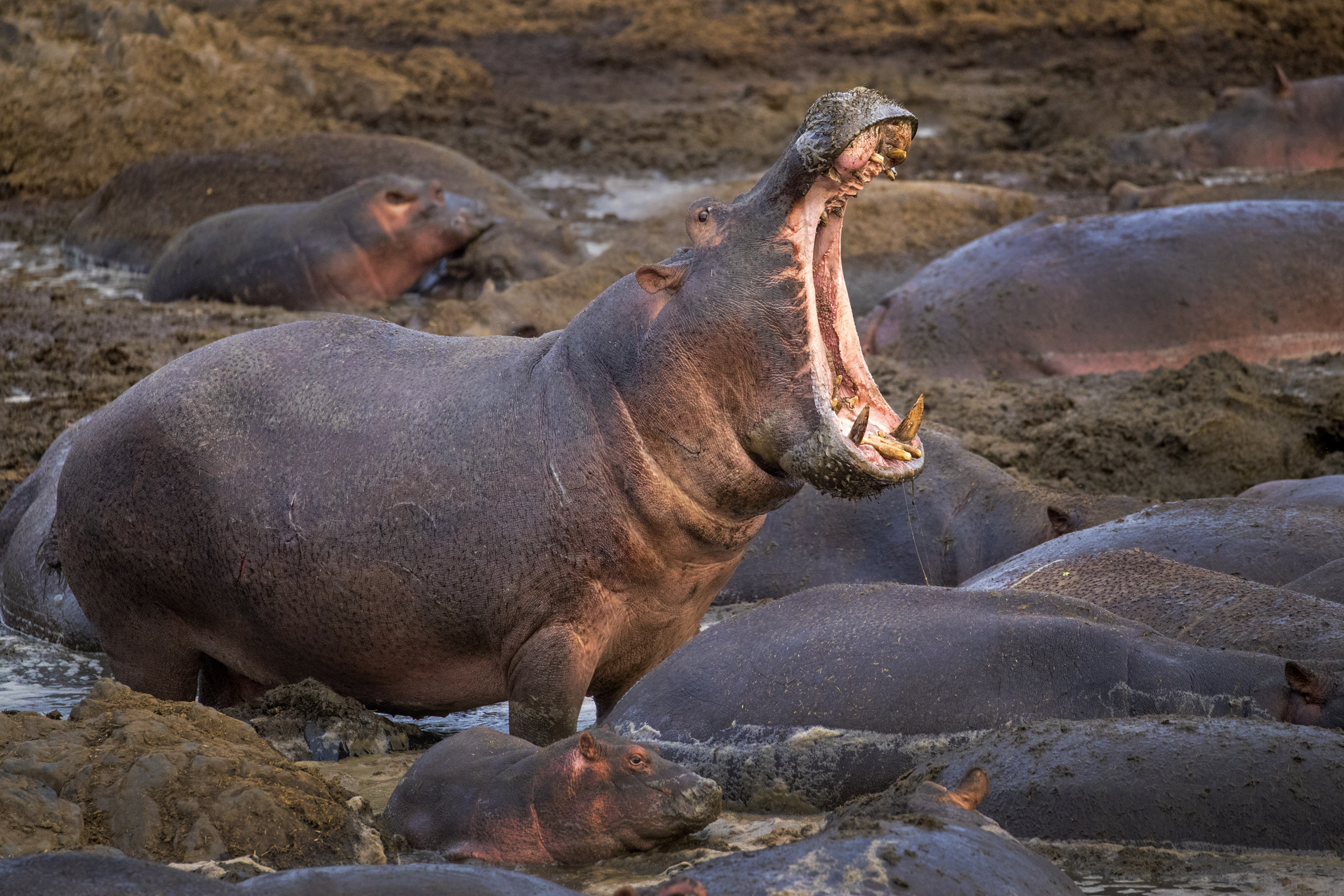
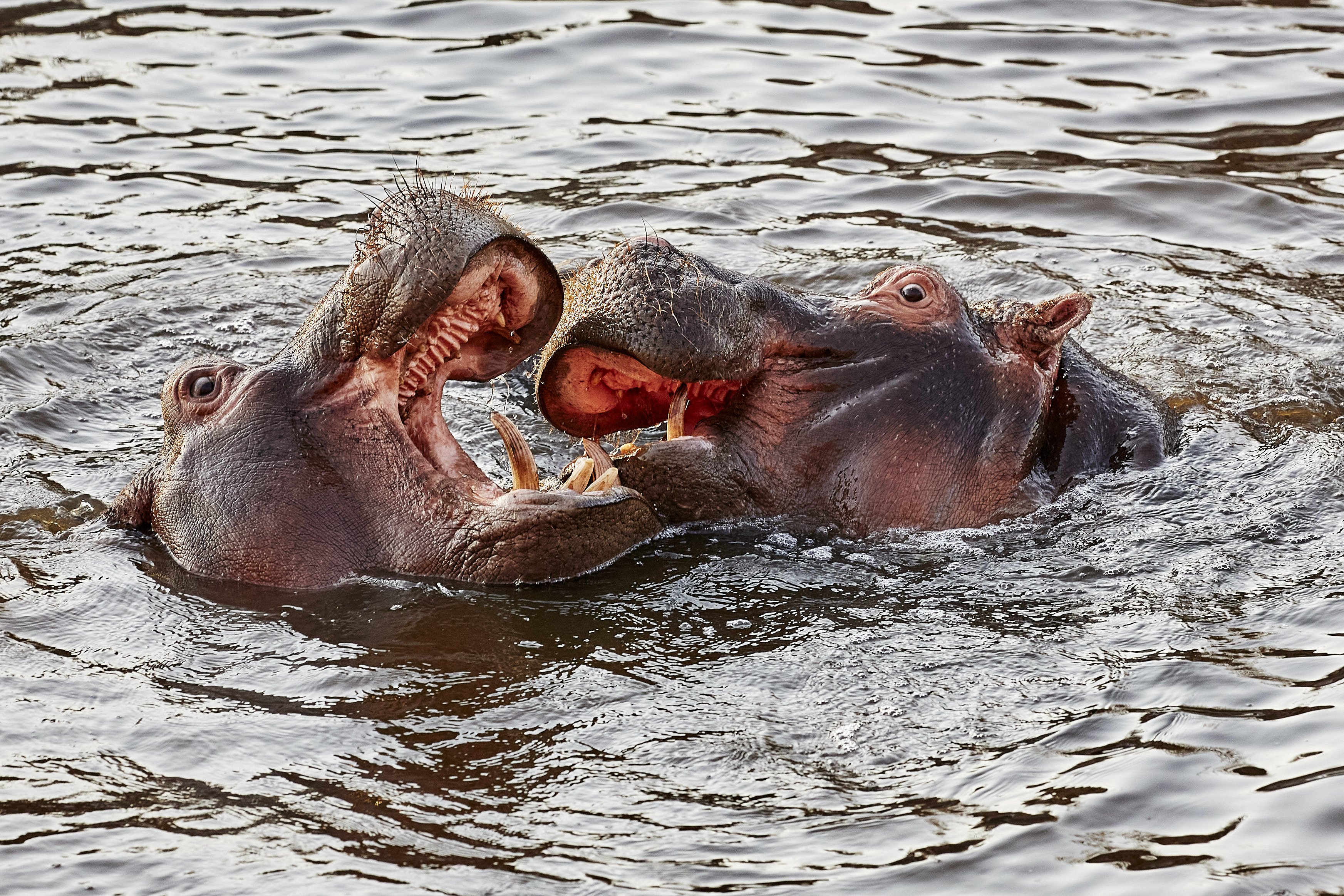
The availability and the access of hippos to water determine many aspects of their biology. The big males defend stretches of water from other males and allow juveniles and females with their young to use the water. The size of these hippo pods can vary from just a handful of individuals to as many as a hundred. The territorial males tolerate bachelors in their pods as long as they do not get up to mischief with any of the females and also behave submissively to him. Fights for the territory between big males are frequently fierce and they can inflict massive damage on each other. It is not uncommon to see males that have been thrown out of a pool walking across the savannah with horrendous injuries, suffering in the midday sun. Minor conflicts are usually settled by threat displays, of which the “yawn” is the most obvious.
Photo by: Todd Gustafson
Photo by:Karamveer Palna
Climate Rain and Hippo Conflicts
In 2019, the surface waters of the Indian Ocean close to Africa’s east coast, turned unusually warm, while the waters further east were cool, a phenomenon known as the Indian Ocean Dipole. As a result, there was exceptional rainfall in Arabia and Africa including some rare cyclones. This heavy rainfall formed several ephemeral lakes in Arabia and resulted in rapid plant growth and locust breeding. These locusts swarmed across Ethiopia and Somalia and into Kenya and Tanzania. The consequence of this has been devastating for many Africa farmers and of course affected the natural vegetation and wildlife.
In late 2019, Lake Naivasha’s basin in Kenya received three times its usual rainfall and the 2020 rainy seasons were also wetter, so the lake has risen by more than 12 feet (~4 meters). Coupled with this, there has been massive deforestation around the lake over the past few decades, so the water ran straight into the lake displacing thousands of people and wildlife. Houses, tourist cabins, and even greenhouses are now underwater, and several lakeside towns submerged. Increased flooding means the hippos lose their grazing lands, so at night the hippos come to the edge of the current lake and start looking for food where they bump into fences and conflict with people.
Photo by: Peter Hudson
Photo by: Amartya Mukherjee
Photo by: Amartya Mukherjee
Then Covid_19 hit, people were unable to make a living with their regular jobs and many people were forced to seek other ways to obtain food and income. Before Covid-19, there were 180 licensed fishing boats on the lake, probably far more than the fish population could support sustainably. Now, on the southwestern shore the boat landing is over-run each morning with fishermen unloading their catches. People are out day and night wading into the lake to try and catch as many fish as they can and in so doing the number of human-hippo conflicts have escalated dramatically. The solution to this is far from clear, the local people want the hippos culled and say there are just too many and yet this is all a consequence of climate change, habitat loss and increasing human pressure on dwindling resources.
This tale is not new, I have been talking to friends in the Himalayas, the Australian outback, the Arctic ice sheets and the Amazon basin who tell similar stories about the real impacts of climate change and how they interact with habitat destruction to spell disaster for people and wildlife. The sad thing is that we in the western world need to take responsibility for this now and put it right. In June, Jo Biden will attend the G7 meeting and then the Climate Change Conference in Glasgow in November.
America needs to rectify the environmental disasters caused by their previous president and we need real leadership with dramatic changes in policy before our planet system collapses further. At the same time each of us needs to take responsibility for what we eat, drive and our use of resources. What makes me sad is that more than 50 years ago, when I was a young boy we were saying exactly the same, surely now we must act.
By Peter Hudson and Kaitlyn Baker
| Photos by Peter Hudson, Amith Krish, Dr Noushad Ali, Hermis Haridas, Deepa Girish, Aminlal Ami, Nikhil Singh, Anidas, Aghil K K, and Nisha Purushothaman
By Peter Hudson and Kaitlyn Baker
| Photos by Aarav Rasquinha, Anil T Prabhakar, Imadeddin Alaeddin, Michael Jansen, Viji Abraham, Nirav Modi, Noushad Ali, Peter Hudson, Kaitlyn Baker & Nisha Purushothaman
By Peter Hudson
| Photos by Peter Hudson, Muhammed Asharaf Kariyil, Deepa Girish, Gopala Krishnan, Shyam Menon, Kalika Shah, Sajeev Kumar Krishnan, Girish Gopinath Dr.K.M.Anand, and Nisha Purushothaman,
By Peter Hudson with Mary Fick
| Photos by Deepa Girish, Peter Hudson, Hermis Haridas, Syed Ahmar Amjad, Chintan Gohel, Kalika Shah, Sajeev KTDA, Sibin Nelson, Solomon Rajkumar, and Nisha Puruhothaman
By Amanda Monahan with Dr. Peter Hudson
| Photos by Peter Hudson, Amanda Monaha, Amith Krish, Seema Suresh, Ish Modha, Avinash Rajendran, Indresh Saluja, Jeevan, Kamal Varma, Shreya Patel, Madhur, and Nisha Puruhothaman
By Kaitlyn Baker & Peter Hudson
| Photos by Peter Hudson, Amith Krish, Prasanth Tatineni, Eric Seemann, Harshad K, Thomas Bretschneider Deepa Girish, Kaitlyn Baker, Vera Huston, Hermis Haridas, Manu Reghurajan, Gustavo Costa, and Nisha Purushothaman