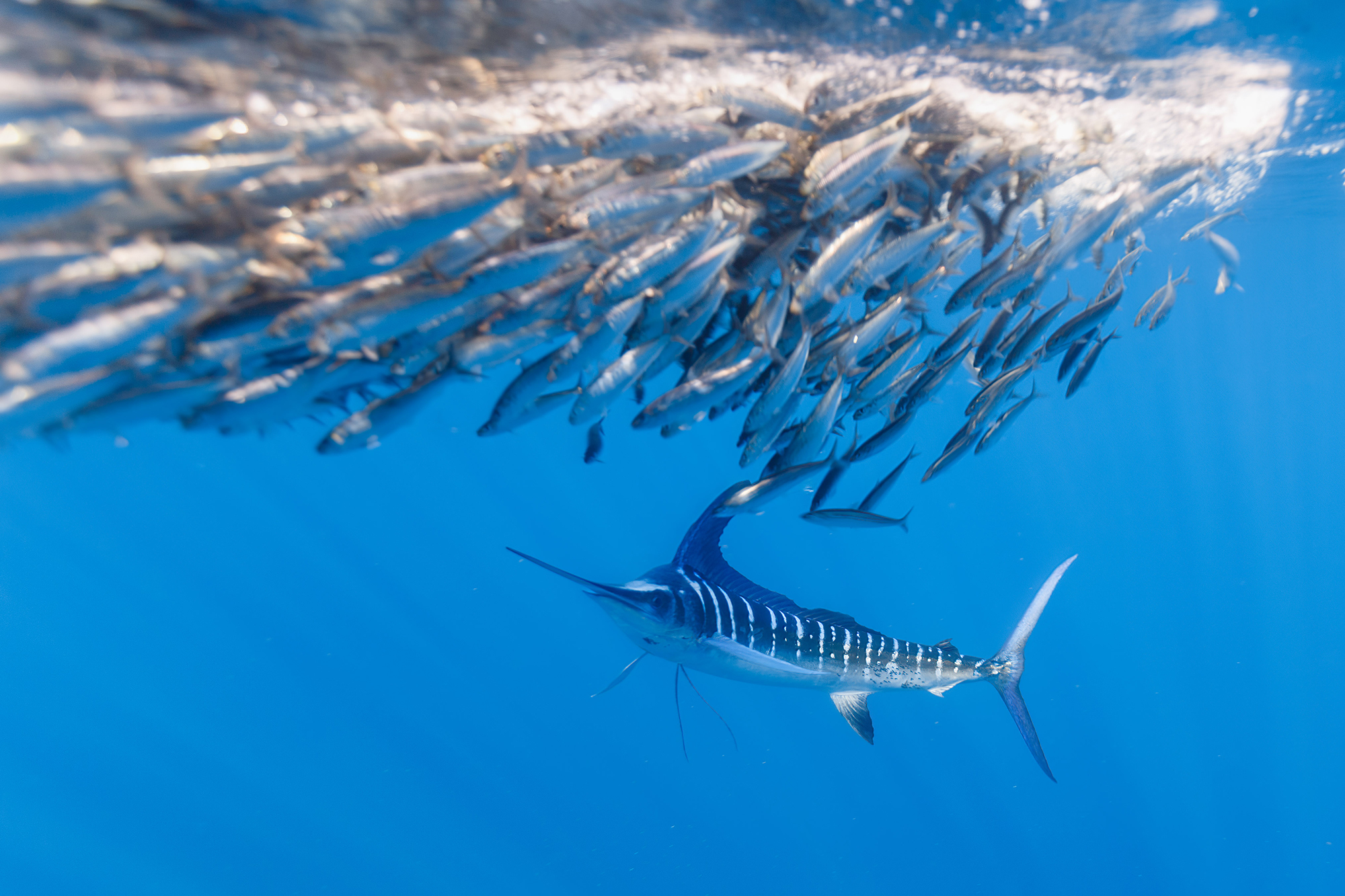
In the distance we can clearly see how a group of sea birds flies over an area and several of them diving into the sea. There it is! The captain warns us as he heads the boat in that direction and accelerates to full speed to get there as fast as possible. When we arrive, the scene is boiling over. Small silver fish leap out of the water in a desperate attempt to survive as dark triangular-shaped dorsal fins cut the surface of the water. To the voice of Go! I jump out of the boat and find myself engulfed by endless bubbles. In a few seconds the bubbles disappear, and I have before me a natural spectacle that leaves me speechless …
Animal migrations are events that contain nuances of majesty and drama in equal doses. From the fragile monarch butterflies that fly thousands of kilometers in North America to the immense herds of wildebeest that roam the African savannah, we have plenty of examples on the planet of diverse species that undertake long, and dangerous days of march driven by an ineffable impulse that forces them to obey the mandates of the life cycle. In the ocean there are also these impressive manifestations of the natural world and one of them is the one that we can witness from October to December every year in Magdalena Bay, Mexico.
Our tour begins in the city of La Paz, capital of the state of Baja California Sur. From there we cross the peninsula from east to west to arrive at Puerto San Carlos, a small town located on the coast of Magdalena Bay, the gateway to the immense Pacific Ocean. Since its origins its inhabitants have been dedicated to fishing, but relatively recently they have begun to understand the value of nature observation tourism. This is because from August to January in this sector of the Pacific the sardines approach the bay forming huge balls, which in turn attracts their main predators, including sea lions, whales, dolphins and the species that we came to document, the striped marlins.
We left the port very early, with the first rays of the sun. Approximately 60 nautical miles await us to reach the area where these formidable fish gather to hunt.
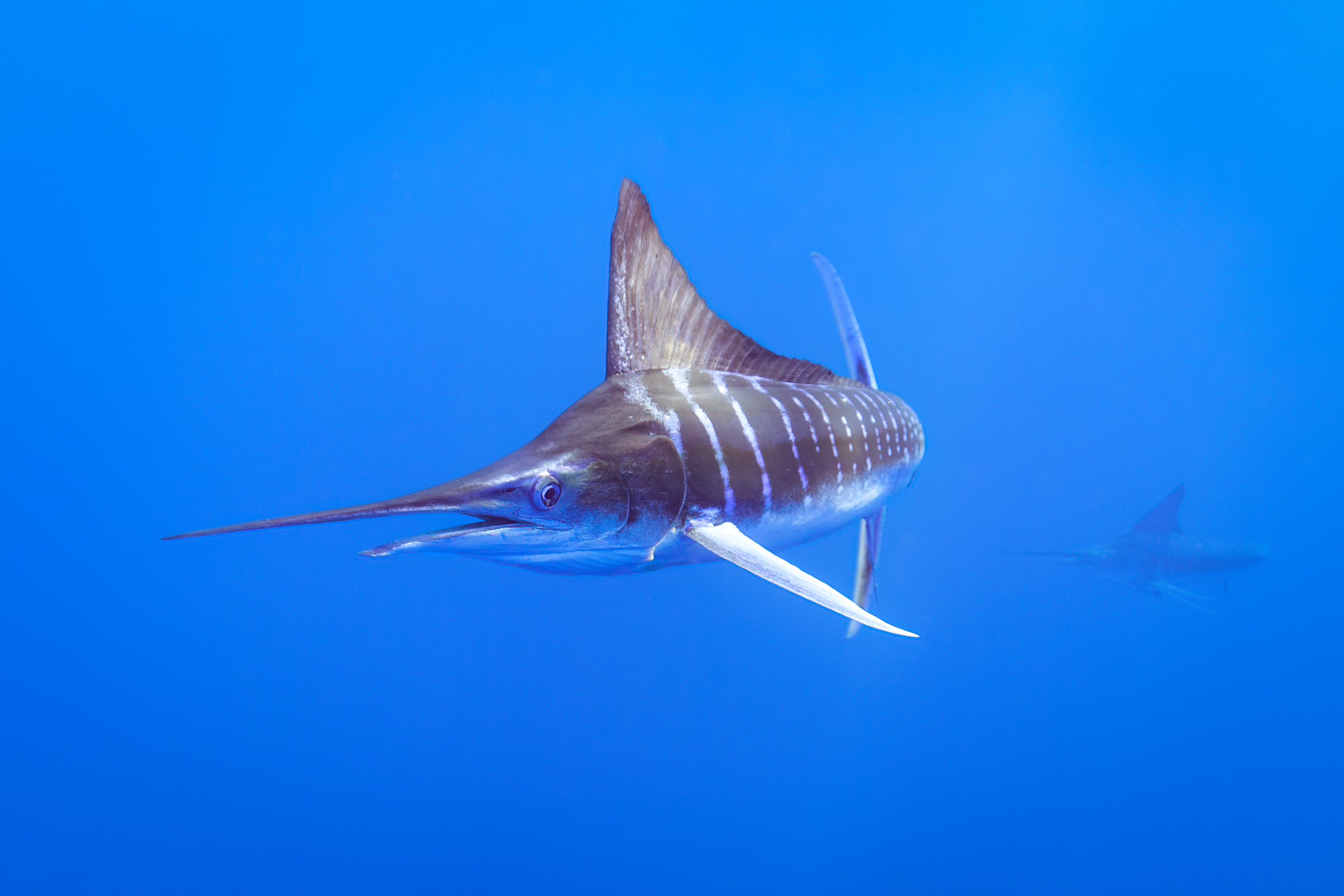
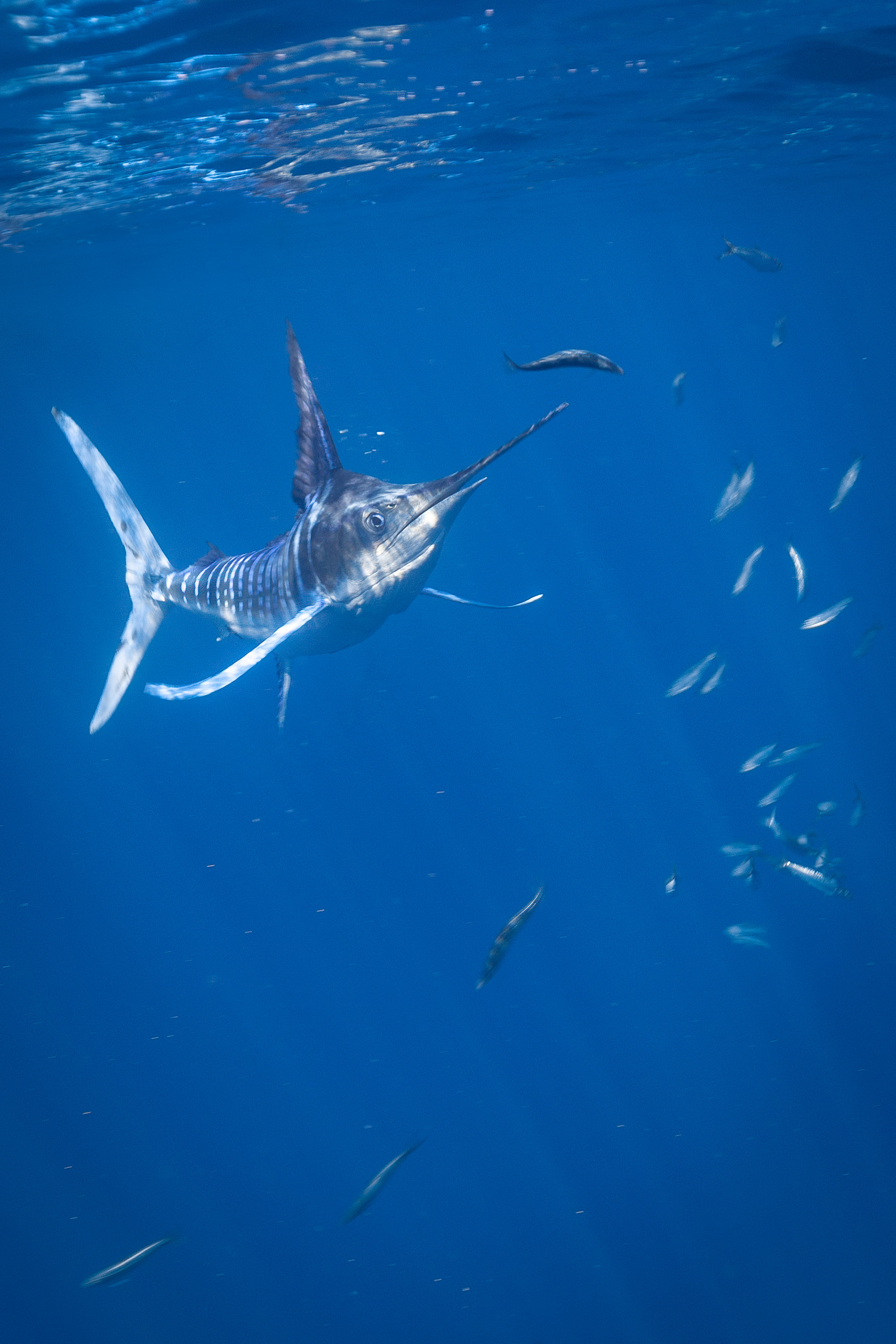
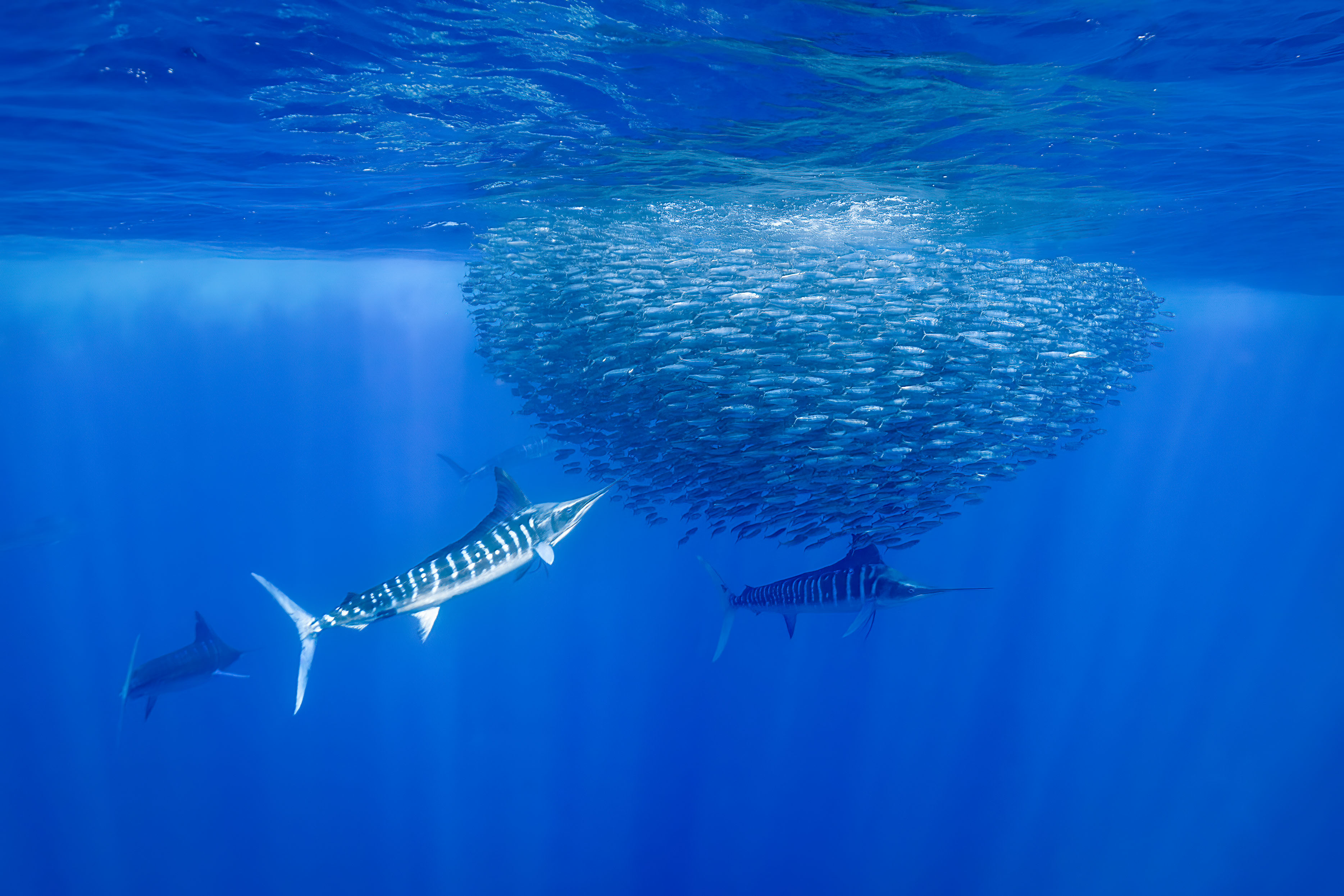
Striped marlin (Kajikia audax) is a species of marlin found in the tropical and temperate zone of the Indo-Pacific oceans. It is a fish that can weigh more than 200 kg and reach a maximum length of 4.2 meters. The striped marlin is a predator that hunts during the day in the first 100 meters from the surface, and it is exactly what they are doing when I fall into the water.
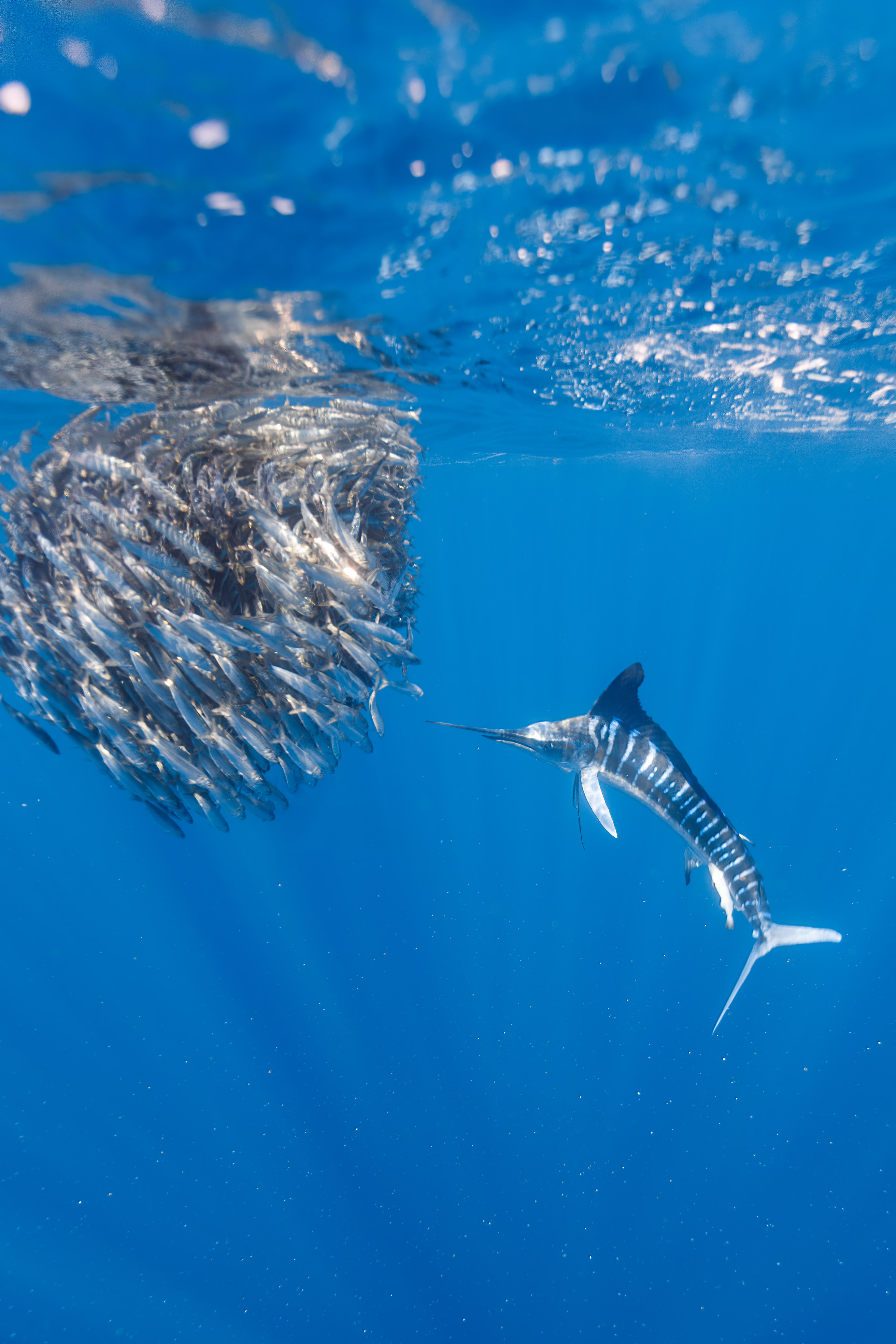
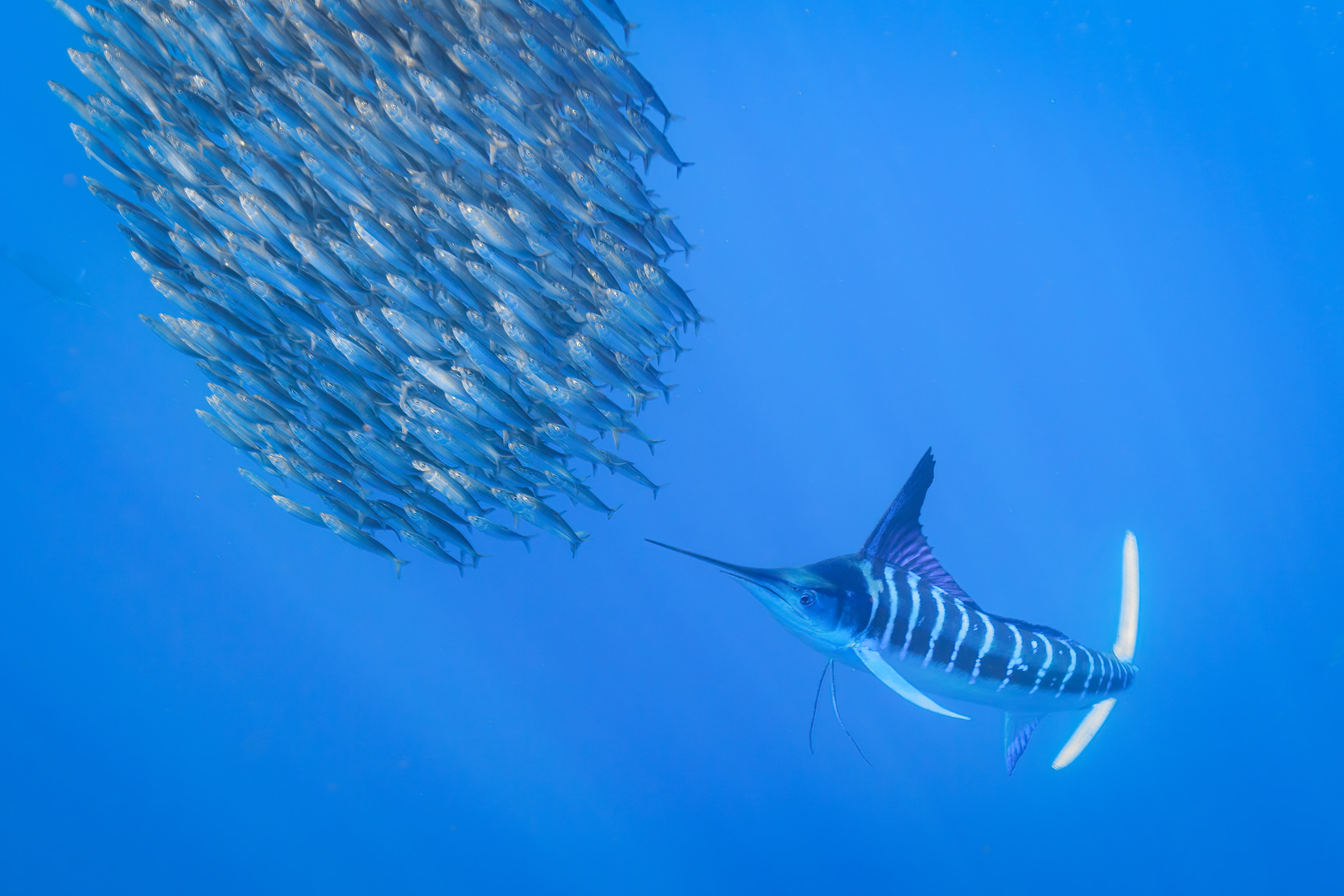
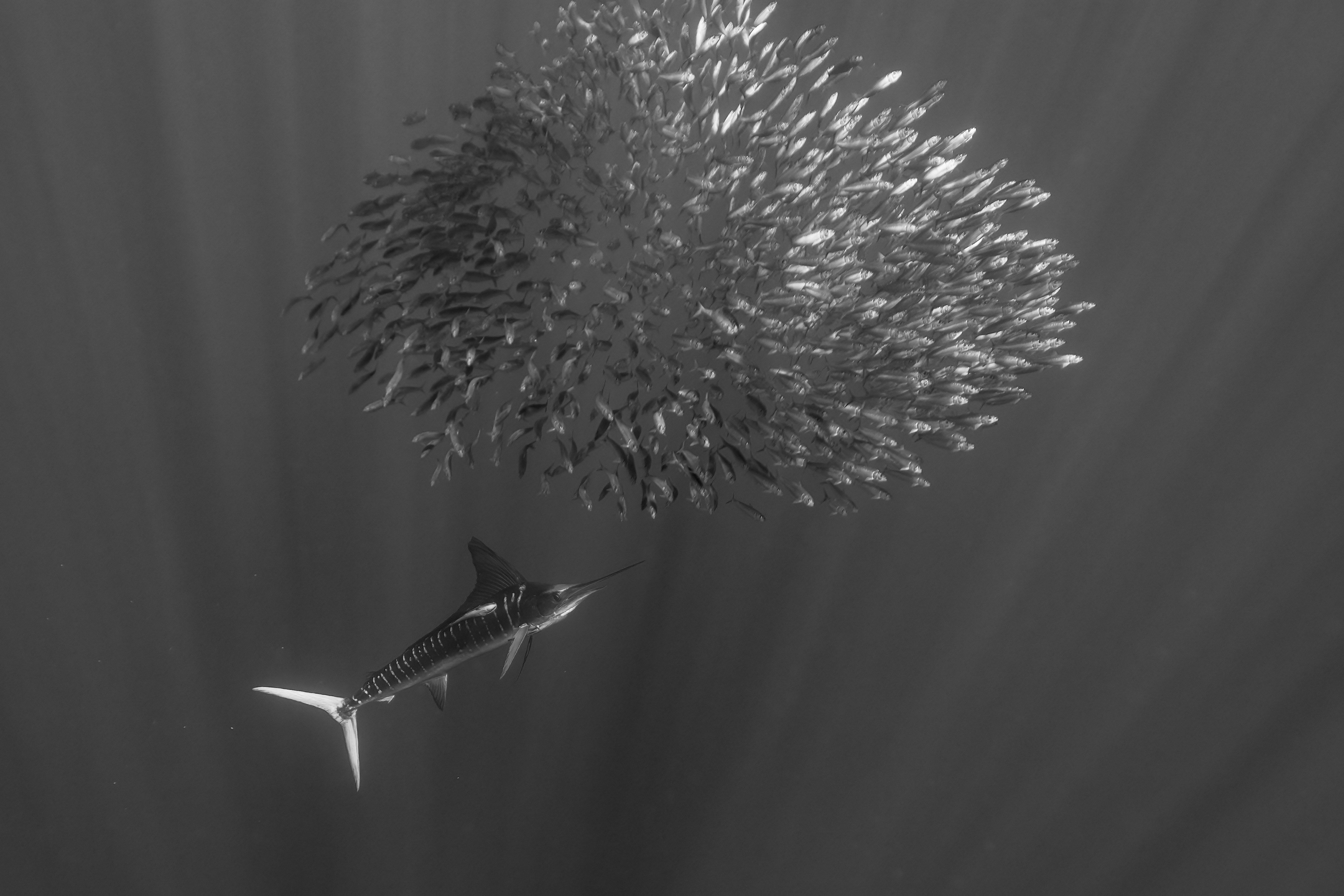
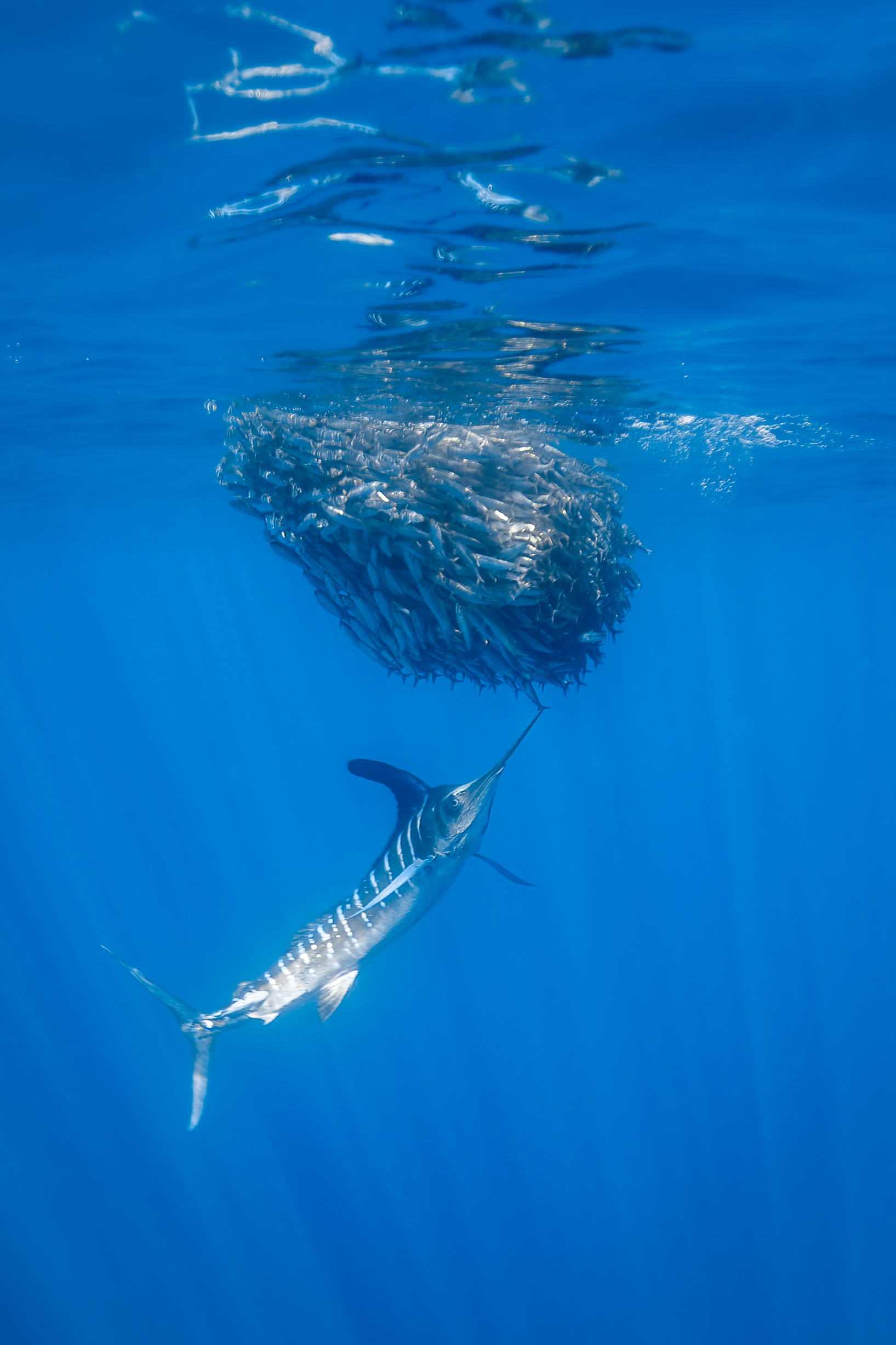
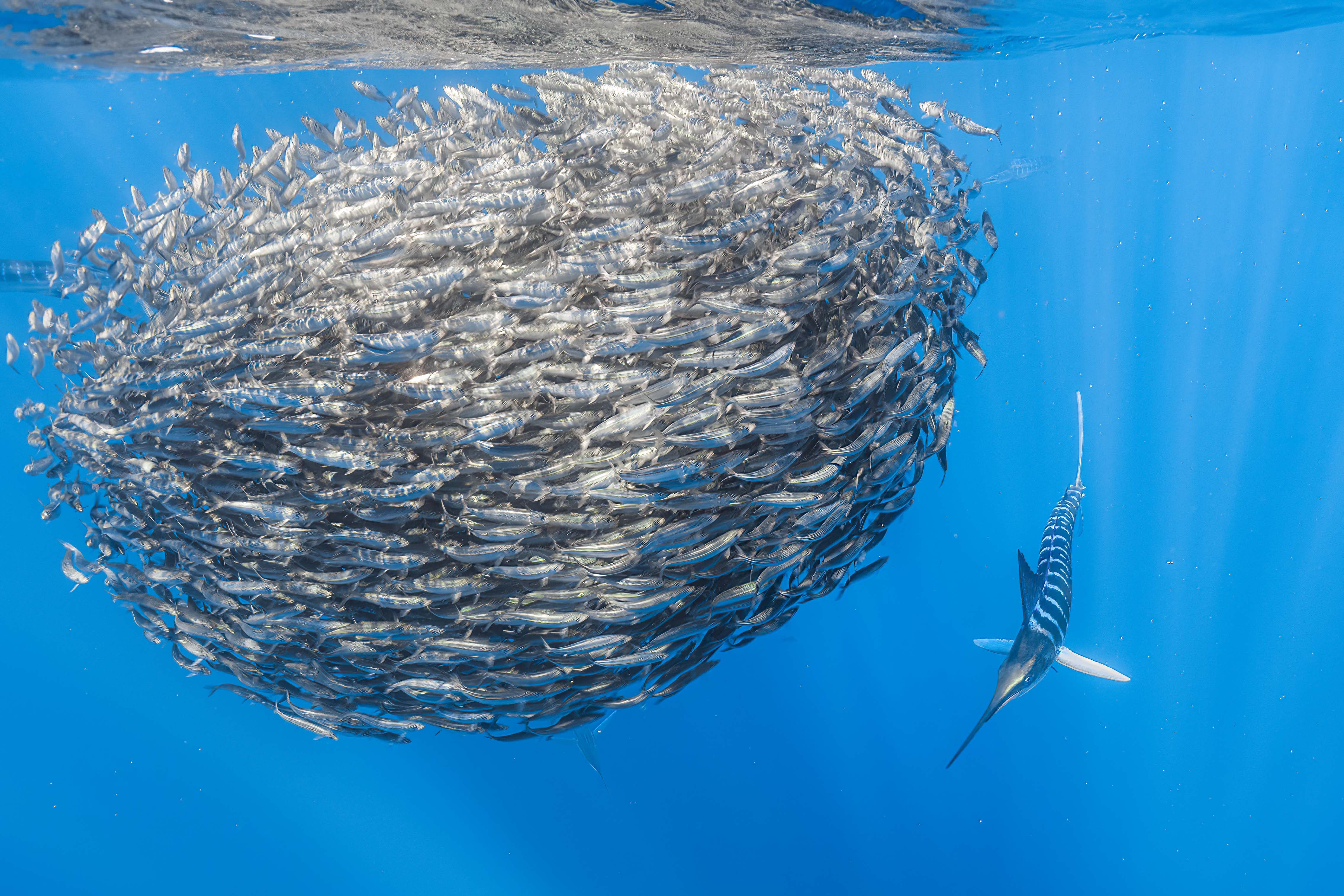
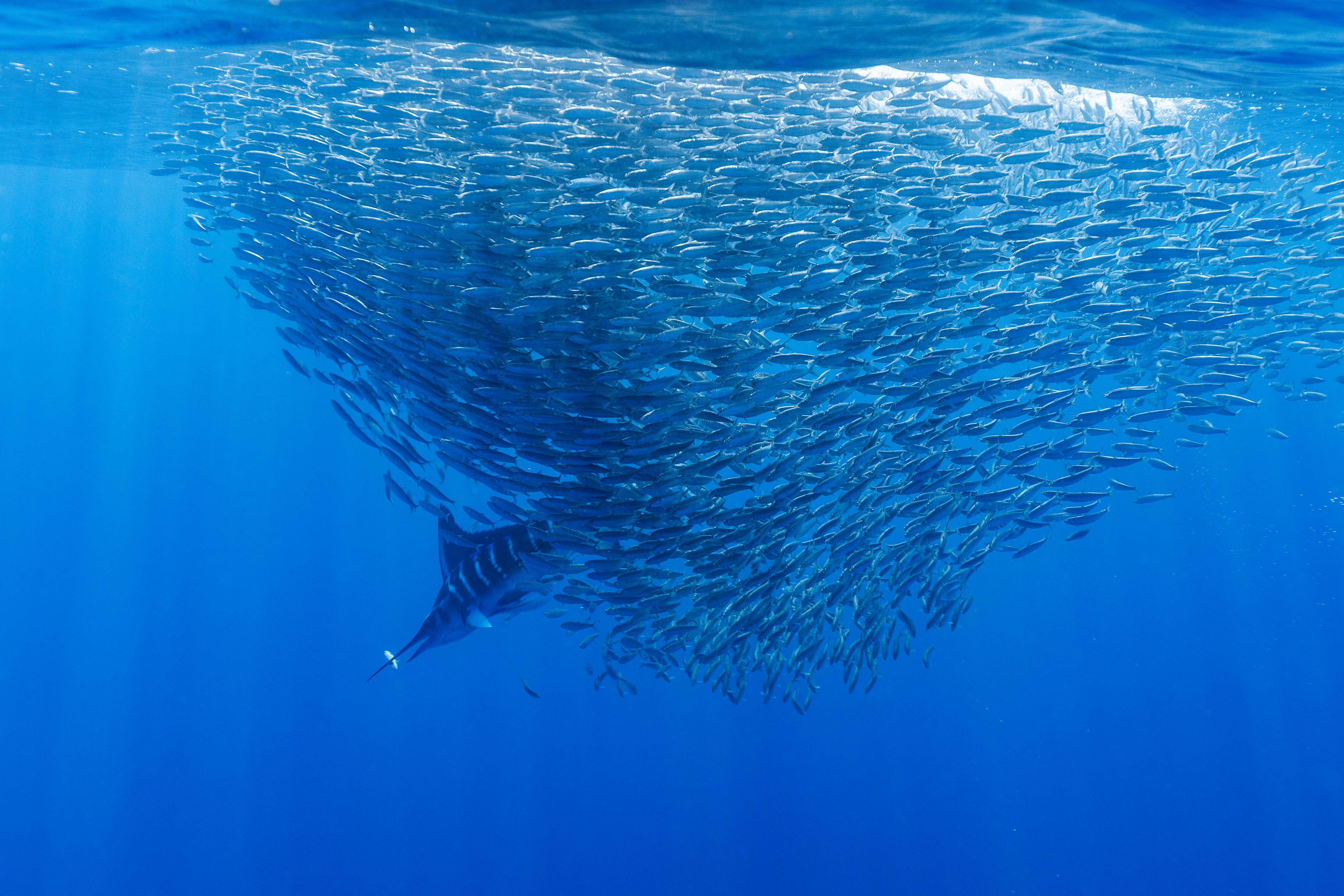
The underwater scene is presented before my eyes in a frantic and dramatic way. A few meters away, I am able to count more than thirty marlins that chase and corner the sardines and in successive and fast attacks they launch themselves over the ball trying to catch their victims, who are forced to get closer and closer to the surface. This, in turn, puts them at the mercy of seabirds that fly over the action attacking them from above.
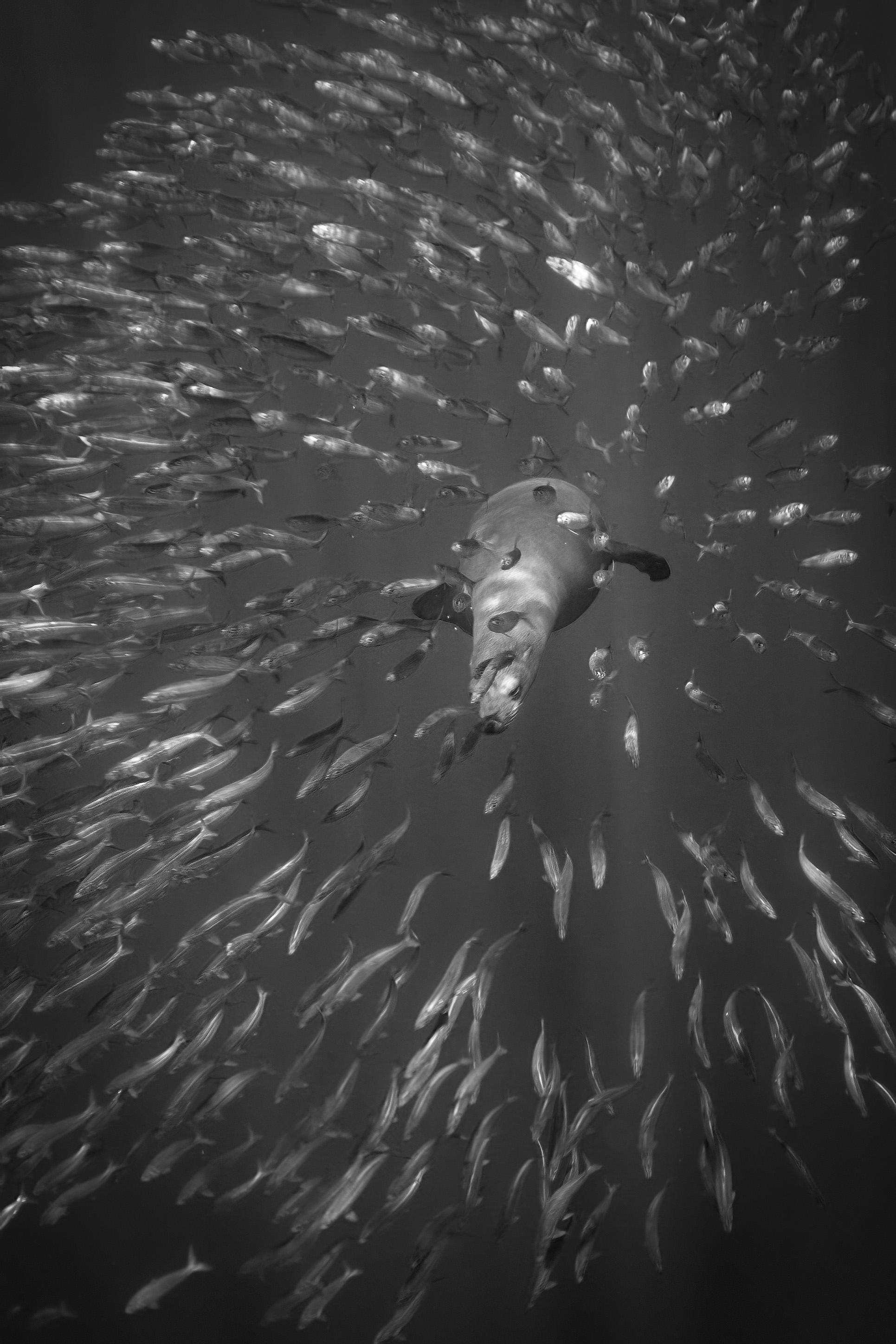
The strength of sardines lies in their large number and in staying together, the ball of fishes moves as if it were a single individual. If a sardine is separated by just a short distance from the rest, it means the end. The strength of marlins is their extraordinary speed. They are one of the fastest fish on the planet, reaching speeds of up to 70 kilometers per hour. This characteristic becomes noticeable when they are thrown in furious accelerations on the ball of fishes. These frenzied casts start and end in seconds, and they’re so fast it’s nearly impossible to catch them with the naked eye. Not all attempts are successful, but the vast majority end with a member of the ball and countless scales floating in the water. While the marlins are the stars of the action, they are not the only ones interested in feeding on the defenseless sardines. On several occasions the sea lions join the feast, first chasing the marlins away and then hunting comfortably, although the two species are often seen attacking the balls simultaneously. Slowly the ball of sardines gets smaller and smaller, and the surviving fish sometimes seek refuge under the divers who are observing the scene floating on the surface, allowing these impressive predators to be admired or photographed sometimes from inches away.
At first glance it seems that the action develops randomly, and I could even say chaotically, but when I stop to observe in more detail, I can realize that there is a kind of choreography or turns procedure among the marlins, by which the vast majority of individuals stay below and around the ball, while two or three individuals attack it. Once these individuals achieve their objective, they take the place of raiders and others take the place of attackers. It is a wonderful mechanism of cooperation between the marlins that leaves me completely amazed.
The action is extremely dynamic, the marlins and sea lions run after the sardine ball, which rarely remains static enduring the siege. So, the game consists of jumping into the water, swimming next to the fishes for a few minutes and, when they move away or the forces leave us, get back into the boat. The captain in turn moves the boat closer to the action to re-enter the water and so on. It is a physically demanding activity, which requires considerable physical condition to keep up with the action.
Eventually the action ceases. The marlins disappear and the sea lions scatter, probably in search of larger balls, leaving only a blue calm dotted with millions of scales from the devoured fish at the site of the battle.
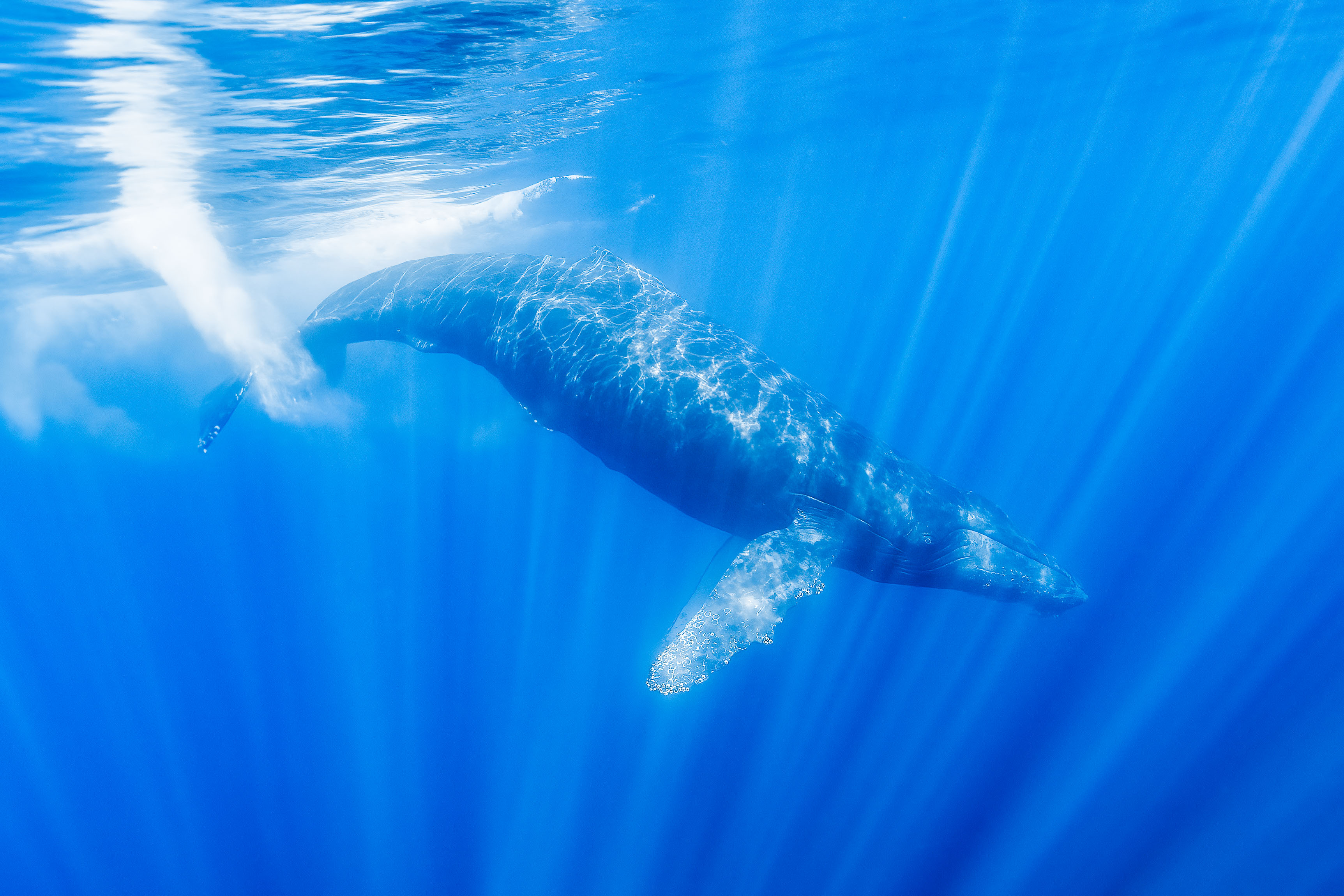
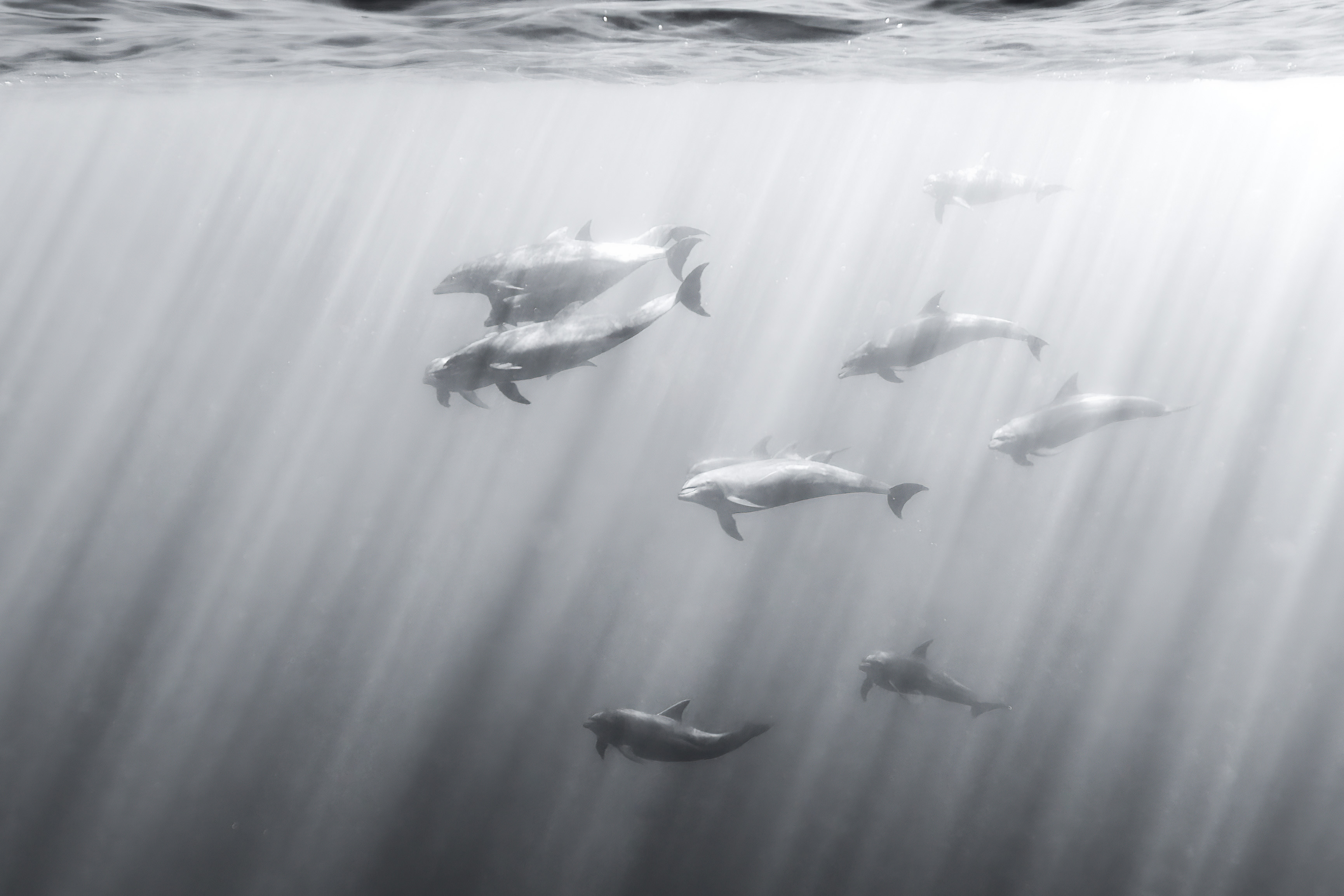
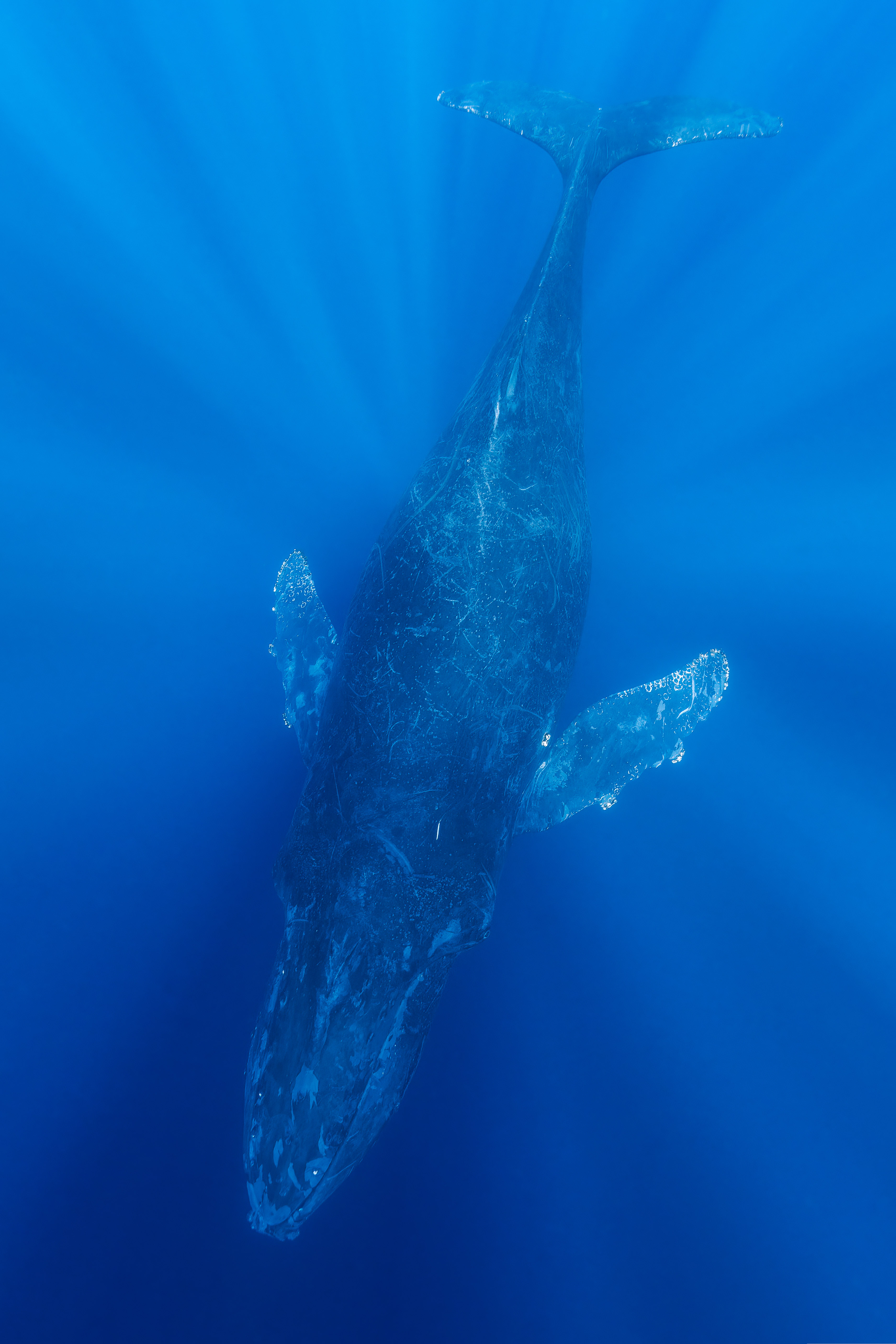
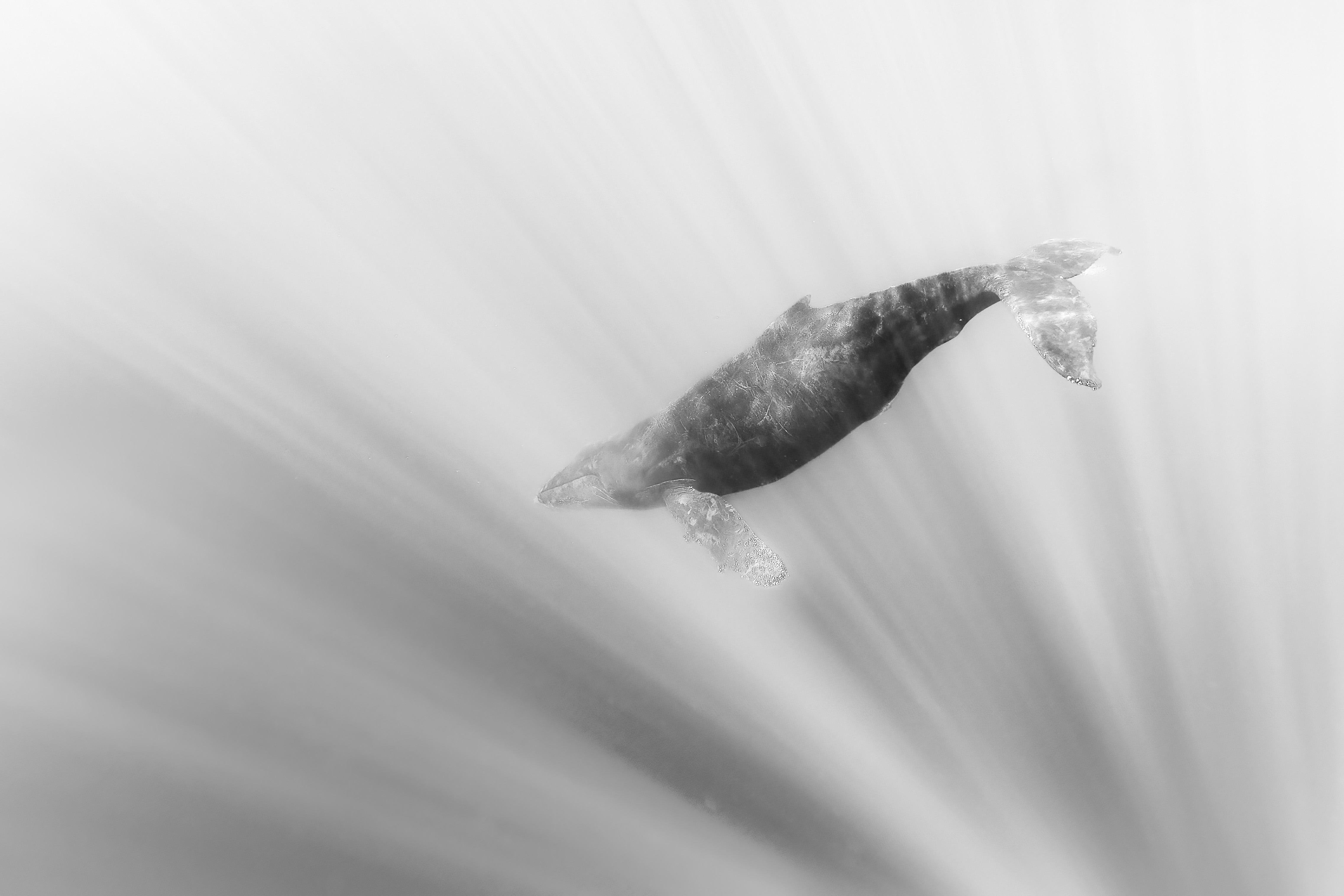
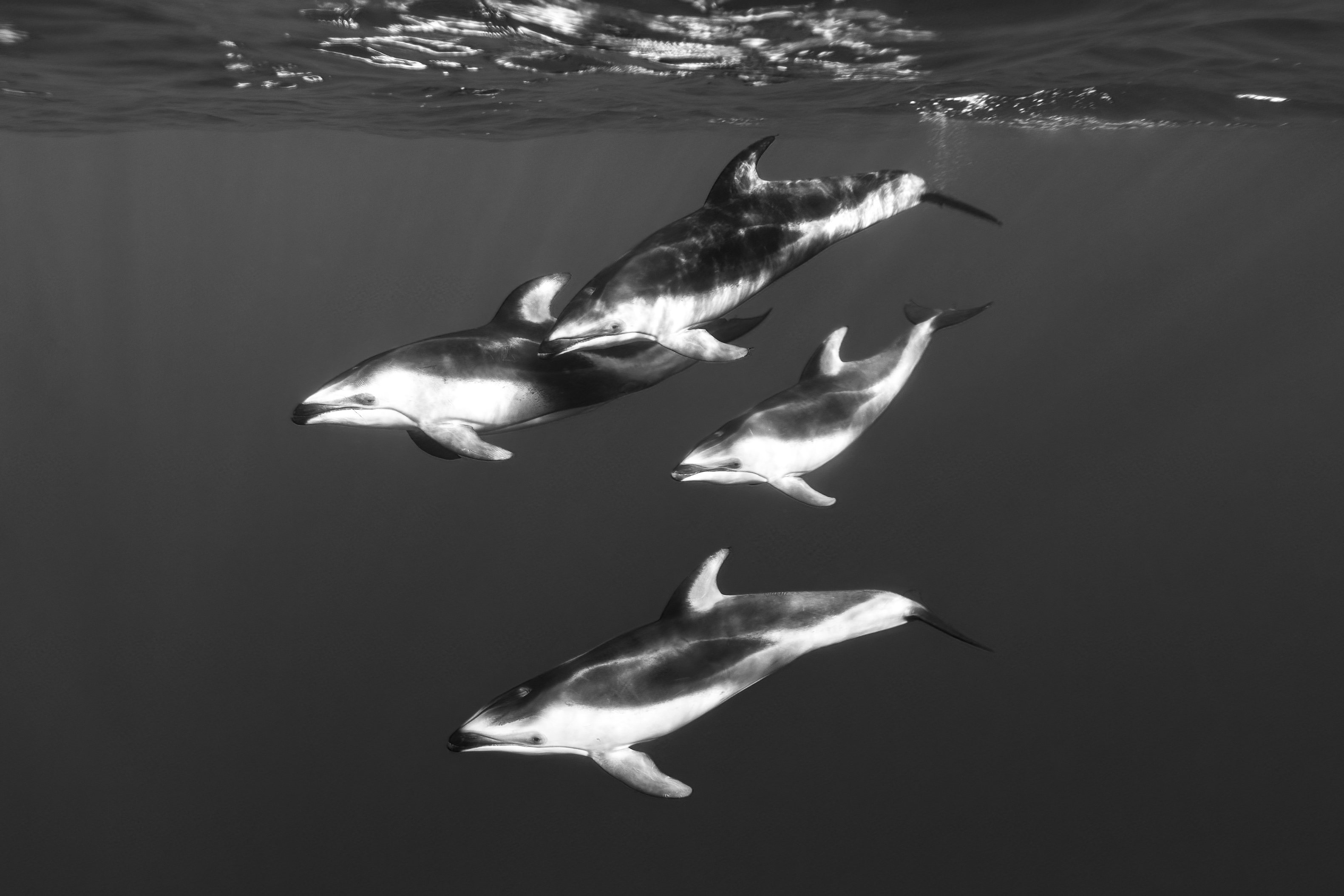
There are days when several of these events can be observed, while on others the marlins remain on the bottom of the ocean without being seen. However, this sector of the Pacific Ocean offers the possibility of observing other fascinating marine species, such as dolphins, sea turtles, mobules or the great inhabitants of the ocean, whales. Several species cross these waters, including Blue, Bryde, and Gray, but Humpback Whales are the most commonly observed. Humpback whales (Megaptera novaeangliae) arrive ashore in Baja Sur California in midOctober. They come here after a long migration from the northern Pacific Ocean, to find mates, give birth and raise their young. It is not uncommon to see females traveling south in the company of their calves born the previous year, or groups of males fighting and slapping their massive bodies against each other to attract the attention of a lone female.
Entering the water to swim with the whales is prohibited in Mexico, but on several occasions the situation occurs that the diver is in the water observing other species and the whales appear, which generally swim by. For those of us who have had this fortune, these few seconds are wonderful, unforgettable and extremely emotional. It is in these rare circumstances that one can correctly size its enormous size. Watching them pass and swim away with their graceful movements is a spectacular experience – one is left floating in the middle of the blue moved to tears and with a feeling of infinite gratitude towards Mother Nature.
At the end of a good day of exploration, you arrive at port exhausted, but with a soul brimming with energy and happiness for having swam in one of the richest and most diverse marine environments that Mexico has to offer.
Gustavo is a professional photographer and scuba diving instructor. Born in Argentina, he moved to the Yucatan Peninsula, Mexico, 15 years ago. His objective is to create evocative images that capture the public’s interest in the natural aspects of the planet and thus raise awareness of the importance of its conservation.
By Hira Punjabi | Photos by Hira Punjabi
PT Explorers 10 Minutes read
ReadEmail: email@pawstrails.com