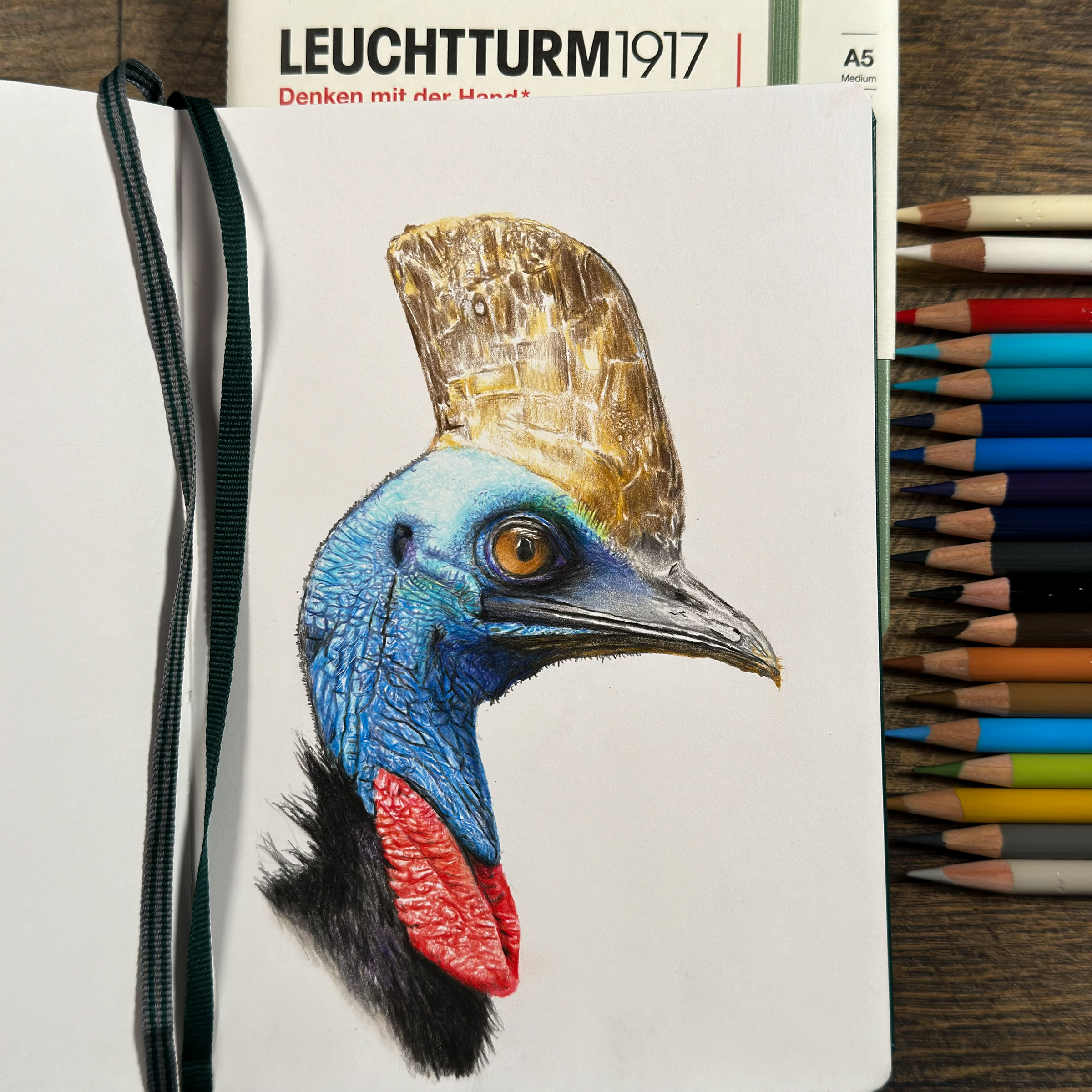
My art practice started long before I thought to call myself an artist. Drawing showed up early and often, in the margins of school notebooks and sketches on scraps of paper. It stayed with me through every career pivot and quiet moment. Today, I’m based in Ottawa, Canada, working in pencil, watercolor, acrylic, oil, and digital. Most days begin or end with drawing inspiration from nature, wildlife, and the space where technology and the outdoors intersect.
I grew up on a hobby farm in Ontario, and my earliest inspiration came from cartoons like “Tom and Jerry” and comic books. I copied animals from those comic books, invented creatures from my imagination, and used whatever materials I could find. There were no classes or mentors, just a pencil, a desk, and time. Though I didn’t pursue formal art education, that early habit of observation and making never left.
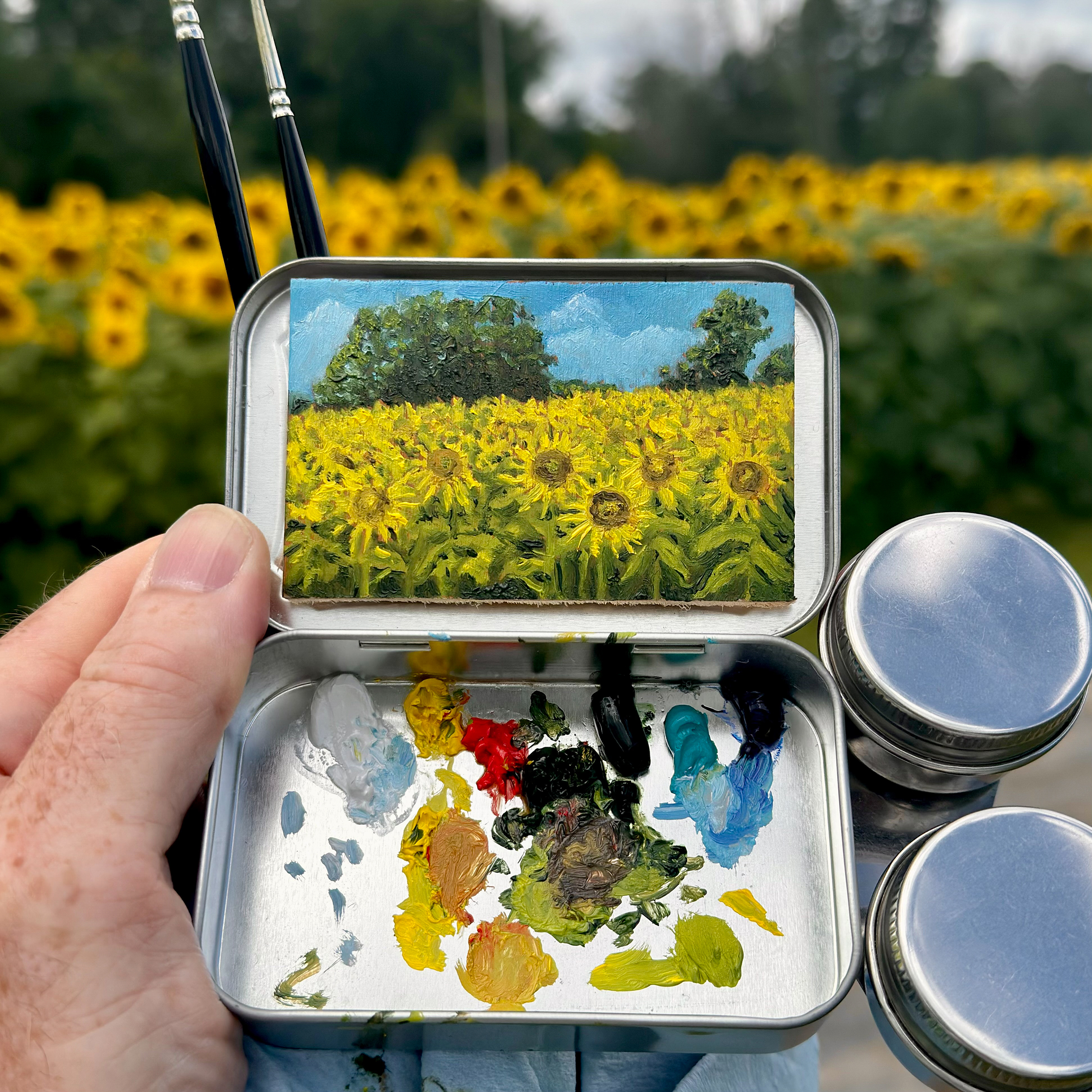
When school and work took over, art slipped into the background. I was a computer hobbyist and hacker in the 80s, then a web designer in the early days of the internet. Over time, I took on a leadership role in health research technology. Even while managing teams, shaping strategy, and building software, I kept sketching quietly on the side. First, as a stay-at-home dad with my oldest daughter, and later with more intention. That consistency became a thread that grounded me.
My day job is technical and structured. It taught me how to manage time, think in systems, and lead without losing curiosity. I used to think my work in tech and my art were separate, but I’ve learned they inform each other. Problem-solving in software helps me push through failed paintings. Leading teams gave me the tools to teach. My day job is also a kind of quiet sponsor, providing the financial stability that allows me to take creative risks and invest in my art practice without pressure to monetize every piece.
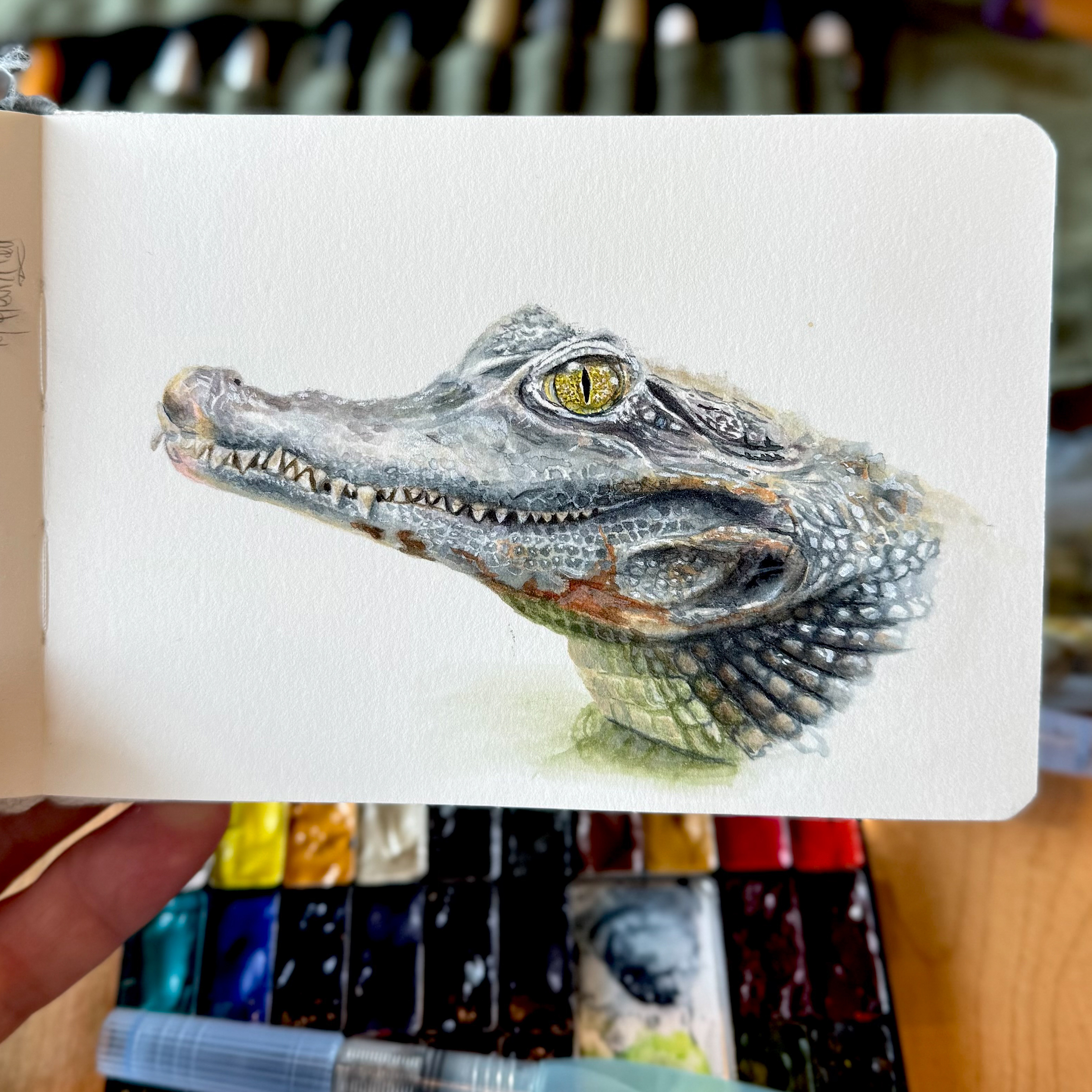
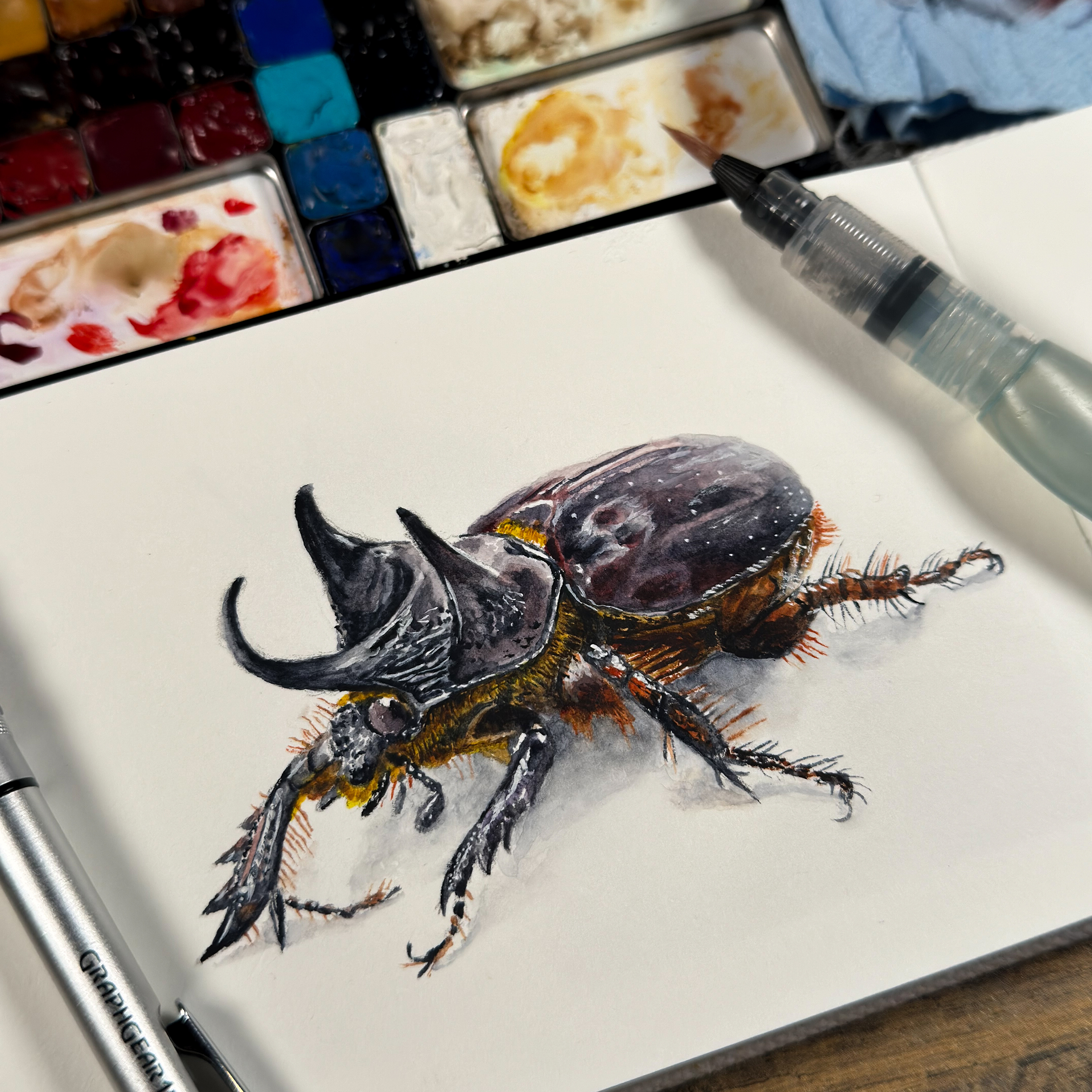
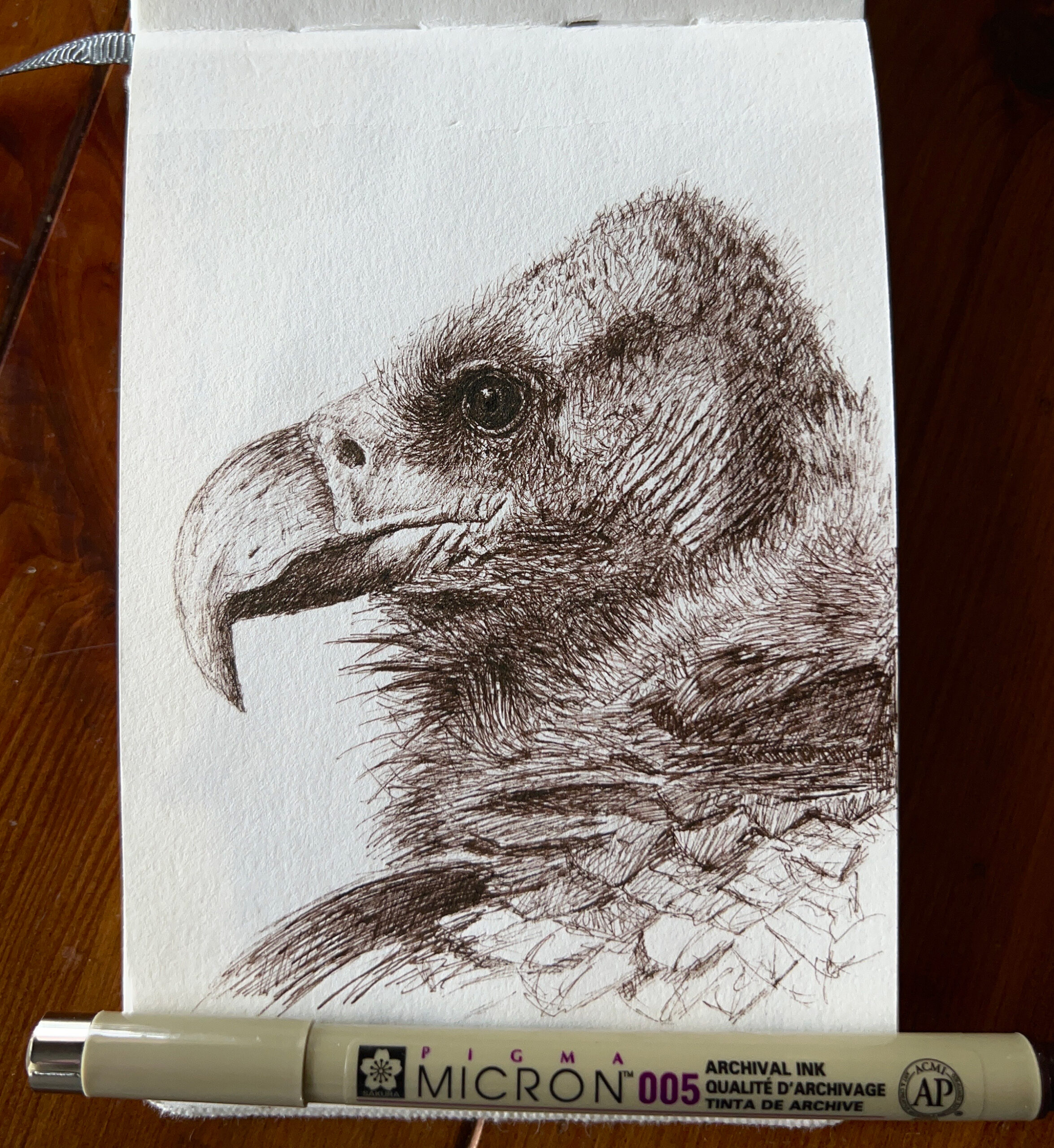
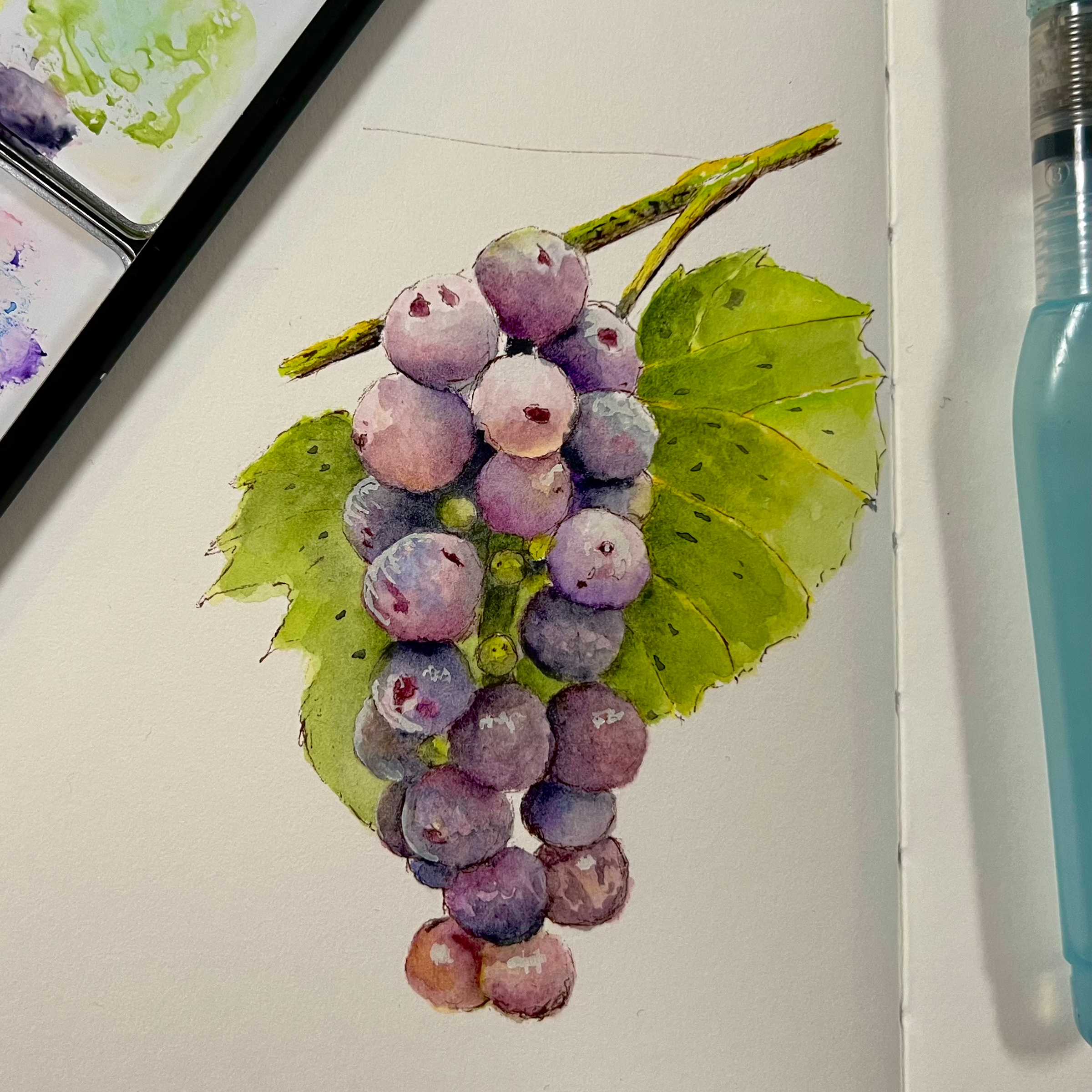
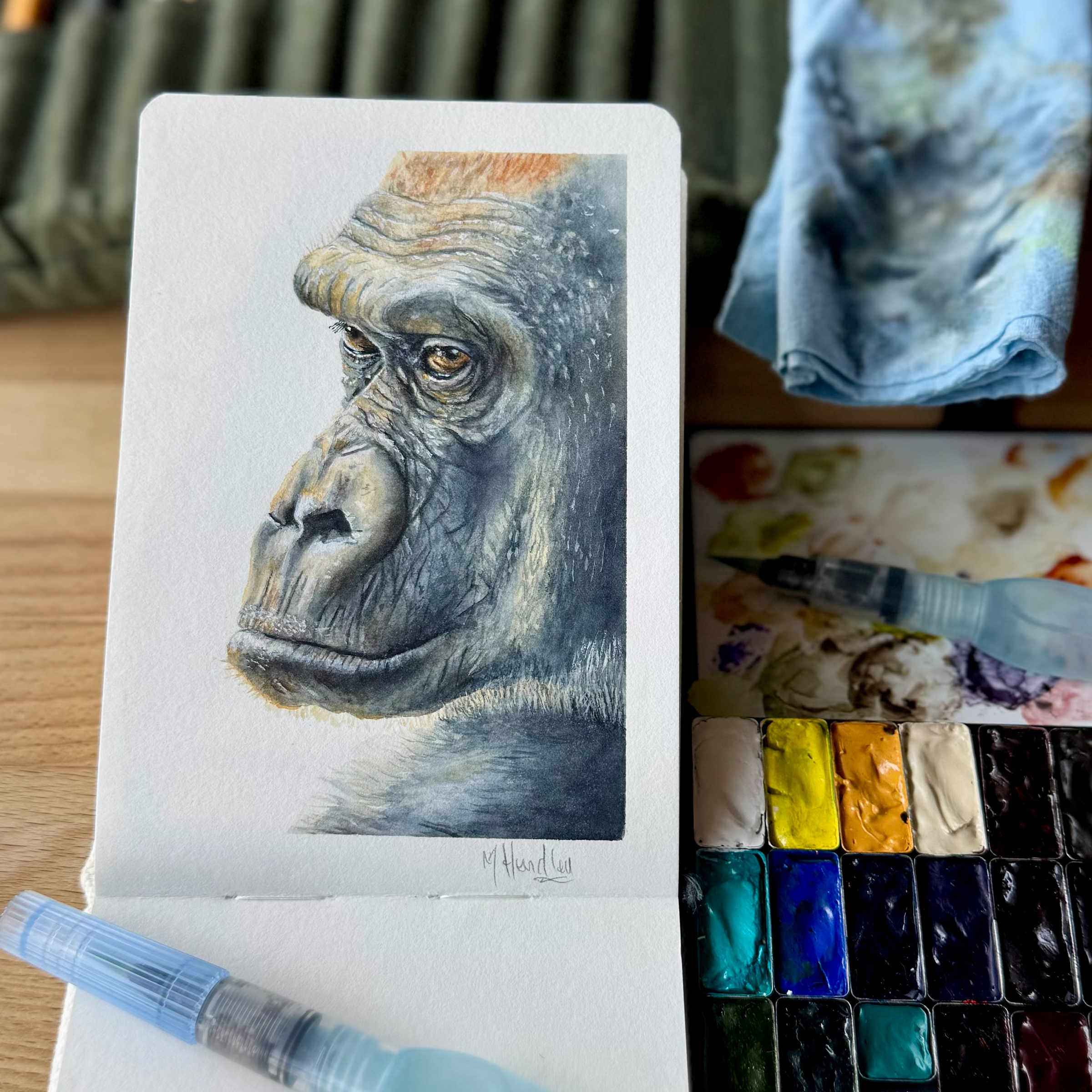
My tools now include graphite, acrylic, watercolor, oil, and digital. Graphite gives me control and precision for animals and textures with a small kit and the challenge of suggesting colour where there is none. Watercolor took me several attempts to embrace, and I have now developed my style of realism using a simple kit and just a waterbrush. Oil lets me slow down and build deeper realism. I’ve come to love oil paint, and it is becoming my primary focus. Each medium offers a way to explore what I see.
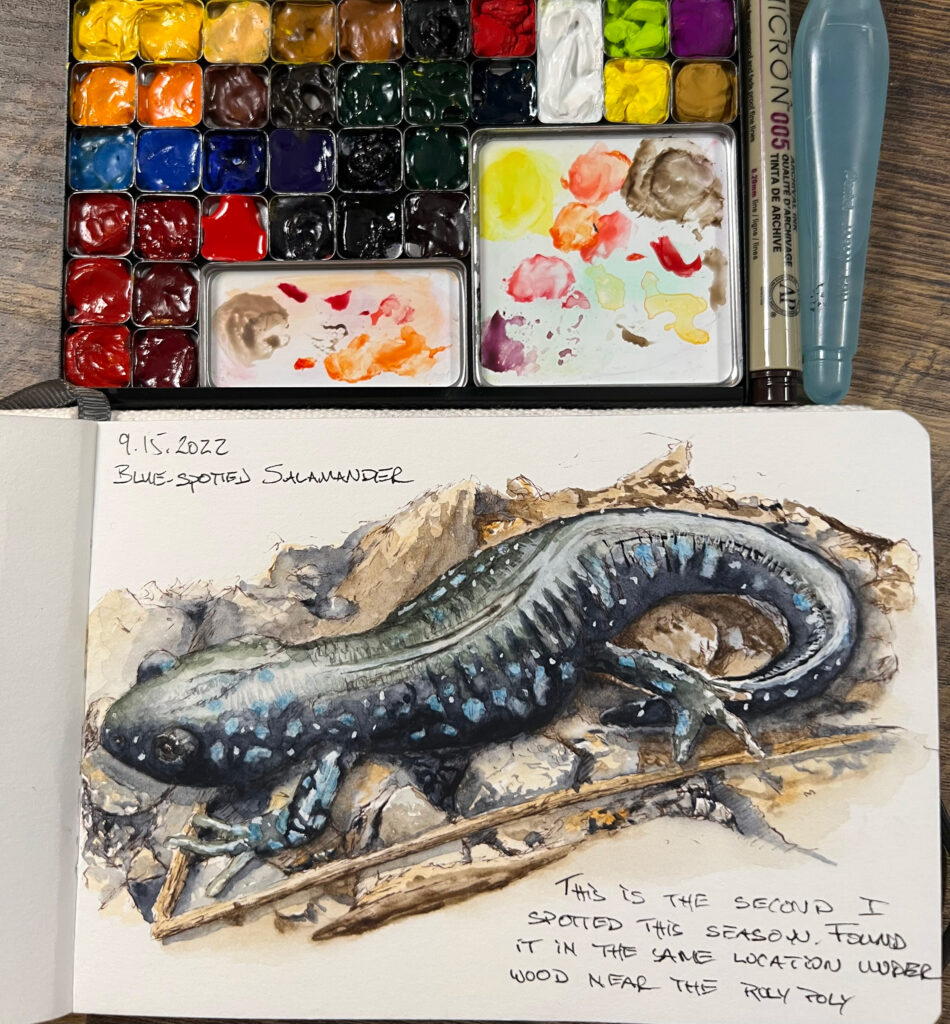
Sketchbooks have become a central part of my practice. They are where I work out ideas, explore composition, and test materials. I often carry two or three–one for graphite, one for watercolor, and another that holds quick studies or notes. Working in sketchbooks has helped me move past the pressure to make finished pieces every time. It gives me space to experiment and think through problems visually. Most of my finished work starts as a loose drawing or colour test in a sketchbook.
Photography plays a big part in my work. I use a Sony a 6700 with a long telephoto lens that I keep with me on my drives to run errands. I also rely on my iPhone for quick studies of insects or textures. These photos aren’t just documentation; they’re part of the drawing process. They help me study gesture, form, and composition before picking up a pencil or brush. I organize them into reference folders, tagging them by species, pose, or setting so that I can pull from them later.
My location in Ontario means I don’t always have access to the animals I want to draw. In those cases, I work with photographers I’ve connected with through my podcast or social media who share their reference images or make them available for a small fee. I always credit their work and focus on representing the subject with care. I see it as a kind of collaboration–respecting the time and effort it takes to get close to these animals, often under challenging conditions.
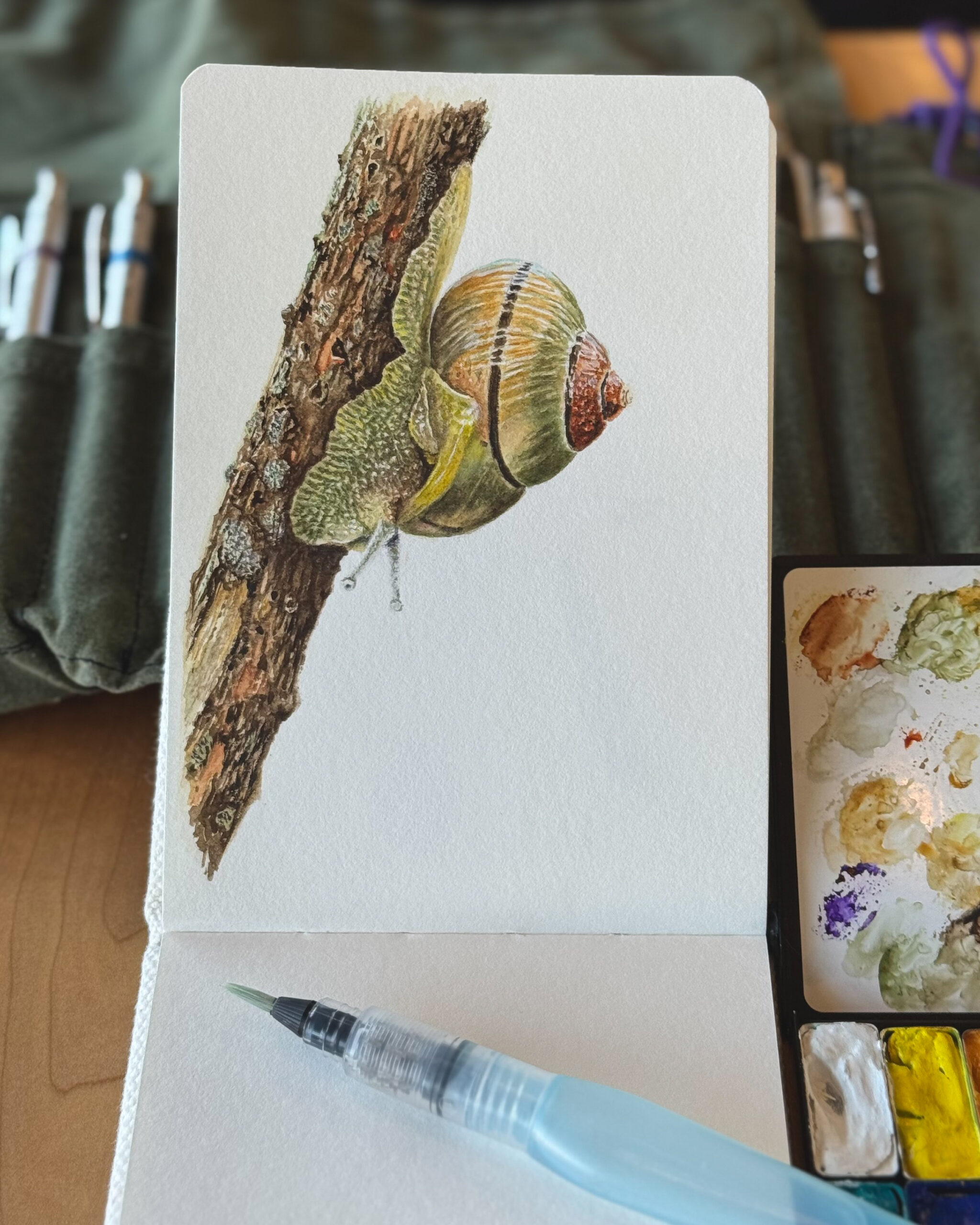
I try to sketch daily, though I don’t always succeed. When I do, it might be for a few minutes or sometimes for hours. I often work in coffee shops in the early morning before heading into the office. These sessions keep me grounded. Pentel mechanical pencils, Golden QoR watercolors, and Etchr sketchbooks are always in my bag. I’ve built a drawing kit over time that has everything I need in one package. Practicing in public has become part of my process, both as a way to stay accountable and as an invitation for conversation. It’s a routine that makes space for creativity, even on the busiest days.
Much of my work centers on wildlife. Birds, frogs, insects, and mammals appear again and again along with the odd human subject. I spend time observing the animals in the wild, watching kestrels scan a field, frogs frolick in our pond, studying how a heron preens, or how a caterpillar eats. I draw to understand, not just to represent. I want to show the small details – the curve of a wing, the texture of fur, the quiet posture of rest.
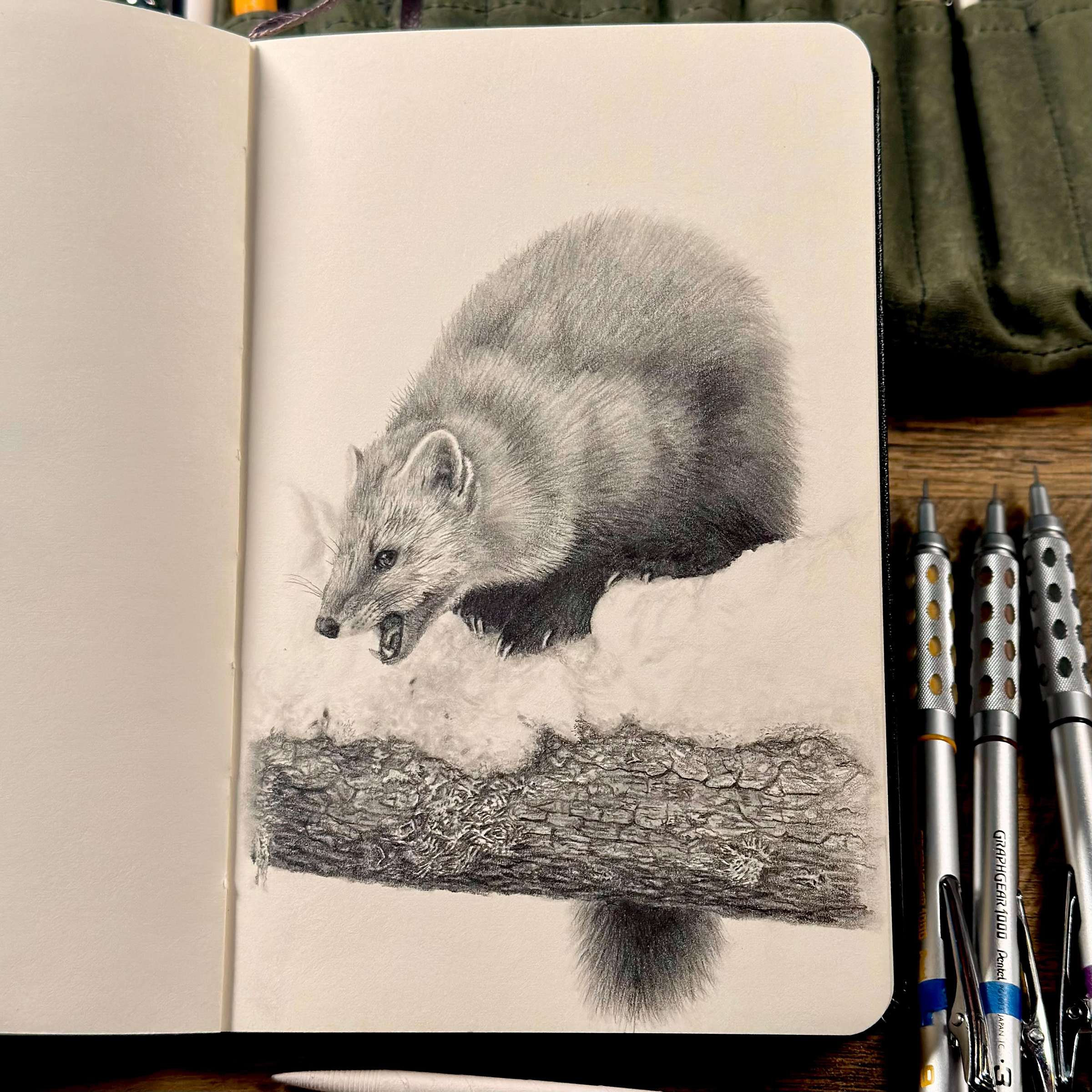
That practice takes discipline. It means sitting still. Noticing. Accepting that your presence changes an animal’s behavior. Drawing animals in a way that reflects that understanding. That discipline shapes everything I do. It affects how I use line, where I put detail, and how much I choose to leave out. It’s about restraint as much as rendering.
In 2019, I launched a podcast called _Drawing Inspiration_. Over 109 episodes, I interviewed more than 80 artists across mediums and experience levels. Those conversations expanded my understanding of what it means to live a creative life. They also connected me with a global community of makers who think deeply about their work. The podcast became a kind of education–learning through conversation, reflecting through editing, and growing through feedback. Even now, these episodes are downloaded every day.
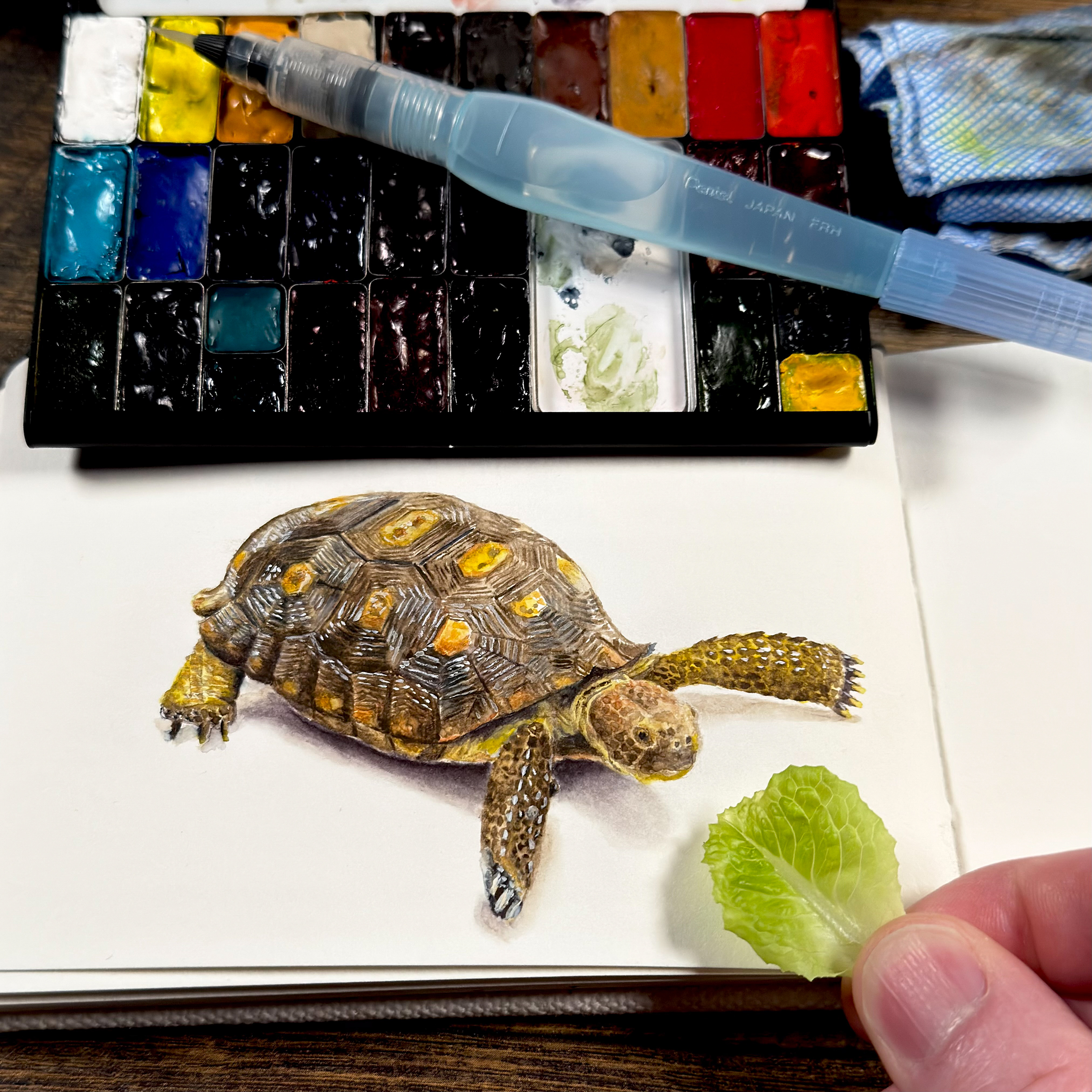
Now, I teach more regularly through live demos, in-person workshops, and online sessions. I’ve partnered with companies to help others discover the tools and processes that work for them. But everything still comes back to the sketchbook. Teaching allows me to clarify my thinking. It pushes me to name what I do and why I do it, and it reminds me to stay open to new approaches.
In 2025, I set a theme for my creative life: _The Year of Connection_. As part of that, I’ve been working on a series of in-person workshops. Every class will be a chance to clarify my thinking and process. Teaching pushes me to explain my approach, make decisions with intention, and learn from the feedback and questions of others. It has become a steady part of how I grow as an artist. Sharing my work and process publicly through social media, newsletters, and now YouTube has extended that learning loop.
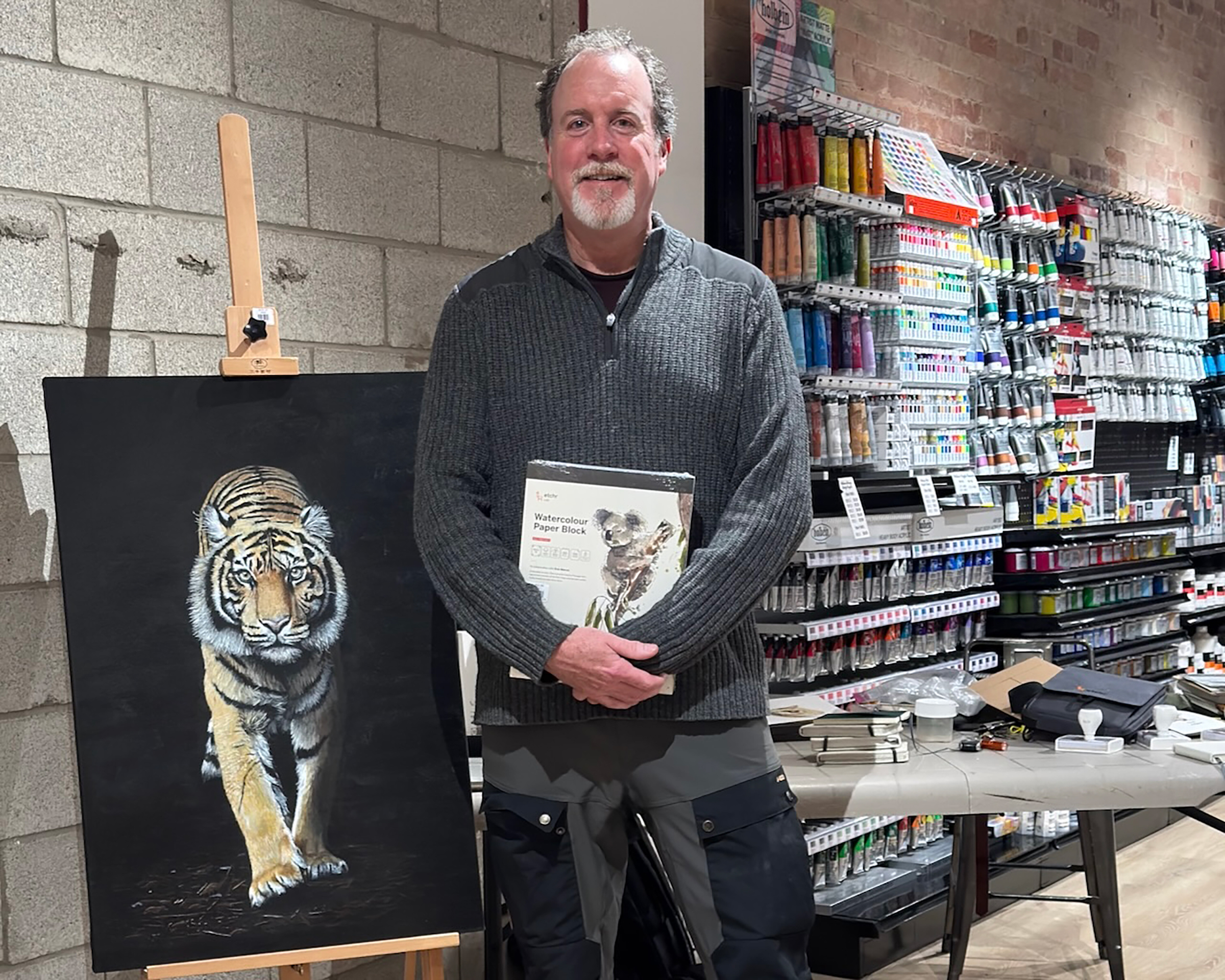
I’m preparing to transition into full-time art as I approach retirement from my technical role. I’m building a sustainable practice around originals, prints, workshops, and commissions. I’m not chasing trends. I’m focused on steady, meaningful work that reflects what I care about most. That includes work that takes time, such as large oil paintings that evolve slowly over weeks or months, or sketchbook pages that build toward something larger.
I continue to work on larger oil pieces and build out some quiet projects. I plan to apply for residencies and exhibitions, and I’m considering reviving the podcast with shorter 6–8 episode seasons, possibly supported by companies interested in helping promote and share artist stories. I’ve also started expanding onto YouTube to share more of my process. Video gives me a way to show the pacing of a drawing or painting session-how slow, quiet, and iterative it can be.
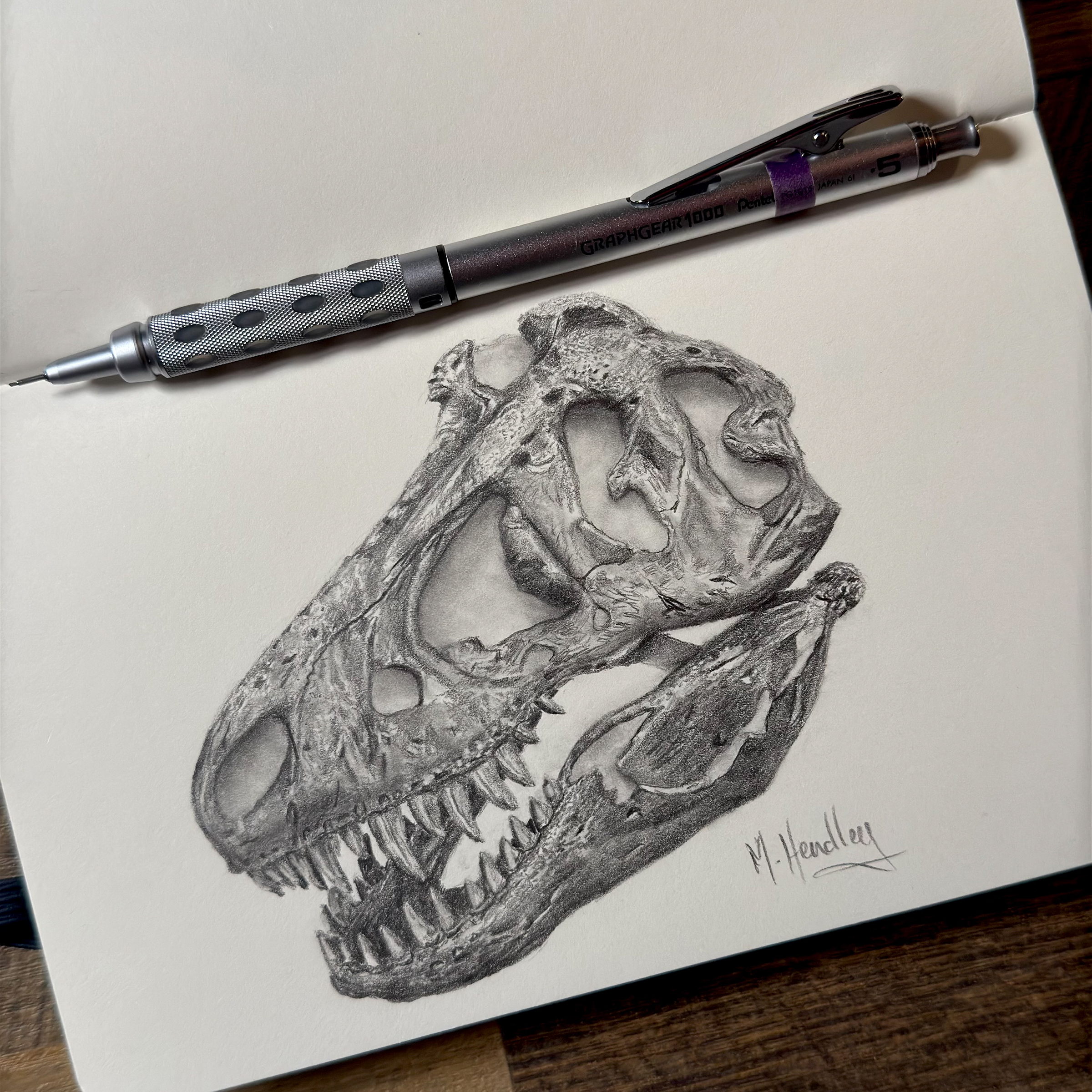
While the natural world is my primary subject, my years in tech influence my perspective. Structure, flow, and pattern show up in bark, feathers, and movement. I often find parallels between a well-balanced painting and a well-written piece of code. I also use digital tools to manage my art practice, from building compositions in Photoshop to editing video and maintaining my website. That overlap is where my creativity lives. It’s not about switching hats. It’s about seeing the connections between systems and sketches, precision and process.
Conversations with other artists, through the podcast or online, have shaped much of my thinking. They’ve introduced me to new tools and approaches and reminded me how much community matters. That network continues to influence my direction. Some have become collaborators, others mentors. Many are people I’ve never met in person, but whose work and thinking I carry with me.
Art didn’t begin for me in a single moment. It has always been there. What changed was how much space I chose to give it. The more time I spend with nature, the more I sketch. The more I sketch, the more I learn. And the more I learn, the more I want to share through my work.