Ten American wildlife artists have collaborated on an art exhibition to highlight the plight of endangered species. A Critical Balance: Artists Take Action, an exhibition of 23 wildlife paintings will be held at in Portland, Maine, US from April 5 to May 25.
When the Merlin was placed in Linda Mirabile’s hand, something visibly shifted in her entire being. She stood in awe—of the biologists who captured and banded the falcon, of the magnificent bird she held, of the sheer beauty of nature. She knew she had to release the bird, but she hesitated, knowing this moment would never come again.
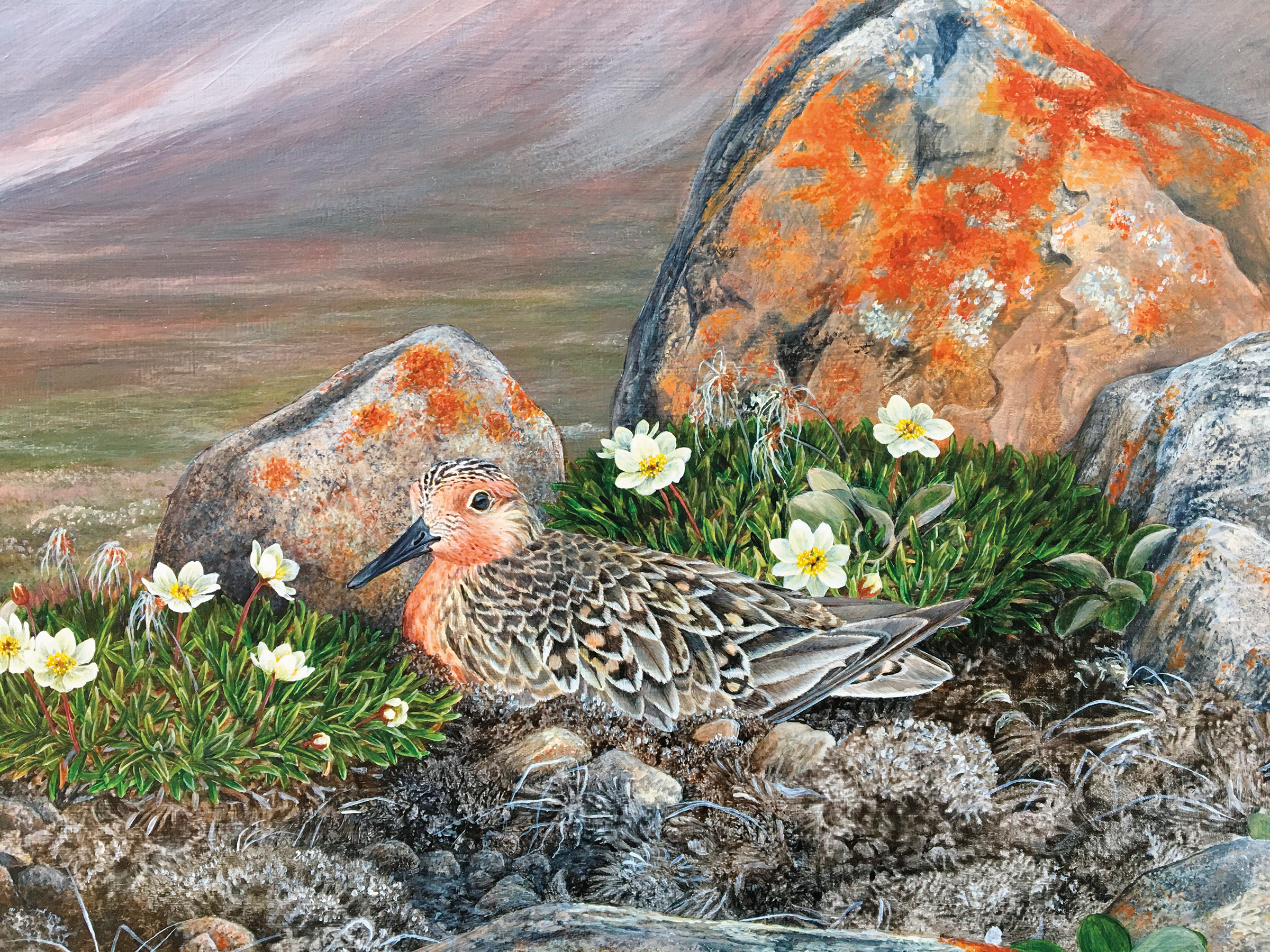
Red knot
Mirabile was one of a group of photographers, artists, and writers who had gathered for a unique creative retreat on Block Island, Rhode Island, US. Every fall, the teardrop-shaped island 13 miles off the coast of Rhode Island becomes a place of refuge for countless numbers of migrating songbirds and raptors that stop there to rest and refuel before continuing their journeys to distant southern latitudes. For one week in October 2015, the island also became a refuge for those who would give voice to their creative inspirations. During that week, participants of the retreat, sponsored by Biodiversity Research Institute (BRI), came to fully understand the idea expressed by Ansel Adams (perhaps the world’s first conservation photographer) in his book Letters and Images: “I believe the approach of the artist and the approach of the environmentalist are fairly close in that both are, to a rather impressive degree, concerned with the affirmation of life. Response to natural beauty is one of the foundations of the environmental movement.”
Mirabile has been painting for more than 40 years, with a particular interest in birds. The owner of a graphic design firm in Vermont, US that specializes in environmental nonprofits, she especially enjoys working for BRI, a group of wildlife biologists whose research focuses on birds.
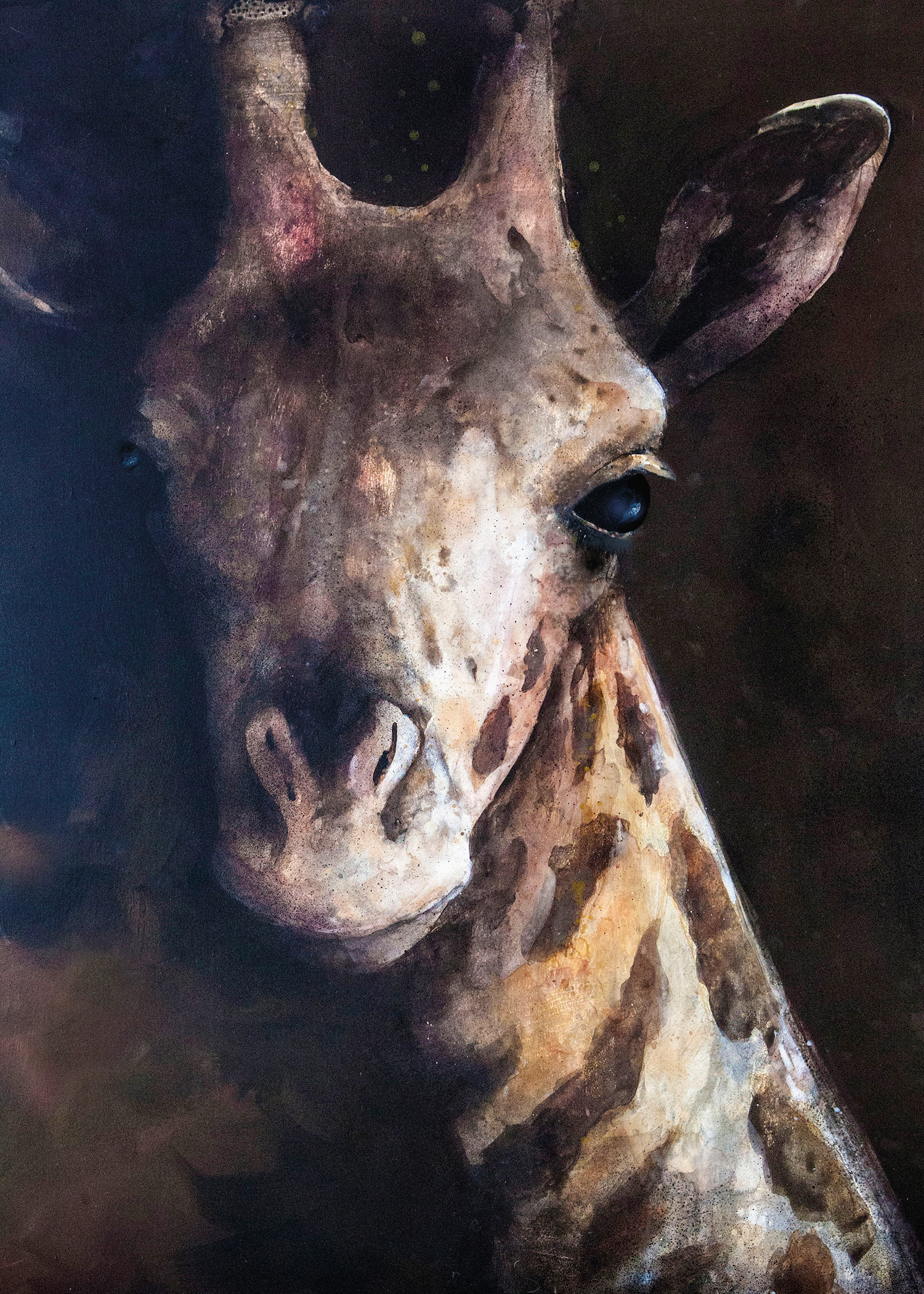
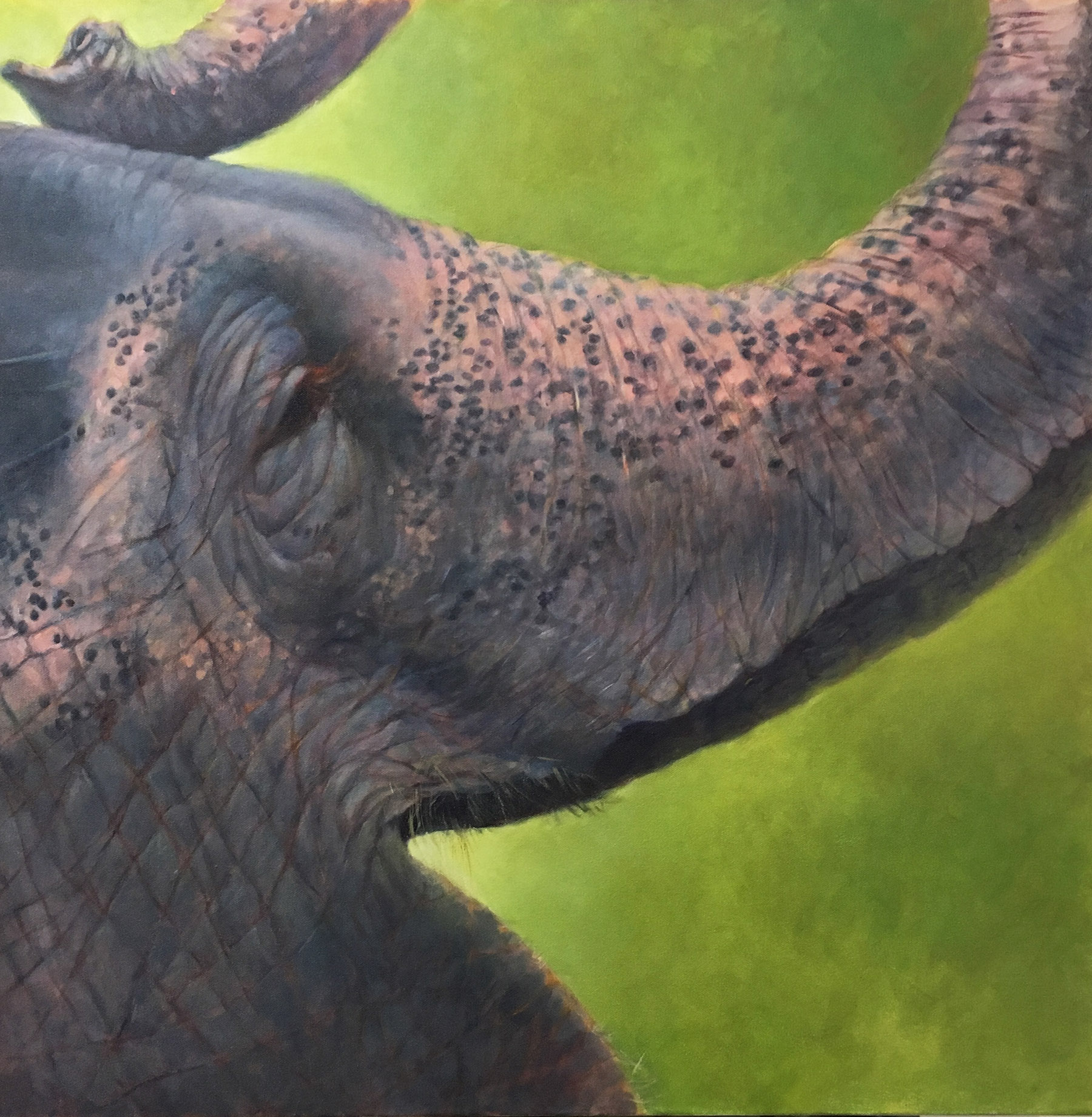
Giraffe
To help with some of the illustrations for BRI’s scientific communications, Linda enlisted fellow Vermonter, friend, and colleague Adelaide Murphy Tyrol, a botanical and natural history illustrator and painter. Thus began an ongoing creative collaboration between the artists and the scientists.
On a pristine island with the biologists and the birds, both Mirabile and Tyrol witnessed how such intimate experiences with nature could awaken a deep affinity and inner knowledge.As Tyrol says, “With due respect to the importance of viewing nature with a scientifically accurate eye, I find the power of nature to lie beyond the caliper. Upon close inspection, the natural world reveals truths other than analytical ones. A random moment fully recognized can embrace the spirit and lead us to a deeper understanding of life. For me, the source is contained in the natural world; the process of painting is an attempt to communicate with and understand its well-spring.”
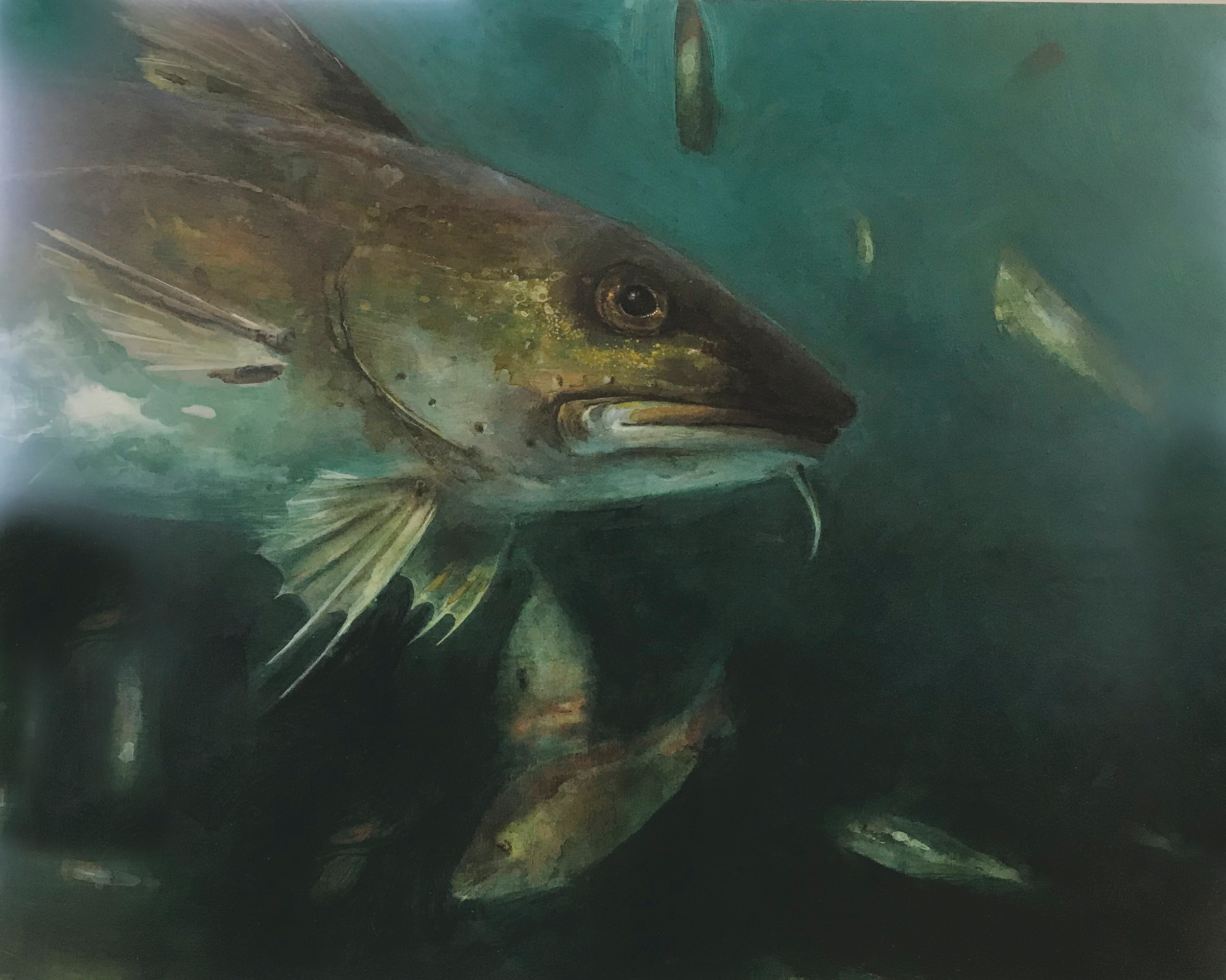
Atlantic cod
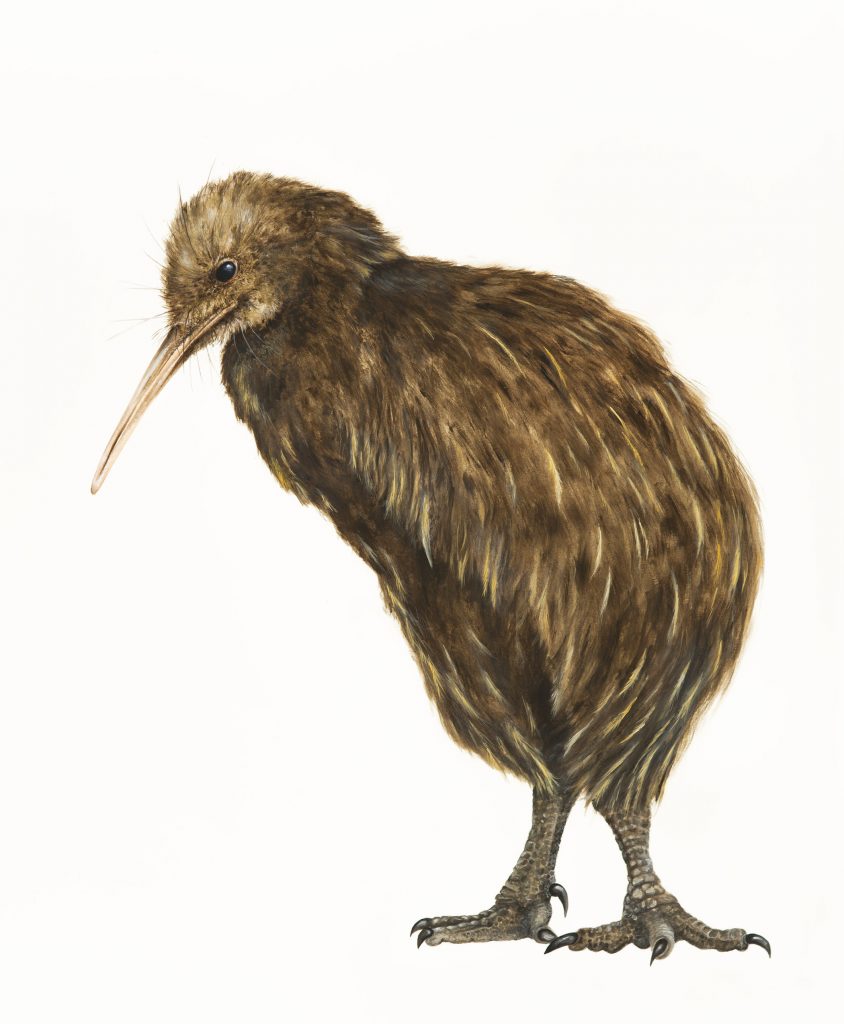
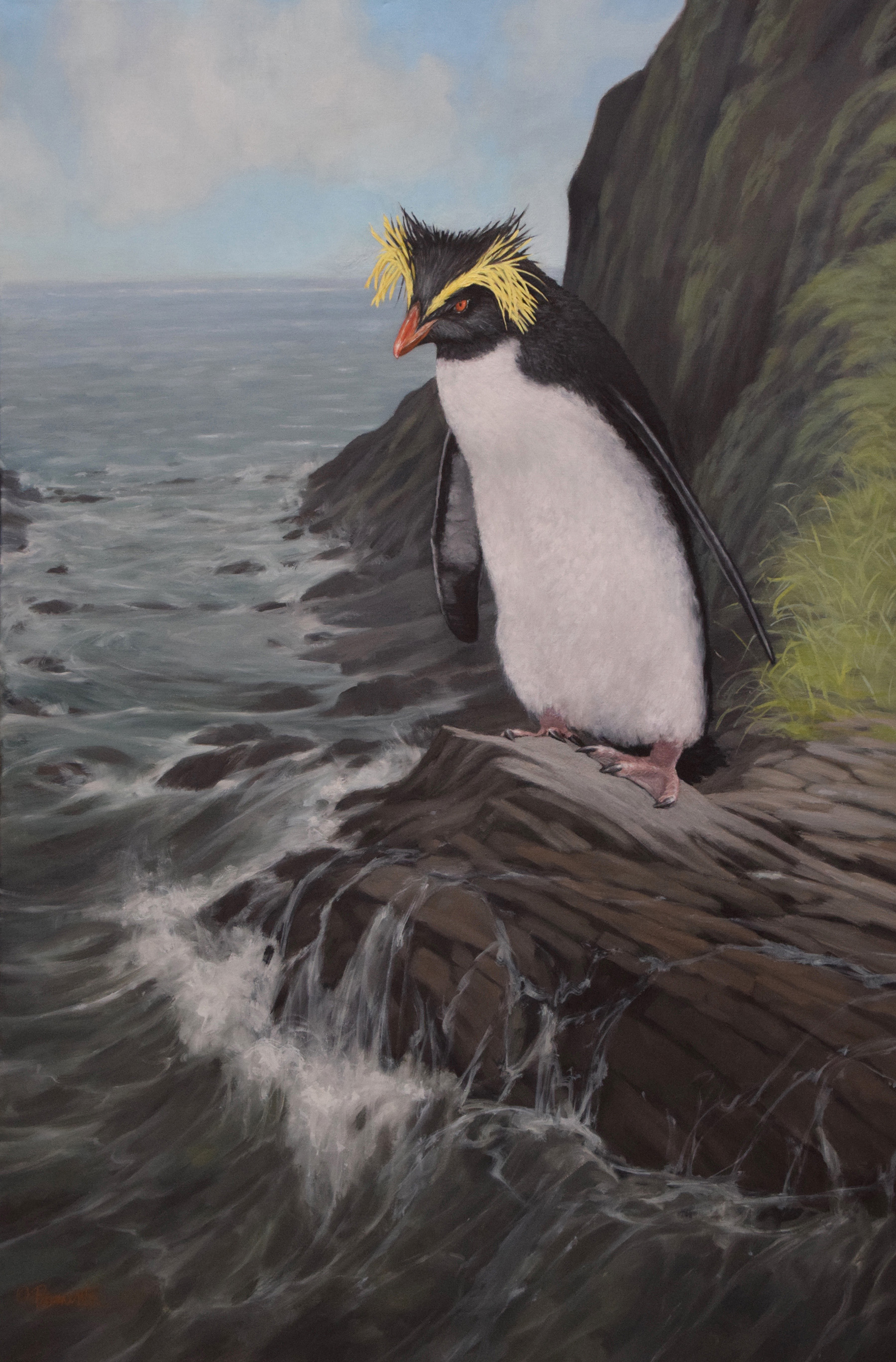
Kiwi
Through painting, photography, or poetry, artists can tell the stories of birds and animals in a way that reaches people on an emotional level. Once captivated, one can begin to gain an understanding of a given environmental concern such as the extinction of a bird or a fish or a wildcat. With knowledge and understanding comes empathy, which can lead to action and support.
“The story of animals and birds facing extinction is a gut wrenching one,” says Tyrol. “I paint these species to get to know them before they are gone. At the crossroads of art and science there is a wonderful opportunity to move forward the dialogue about conservation. The juncture of art and science may move mountains.”
Committed to exploring nature through their art, both Mirabile and Tyrol realized that they possessed a powerful tool to help move some of those mountains.
A Critical Balance: Artists Take Action
Scientists estimate that 150-200 species of plant, insect, bird, and mammal become extinct every 24 hours. This is nearly 1,000 times the “natural” or “background” rate and, according to many scientists, is greater than anything the world has experienced since the vanishing of the dinosaurs nearly 65 million years ago. Today many of the creatures that are familiar to us are at a critical balancing point. They might not be here for future generations to experience.
“As a bird watcher,” says Mirabile, “I have always valued the common chickadee as much as the majestic Great Blue Heron. But, as a painter, I often chose subjects that interested me from an artistic perspective, tending toward the more colorful or striking bird. That all changed when I discovered that a bird I had painted years ago, the Snowy Owl, was endangered. Was it possible that my eight-year-old granddaughter would never see one of these owls outside of a zoo? The thought breaks my heart.”
Perhaps the Merlin Mirabile released that day on Block Island sparked an idea. “Our week at BRI’s raptor station introduced me to the heroic efforts being done by scientists all over the world to help protect these beautiful birds and the critical need for public understanding and support,” says Mirabile. “I was determined to spread the word in my own way.”
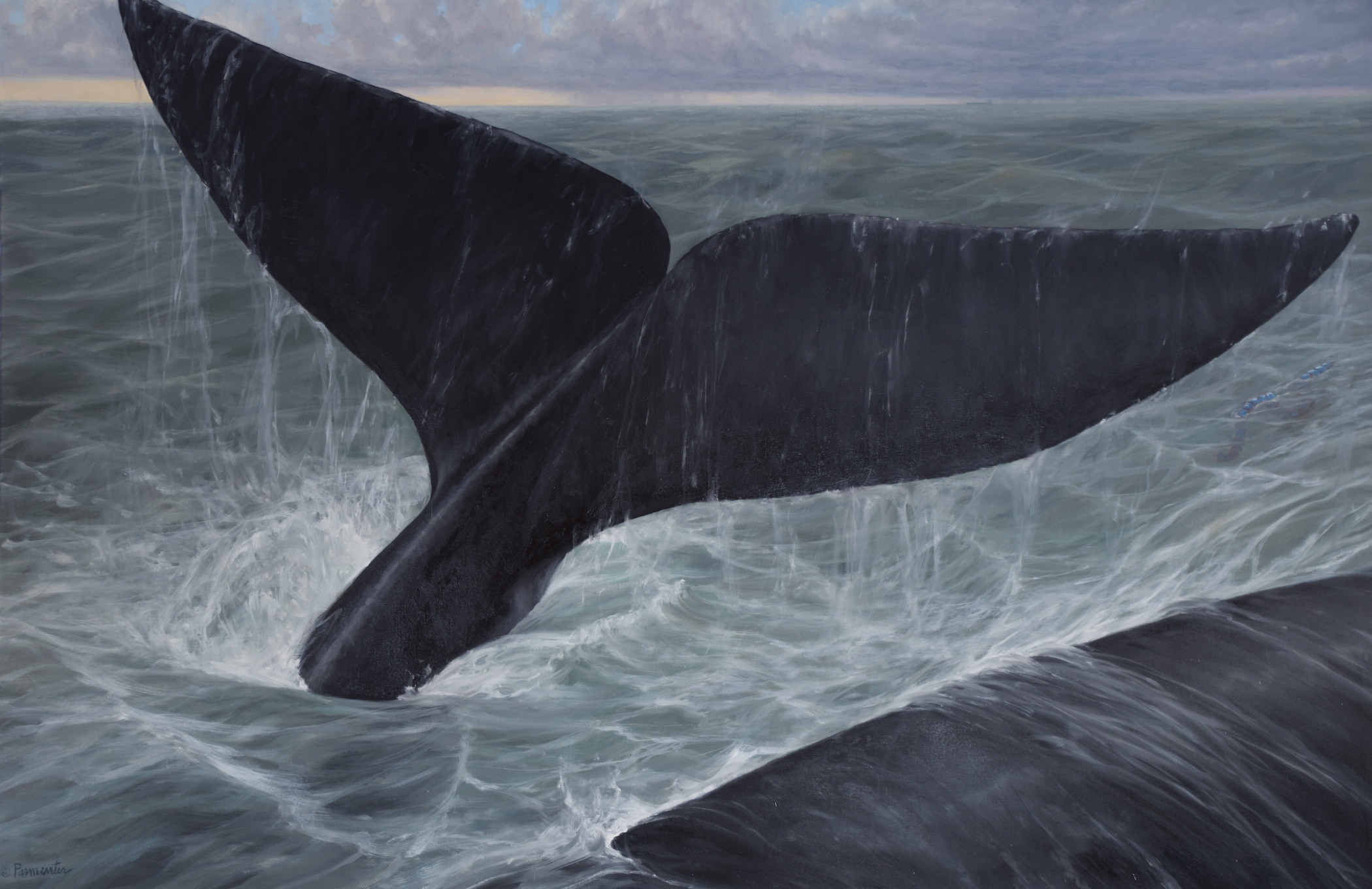
North Atlantic Right Whale Calf
Over the following months and years, Mirabile and Tyrol worked together to fan the flames of that spark until it became a burning mission, and they knew they must use their talents to bring attention to the plight of threatened and endangered species. They invited eight other artists to help tell the stories of these species, to engage the public in a way that would inspire positive action. Their mission manifested into A Critical Balance: Artists Take Action, an art exhibit featuring life-sized paintings of animals that are in trouble.
Each of ten artists, all of whom share a dedication to the natural world, chose one or more species listed as endangered or threatened by the International Union for Conservation of Nature (IUCN). Painting in their own artistic style, their intent is to use art to inspire and educate in ways that will reach beyond statistics, policy, and politics.
“This opportunity to work with other artists who share my love of and concern for the natural world has been so cathartic,” says Mirabile. “I know our work is just a small drop in a large pool. But, with luck the drop will become a ripple.”
The exhibit opens on April 5 at the Lewis Gallery, part of the Portland Public Library, in Portland, Maine. The exhibit will include 23 pieces of art painted to life-size and a catalog of the work. All work will be available for sale and a percentage of proceeds will be donated to the conservation of endangered or threatened species. For more information about the exhibit, please visit: www.briloon.org/artexhibit
By Peter Hudson and Kaitlyn Baker
| Photos by Peter Hudson, Amith Krish, Dr Noushad Ali, Hermis Haridas, Deepa Girish, Aminlal Ami, Nikhil Singh, Anidas, Aghil K K, and Nisha Purushothaman
By Peter Hudson and Kaitlyn Baker
| Photos by Aarav Rasquinha, Anil T Prabhakar, Imadeddin Alaeddin, Michael Jansen, Viji Abraham, Nirav Modi, Noushad Ali, Peter Hudson, Kaitlyn Baker & Nisha Purushothaman
By Peter Hudson
| Photos by Peter Hudson, Muhammed Asharaf Kariyil, Deepa Girish, Gopala Krishnan, Shyam Menon, Kalika Shah, Sajeev Kumar Krishnan, Girish Gopinath Dr.K.M.Anand, and Nisha Purushothaman,
By Peter Hudson with Mary Fick
| Photos by Deepa Girish, Peter Hudson, Hermis Haridas, Syed Ahmar Amjad, Chintan Gohel, Kalika Shah, Sajeev KTDA, Sibin Nelson, Solomon Rajkumar, and Nisha Puruhothaman
By Amanda Monahan with Dr. Peter Hudson
| Photos by Peter Hudson, Amanda Monaha, Amith Krish, Seema Suresh, Ish Modha, Avinash Rajendran, Indresh Saluja, Jeevan, Kamal Varma, Shreya Patel, Madhur, and Nisha Puruhothaman